Sunday, June 15, 2025

Via Lionsroar \\ Thich Nhat Hahn

 When bombs begin to fall on people, you cannot stay in the meditation hall all of the time. Meditation is about the awareness of what is going on— not only in your body and in your feelings, but all around you.” 

-Thich Nhat Hahn.


See:   https://www.lionsroar.com/in-engaged-buddhism-peace-begins-with-you/#:~:text=Thich%20Nhat%20Hanh:%20Engaged%20Buddhism,feelings%2C%20but%20all%20around%20you.

Via FB


Via FB


Via The Tricycle Communit \\ The Academy: Relics


JUNE 2025

From the Academy
Welcome to From the Academy, a monthly newsletter for Premium subscribers offering a scholarly take on topics in Buddhist thought and practice. Each issue highlights a key theme and offers additional resources for in-depth exploration. This month, we examine the prominent role of relics in Buddhist practice, in the past and the present.  

Buddhist Relics
The relics of Piprahwa Stupa, extracted, framed, and consigned to Sotheby’s HK for sale 7 May 2025
Selling the Buddha?

On May 7, 2025, an auction of Buddhist relics—tiny, dazzling jewels taken from the Indian Piprahwa Stupa in 1898—was abruptly put on hold at Sotheby’s Maison, Hong Kong. The proposed sale raised numerous ethical and historical concerns, none more central than a disagreement over what constitutes a relic. Many Buddhists consider the Piprahwa jewels to be corporeal relics, or sarira—embodiments of the Buddha that remain in the world. For the auction house, however, the gems are treated as material artifacts, distinct from human remains and therefore suitable for sale.

The Buddha, Still Present

Across Buddhist traditions, relics are regarded as powerful objects that convey the presence of the Buddha and other revered figures from the past. The Mahavamsa, a Sri Lankan Buddhist chronicle, states: “If we see the relic, we behold the Buddha.” Tradition classifies a variety of materials as relics: bone fragments, crystalline “pearls,” and even clothes or ritual implements used by a Buddhist master. The Piprahwa jewels are considered as sacred as the bones and ashes they were found with and, according to the Sanskrit inscription on the stupa, are relics of the Buddha himself.
Buddha's Tooth in the 10,000 Buddha Relics Collection
Enshrined in stupas, relics are revered as literal embodiments of enlightened presence, inspiring prayers and aspirations, circumambulations, and devotional rites. More broadly, relics reflect how objects, places, and symbols become sacred through the ways people relate to them. For many practitioners, this presence is not symbolic but real—relics are living links to the Buddha that invite reverence, offerings, and ongoing relationship.

Relics in Place and Transit

Like other facets of religious life, relics cannot be understood apart from broader networks of trade, travel, and political power. King Asoka (3rd century BCE) famously divided relics among numerous stupas that helped map his empire. As embodiments of the Buddha, relics have traveled with monks and merchants as key elements in the legitimization and transmission of Buddhism across cultures. Garments worn by past masters, along with their ritual implements, have also been highly valued as objects that transmit blessings and authority.

Relics continue to be displayed and venerated on ceremonial occasions. They are also sent on tour, bringing in revenue and prestige, but raising ethical tensions around control and access. At times, these concerns blend with questions of religious authority and state sovereignty, as seen in a recent dispute over an illicit image of the Buddha’s tooth. Outside the ritual setting of a stupa or shrine, it becomes difficult to appreciate the religious significance of relics. The extraction of sacred objects from their traditional sites—and their sale as art or collectables—has become controversial in the postcolonial era.


Perceiving the Sacred

For some, relics evoke superstition or idolatry; for others, they are sources of devotion, faith, and inspiration. Are sacred objects powerful in themselves, or only because of how they are perceived? How we answer that question shapes our relationship with relics. Traditional Buddhist narratives and modern authors acknowledge this ambiguity, suggesting that even mundane objects can offer blessings when they are seen as special. The multiple ways of viewing relics illustrate a key Buddhist principle: Perception, in many ways, shapes reality.
Recommended Material on Relics
  • Conan Cheong and Ashley Thompson, “Selling the Buddha’s Relics Today” (Journal of Buddhist Ethics Vol. 32, 2025). A discussion on the history and meaning of relics and the proposed auction of Piprahwa relics by Sotheby’s. These relics are also the subject of a National Geographic documentary “Bones of the Buddha” (2013).
     
  • Alexandra Kaloyanides, “Objects of Conversion, Relics of Resistance” (Stanford Department of Religious Studies, 2017). In this video, Kaloyanides, a former Tricycle managing editor, discusses how Buddhists used relics in colonial-era Burma to resist Christian conversion efforts. You can also listen to a Tricycle podcast with Kaloyanides on relics and Theravada Buddhism.
     
  • Dan Martin, “Pearls from Bones: Relics, Chortens, Tertons and the Signs of Saintly Death in Tibet” (Numen, Vol. 41, 1994). A scholarly paper on the types and significance of relics in Tibetan Buddhism, presenting differing historical perspectives, including those of Tibetans who have questioned their value and importance.
Follow Us

               
© 2021 Tricycle Foundation
89 5th Ave, New York, NY 10003

Via Gay Wisdom for Daily Living from White Crane Institute \\ The Supreme Court ruled that a landmark civil rights law protects LGBT people


White Crane InstituteExploring Gay Wisdom & Culture since 1989
 

This Day in Gay History

June 15


Noteworthy
2020 -

The Supreme Court ruled that a landmark civil rights law protects LGBT people from discrimination in employment, a resounding victory for LGBT rights from a conservative court. The court decided by a 6-3 vote that a key provision of the Civil Rights Act of 1964 known as Title VII that bars job discrimination because of sex, among other reasons, encompasses bias against LGBT workers.

The cases were the court’s first on LGBT rights since Justice Anthony Kennedy’s retirement and replacement by Kavanaugh. Kennedy was a voice for gay rights and the author of the landmark ruling in 2015 that made same-sex marriage legal throughout the United States. Kavanaugh generally is regarded as more conservative.

The Trump administration had changed course from the Obama administration, which supported LGBT workers in their discrimination claims under Title VII. During the Obama years, the federal Equal Employment Opportunity Commission had changed its longstanding interpretation of civil rights law to include discrimination against LGBT people. The law prohibits discrimination because of sex, but had no specific protection for sexual orientation or gender identity.

In recent years, some lower courts have held that discrimination against LGBT people is a subset of sex discrimination, and thus prohibited by the federal law. Efforts by Congress to change the law had failed.

The Supreme Court cases involved two gay men and a transgender woman who sued for employment discrimination after they lost their jobs. And while these precedents may make us feel warm and fuzzy all over, they are certainly in the gunsights of the current SCOTUS bench. 


|8|O|8|O|8|O|8|O|8|O|8|O|8|O|8|

Gay Wisdom for Daily Living from White Crane Institute

"With the increasing commodification of gay news, views, and culture by powerful corporate interests, having a strong independent voice in our community is all the more important. White Crane is one of the last brave standouts in this bland new world... a triumph over the looming mediocrity of the mainstream Gay world." - Mark Thompson

Exploring Gay Wisdom & Culture since 1989!
www.whitecraneinstitute.org

|8|O|8|O|8|O|8|O|8|O|8|O|8|O|8|


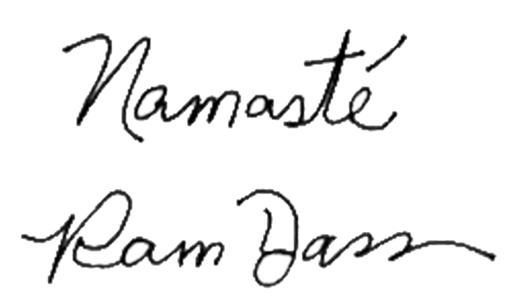
Via Ram Dass - Love Serve Remember Foundation \\ Words of Wisdom - June 15, 2025 💠


When I look back on the suffering in my life, this may sound strange, but I see it now as a gift. I would have never asked for it for a second. I hated it while it was happening, and I protested as loudly as I could, but suffering happened anyway. Now, in retrospect, I see how it deepened my being immeasurably.
 
- Ram Dass


Via Daily Dharma: Trusting This Moment


Browse our online courses »
Trusting This Moment

In awakened awareness there’s no grasping. It’s a simple, immanent act of being here, being patient. It takes trust, especially trust in yourself. No one can make you do it or magically do it for you. Trusting this moment is therefore very important.

Ajahn Sumedho, “Trusting in Simplicity”


CLICK HERE TO READ THE ARTICLE

Getting to Know the Buddha
By Kim Allen
Explore a teaching and practice on recollection and devotion, or sensing the essence of the Buddha in a way that transforms us.
Read more »

Via Dhamma Wheel | Right Mindfulness and Concentration: Establishing Mindfulness of Body and the First Jhāna


TRICYCLE      COURSE CATALOG      SUPPORT      DONATE

RIGHT MINDFULNESS
Establishing Mindfulness of Body
A person goes to the forest or to the root of a tree or to an empty place and sits down. Having crossed the legs, one sets the body erect. One establishes the presence of mindfulness. (MN 10) One is aware: “Ardent, fully aware, mindful, I am content.” (SN 47.10)
 
When lying down, one is aware: “I am lying down.”. . . One is just aware, just mindful: “There is body.” And one abides not clinging to anything in the world. (MN 10)
Reflection
Practicing in a prone position is not essentially different from practicing in the other three primary bodily postures: sitting, standing, and walking. The instruction is simply to be fully aware of all the bodily sensations that arise and pass away in your experience. The most common form of doing this is the body scan, wherein you systematically focus on all bodily sensations from head to toe or from toe to head.

Daily Practice
In addition to practicing while sitting, standing, and walking, become familiar with meditating while lying down. The particular challenge there is to avoid falling asleep. In the other three positions muscle tension helps prevent this, but when you are prone it is very easy to doze off. You will find the ability to practice lying down especially valuable if you are sick and stuck in bed.     


RIGHT CONCENTRATION
Approaching and Abiding in the First Phase of Absorption (1st Jhāna)
Having abandoned the five hindrances, imperfections of the mind that weaken wisdom, quite secluded from sensual pleasures, secluded from unwholesome states, one enters and abides in the first phase of absorption, which is accompanied by applied thought and sustained thought, with joy and the pleasure born of seclusion. (MN 4)

One practices: “I shall breathe in experiencing rapture";  one practices: “I shall breathe out experiencing rapture.” This is how concentration by mindfulness of breathing is developed and cultivated so that it is of great fruit and great benefit. (SN 54.8)

Tomorrow: Understanding the Noble Truth of the Origin of Suffering
One week from today: Establishing Mindfulness of Feeling and Abiding in the Second Jhāna

Share your thoughts and join the conversation on social media
#DhammaWheel

Questions?
 Visit the Dhamma Wheel orientation page.


Tricycle is a nonprofit and relies on your support to keep its wheels turning.

© 2025 Tricycle Foundation
89 5th Ave, New York, NY 10003

Via FB


Via FB