
Wednesday, June 25, 2025


Via Daily Dharma: You Are a Tourist
| ||||||||||
| ||||||||||
|



Via Dhamma Wheel | Right Speech: Refraining from Harsh Speech
| |||||||||||||||
| |||||||||||||||
| |||||||||||||||
| |||||||||||||||
|

Via White Crane Institute //
| |||
| This Day in Gay History | |||
June 25 | |||

Noteworthy 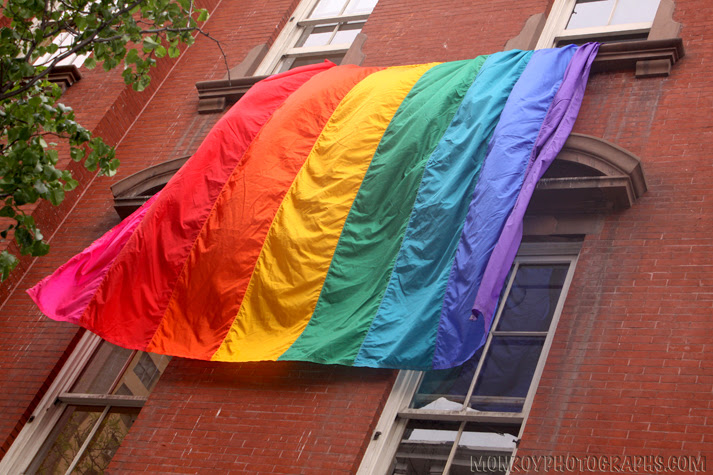 1978 - The RAINBOW FLAG is first displayed in the San Francisco Gay Pride Parade. While Gilbert Baker is widely recognized as the creator of the Rainbow Flag, the origins of the flag remain controversial. The late activist and author, Lee Mentley asserted -- we think correctly -- that it was made by artists from Eureka Noe Valley Artist’s Coalition, The Hula Palace, and Gay Freedom Day community volunteers in Top Floor Gallery. It was the summer of 1978, and the Gay Community Center in San Francisco swarmed with dozens of young people, flitting between ironing boards, swewing machines and trash cans filled with colorful dye. They had been tasked with making two enormous flags to fly above the city's Gay Freedom Day Parade, and they wanted something bright. Something inclusive. Something hopeful. Unbeknownst to them, their colorful project, the rainbow flag, would become the international symbol for LGBTQI rights, seen practically everywhere: atop City Hall in West Hollywood, in countries like Uganda, where homosexuality is still illegalm in the Target clothing aisle during Pride Month. The design and sewing of the first rainbow flag often is solely credited to the self-described "gay Betsey Ross," Gilber Baker -- a well-known activist and drag queen who died in 2017 -- with little or no mention of the artists and volunteers who helped that summer. Lynn Segerblom, who co-chaired the 1978 Gay Freedom Day decorations committee that year with Baker, remembers the conceptualization and creation of the rainbow flag as a joyous collaboration with friends. Segerblom and Paul Langlotz, who both witnessed the making of the giant banners, said Baker had been their friend and roommate but as soon as he started traveling the world promoting the flag, the stories of the other artists eventually fell by the wayside. In the interest of history, without Segerblom and a seamster, James McNamara, who died of HIV-AIDS in 1999, the flags wouldn't have happened. Mentley, in his recent book, The Princess of Castro Street [ISBN-10: 1533323844 - ISBN-13: 978-1533323842], disputes the origin story of the flag told by Gilbert Baker who claimed the flag design as his own. According to Mentley: “…Gilbert Baker who could barely finish any project he ever started was the 1978 co-chair of the Gay Day Decorating Committee would later … claim he created the rainbow flags all by himself, at Harvey’s [Milk] request nonetheless—but the artists knew he was no Betsy Ross! “Lynn Segerblon who was the other co-chair with Gilbert Baker of the Gay Day Decorating Committee, along with Hula Palace artist Robert Guttmann, presented their original idea to the Pride Board of the rainbow flag concept. “The Pride Foundation requested and found funding through the Hotel Tax. Lynn was the rainbow artist for Capezio downtown and professionally known as Faery Rainbow Argyle. It was Ms. Faery who, working with others, chose the colors and mixed the dye for one thousand yards of bleached muslin and designed the Rainbow and Rainbow American Flag, with a sole star placed within the stripes symbolizing “The State of Consciousness.” “More than one hundred artists worked on this amazing project.” The flag consisted of eight stripes: hot pink: sexuality; red: life; orange; healing; yellow: sunlight; green: nature; turquoise; magic/art; indigo: serenity/harmony; and violet: spirit. After the assassination of Harvey Milk, there was an increased demand for the flags. To meet that demand, the Paramount Flag Company began selling a version of the flag using stock rainbow fabric consisting of seven stripes of red, orange, yellow, green, turquoise, blue, and violet. In 1979 the flag was modified again. When hung vertically from the lamp posts of San Francisco's Market Street, the center stripe was obscured by the post itself. Changing the flag design to one with an even number of stripes was the easiest way to rectify this, so the turquoise stripe was dropped, which resulted in a six stripe version of the flag - red, orange, yellow, green, blue, and violet. Naturally, in the modifications, the two color elements that were lost: sex and magic/art. In the early years of the AIDS epidemic, AIDS activists designed a "Victory Over AIDS" flag consisting of the standard six-stripe rainbow flag with a black stripe across the bottom. Leonard Matlovich, himself dying of AIDS-related illness, suggested that upon a cure for AIDS being discovered, the black stripes be removed from the flags and burned. There is also an on-going controversey around the addition or changing of colors in the flag so individial communities within the LGBTQI communty can be represented. This misses the spirit of the flag. The stripes do not represent specific communities but ideals held by the community: Red represents life; orange is for healing; yellow is for sunlight; green is for nature; blue is for harmony; and purple is for spirit. The original flag had eight stripes, however there have been many iterations since. Today, the most commonly used flag, created in 1979, has six stripes. Still, there are other versions of the rainbow flag used to represent various queer subsets. At the 2018 Met Gala, for example, Lena Waithe wore a pride flag with black and brown stripes that were used to represent marginalized LGBTQIA+ people of color. It was introduced by the city of Philadelphia in 2017. In addition to the rainbow flag, there is also a transgender flag, a bisexual flag, and a gender fluid flag, to name a few. The rainbow flag remains a potent symbol of and for the LGBTQI Community. Daily GayWisdom pays tribute to the rainbow with the colors of every entry in GayWisdom. | ||
|8|O|8|O|8|O|8|O|8|O|8|O|8|O|8 Gay Wisdom for Daily Living from White Crane Institute "With the increasing commodification of gay news, views, and culture by powerful corporate interests, having a strong independent voice in our community is all the more important. White Crane is one of the last brave standouts in this bland new world... a triumph over the looming mediocrity of the mainstream Gay world." - Mark Thompson Exploring Gay Wisdom & Culture since 1989! |8|O|8|O|8|O|8|O|8|O|8|O|8|O|8 |
Via Ram Dass - Love Serve Remember Foundation //
| ||||||
|

Via GBF // "Shakespeare Dharma" with Matthew Perifano
Our latest dharma talk is now available on the GBF website, podcast, and YouTube channel:
Shakespeare Dharma – Matthew Perifano
Love & Light,
Tom Bruein
______________
How do the works of Shakespeare echo the teachings of the Buddha?
In this heartfelt talk, Matthew Perifano reflects on the transformative power of language as he intertwines his lifelong love of Shakespeare with his journey through Buddhism and the AIDS epidemic. He begins by framing the dharma as more than just teachings—truth, practice, and a deep refuge—and connects it to the power of Shakespearean language. Matthew highlights how Shakespeare can evoke profound emotional resonance, citing authors and works like Shakespeare Meets the Buddha and The Buddha and the Bard that mirror Eastern thought. He recounts how one particular quote from Cymbeline has echoed through his life: “All other doubts by time, let them be cleared. Fortune brings in some boats that are not steered.” This quote, and others, become spiritual companions, much like Buddhist texts.
He shares personal stories from his past, including his deep involvement with a Shakespeare reading group and its eventual disbanding. Through grief and loss during the AIDS crisis, Matthew found solace in Shakespeare's sonnets, many of which mirrored his emotional landscape. This culminated in the creation of a musical project—A Shakespeare Garden—telling a poignant love story between two young men in 1980s San Francisco, solely through Shakespeare’s words. Matthew sees blank verse as a heartbeat, a meditative rhythm that aligns with Buddhist practice. He closes by reciting stirring lines from The Tempest, capturing impermanence and the dreamlike nature of life, resonating with the first noble truth and the dharma's essence.
______________
Matthew Perifano (he/him) is a member of the Gay Buddhist Fellowship. He is grateful to be given this opportunity to share his love of Shakespeare and the Dharma with GBF. Shakespeare Dharma recounts his rich and strange journey with Shakespeare that began with a reading group that approached Shakespeare as mind/body practice rather than as theater. Eventually, this reading group would form Birnam Wood Musical Shakespeare Co. and Matthew would discover his facility for setting Shakespeare’s verse to music.
As Matthew became more knowledgeable about Buddhist Dharma, he discovered connections between Buddhist teachings and the truth about human nature and human existence to be found in the plays and sonnets of Shakespeare. Certain passages have become like sutras to him which he is happy to share with you. Ultimately, on a most profound level, Shakespeare became a refuge of solace and healing during the darkest days of the AIDS epidemic.
--Enjoy 850+ free recorded dharma talks at https://gaybuddhist.org/

Subscribe to:
Posts (Atom)