A personal blog by a graying (mostly Anglo with light African-American roots) gay left leaning liberal progressive married college-educated Buddhist Baha'i BBC/NPR-listening Professor Emeritus now following the Dharma in Minas Gerais, Brasil.
RIGHT LIVING Undertaking the Commitment to Abstain from Harming Living Beings
Harming living beings is unhealthy. Refraining from harming living beings is healthy. (MN 9) Abandoning the harming of living beings, one abstains from harming living beings; with rod and weapon laid aside, gentle and kindly, one abides with compassion for all living beings. (MN 41) One practices thus: “Others may harm living beings, but I will abstain from the harming of living beings." (MN 8)
A layperson is not to engage in the livelihood of trading in intoxicants. (AN 5.177)
Reflection
What you do for a living involves repeating certain actions of body, speech, and mind again and again on a daily basis. If any of these things cause harm to yourself or others, you are engaging in the consistent practice of becoming unhealthier every day. It is important to undertake the commitment to abstain from harming all living beings, including yourself, and in some cases this might mean changing professions.
Daily Practice
Reflect upon your means of livelihood and investigate honestly whether or not it is contributing to the kind of intoxication that causes harm. Remember that there can be many forms of intoxication, which is defined as the loss of diligence and the growth of heedlessness. Are you contributing to greater clarity and well-being by what you do for a living? If so, that is good, but if not, you might want to think of making some changes.
Tomorrow: Restraining Unarisen Unhealthy States One week from today: Abstaining from Taking What is Not Given
Share your thoughts and join the conversation on social media #DhammaWheel
A true awakening would expand the awareness of those impacted by our thought, speech, and bodily action to include not only other people but all beings we recognize as living—plants, animals, fungi, and bacteria—and even those existences we consider nonliving—rocks, water, and sunlight.
Jan Chozen Bays, “What the Buddha Taught About Sexual Harassment”
Tricycle’s Buddhism & Ecology Summit April 22–24, 2025
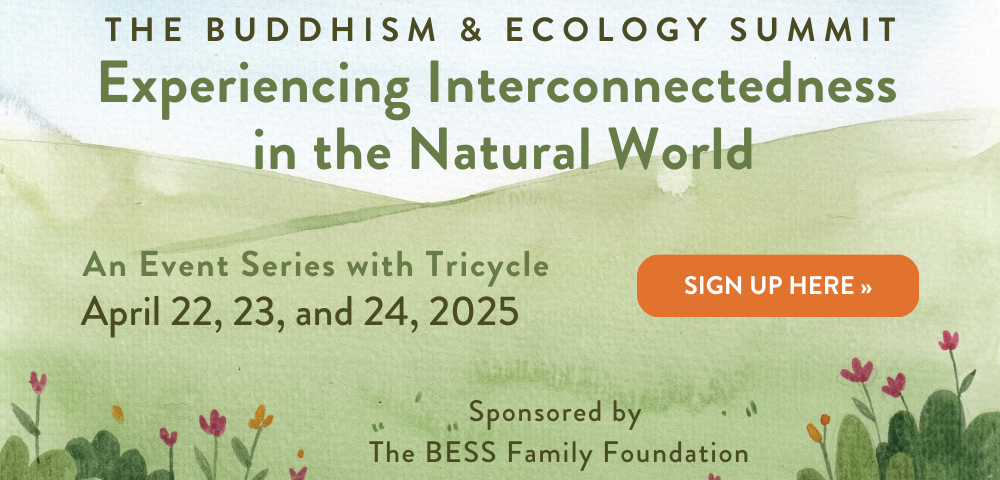
Join us from April 22–24, 2025, for Tricycle’s Buddhism & Ecology Summit: Experiencing Interconnectedness in the Natural World, a series of conversations with Buddhist teachers, writers, and environmental activists. This is a donation-based event sponsored by The BESS Family Foundation.
However the seed is planted, in that way the fruit is gathered. Good things come from doing good deeds; bad things come from doing bad deeds. (SN 11.10) What is the purpose of a mirror? For the purpose of reflection. So too bodily action is to be done with repeated reflection. (MN 61)
When you have done an action with the body, reflect upon that same bodily action thus: “Has this action I have done with the body led to the affliction of another?” If, upon reflection, you know that it has, then tell someone you trust about it and undertake a commitment not to do it again. If you know it has not, then be content and feel happy about it. (MN 61)
Reflection
While contemplative practice emphasizes remaining in the present moment, there is also value in the skillful use of memory. Reflecting upon past actions is one form of this, when you can review whether you have acted appropriately or not in the past. When you admit your mistakes, you can undertake a commitment to act differently in the future. It is a way of openly acknowledging that you have learned from your mistakes.
Daily Practice
It is healthy to be truthful with yourself about actions you have done in the past that may have caused harm. A sure way to get such deeds out of the shadows and into the light is to share them openly with someone you trust. It is not that the other person will absolve you in some way, but by bringing things into the open you unburden yourself. Try admitting a misdeed to a good friend and see how it makes you feel. It will lighten the load.
Tomorrow: Abstaining from Harming Living Beings One week from today: Reflecting upon Verbal Action
Share your thoughts and join the conversation on social media #DhammaWheel
Tricycle’s Buddhism & Ecology Summit April 22–24, 2025
Join us from April 22–24, 2025, for Tricycle’s Buddhism & Ecology Summit: Experiencing Interconnectedness in the Natural World, a series of conversations with Buddhist teachers, writers, and environmental activists. This is a donation-based event sponsored by The BESS Family Foundation.