Sunday, May 18, 2025

Via Daily Dharma: Anxiety Is Allowed


Anxiety Is Allowed

It’s very important to not push away anxiety but to allow ourselves to be scared. As we say in the dharma world, what we resist persists. 

Josh Korda, “The Anxiety of Ending”


CLICK HERE TO READ THE ARTICLE

Via Daily Dharma: Own Your Dharma


Own Your Dharma

Ultimately, the dharma belongs to you. Good or bad, like it or not, it is your dharma. If you give yourself the luxury of abandoning dharma the moment things become inconvenient or difficult, you are missing this quality of ownership. 

Mindrolling Jetsün Khandro Rinpoche, “Owning Your Dharma”


CLICK HERE TO READ THE ARTICLE

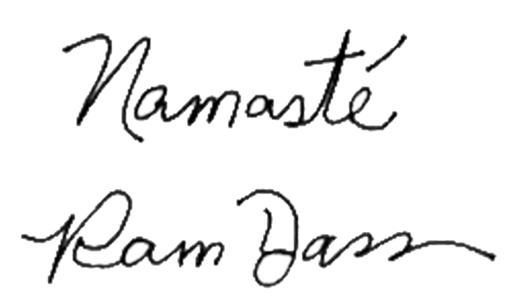
Via Ram Dass - Love Serve Remember Foundation \\ Words of Wisdom - May 18, 2025 💠


The Living Spirit, the Beloved, is always right here. It is merely your mind that prevents you from acknowledging its existence. The minute you either quiet your mind or take your heart and open it out so that it draws your mind along with it, only then do you rend the veil to see that the Beloved is right there.
 
- Ram Dass

Saturday, May 17, 2025

Via Dhamma Wheel | Right Effort: Restraining Unarisen Unhealthy States


TRICYCLE      COURSE CATALOG      SUPPORT      DONATE
RIGHT EFFORT
Restraining Unarisen Unhealthy States
Whatever a person frequently thinks about and ponders, that will become the inclination of their mind. If one frequently thinks about and ponders unhealthy states, one has abandoned healthy states to cultivate unhealthy states, and then one’s mind inclines to unhealthy states. (MN 19)

Here a person rouses the will, makes an effort, stirs up energy, exerts the mind, and strives to restrain the arising of unarisen unhealthy mental states. One restrains the arising of the unarisen hindrance of sense desire. (MN 141)
Reflection
There are two popular conceptions that may well be wrong. One is that we have free will to do whatever we want, and the other is that we have no control over what our unconscious minds throw up into consciousness. This text speaks to the ability to use our powers of conscious intention to influence what rises into awareness from preconscious or subconscious realms. There are ways to guard against unhealthy states.
Daily Practice
When sense desire arises, it has the effect of hijacking the mind and driving it in unhealthy directions. See what you can do to guard against certain kinds of content arising. One example is learning not to follow the "clickbait" that keeps popping up on your computer, urging you to go to specific websites. An internal example is to stay mindful of thoughts arising and passing away, seeing them as impersonal events, without following the content down the rabbit hole. 
Tomorrow: Establishing Mindfulness of Body and Abiding in the First Jhāna
One week from today: Abandoning Arisen Unhealthy States

Share your thoughts and join the conversation on social media
#DhammaWheel

Questions?
 Visit the Dhamma Wheel orientation page.
Tricycle is a nonprofit and relies on your support to keep its wheels turning.
© 2025 Tricycle Foundation
89 5th Ave, New York, NY 10003

Friday, May 16, 2025

VIA FB


Via Dhamma Wheel | Right Living: Abstaining from Harming Living Beings


TRICYCLE      COURSE CATALOG      SUPPORT      DONATE
RIGHT LIVING
Undertaking the Commitment to Abstain from Harming Living Beings
Harming living beings is unhealthy. Refraining from harming living beings is healthy. (MN 9) Abandoning the harming of living beings, one abstains from harming living beings; with rod and weapon laid aside, gentle and kindly, one abides compassionate to all living beings. (M 41) One practices thus: “Others may harm living beings, but I will abstain from the harming of living beings.” (MN 8)

A layperson is not to engage in the livelihood of trading in poison. (AN 5.177)
Reflection
The guideline calling for laypeople to earn their livelihood in ways that do not inflict harm on themselves or others can be taken literally, as in not producing or deploying pesticides, but the scope of what is meant by poison can be expanded beyond a physical substance to include a wide range of mental toxins as well. For example, trading in misinformation or prejudice, or conducting all sorts of unethical enterprises could also be considered toxic.
Daily Practice
Take stock of what you do for a living and inquire into how much harm it may cause. If the answer is “none” then take joy in that and carry on. But if your profession causes harm, even from subtle toxic activity, be aware of that and do what you can to diminish the harm. It is a blessing to engage in a harmless profession and even more of a blessing to do work that actively contributes to the welfare of others.
Tomorrow: Restraining Unarisen Unhealthy States
One week from today: Abstaining from Taking What is Not Given

Share your thoughts and join the conversation on social media
#DhammaWheel

Questions?
 Visit the Dhamma Wheel orientation page.
Tricycle is a nonprofit and relies on your support to keep its wheels turning.
© 2025 Tricycle Foundation
89 5th Ave, New York, NY 10003

Via Daily Dharma: Illusory Dualisms


Illusory Dualisms

Inner peace and world peace, personal prosperity and economic equality, personal health and planetary health—all of these are illusory dualisms in the eyes of the dharma.

Allan Badiner, “Ecodharma”


CLICK HERE TO READ THE ARTICLE


White Crane InstituteExploring Gay Wisdom & Culture since 1989
 
This Day in Gay History

May 16

Linguist John Holm
1943 -

Linguist JOHN HOLM was born (d: 2016); Holm produced a landmark study, a two-volume “Pidgins and Creoles” which traced the socio-historical evolution of the two language forms. While hitchhiking through Mexico and Central America in his teenage years, Holm heard black Nicaraguans on the Caribbean coast, speaking a non-Spanish language that seemed familiar to him. They called it “Pirate English”, a reference to its probable origin on pirate and British Navy ships.

Holm was born in Jackson, Michigan and studied German, Spanish and Russian in high school. He attended the University of Michigan, obtaining a B.S. degree in English. He went on to attend the Sorbonne to study French and to teach English at the University of the Andes in Bogota, Colombia. He obtained a Master’s in teaching English as a foreign language from Columbia’s Teachers College and a doctorate in linguistics from University College, London, writing his dissertation, a history, descriptive grammar and dictionary of the “pirate English” he had heard as a young man along the Miskito Coast.

He insisted that pidgins and creoles be regarded as languages in their own right, not debased versions of the source languages. He died in January 2016 and is survived by his husband Michael Pye.


|8|O|8|O|8|O|8|O|8|O|8|O|8|O|8|

Gay Wisdom for Daily Living from White Crane Institute

"With the increasing commodification of gay news, views, and culture by powerful corporate interests, having a strong independent voice in our community is all the more important. White Crane is one of the last brave standouts in this bland new world... a triumph over the looming mediocrity of the mainstream Gay world." - Mark Thompson

Exploring Gay Wisdom & Culture since 1989!
www.whitecraneinstitute.org

|8|O|8|O|8|O|8|O|8|O|8|O|8|O|8|

Via lgbtqnation //


Thursday, May 15, 2025

Via FB


Via FB


Via Daily Dharma: A Simple Method


Love Daily Dharma? Share it with friends!

For over 10 years, Daily Dharma has been one of our most beloved offerings. Each day, 80,000 readers get a daily dose of wisdom from leading Buddhist teachers and writers. We've heard from many of you over the years how much this offering means to you.
Now it's time to share the wisdom! For a limited time, when you refer 3 friends to the Daily Dharma newsletter you'll receive a special gift: a brand-new Daily Dharma e-book that includes 30 free teachings from our most popular quotes. That's 30 full articles—for free.
Refer your friends to Daily Dharma »
Already joined the referral campaign? Access your share link and check on your referrals here.
A Simple Method

Sometimes just sitting in silence, enjoying our senses, not following our thoughts, can lead us directly to the state of mind in which we see the liberating, true nature of reality. 

Anam Thubten, “The Three Fortresses”


CLICK HERE TO READ THE ARTICLE