Tuesday, April 7, 2026

Will Trump wipe out ‘a whole civilization’? 
-- from the Washington Post. By Amber Phillips Tuesday 4/7/2026


President Donald Trump’s threat to eliminate an entire civilization Tuesday night in Iran is troubling U.S. military experts, who say it’s hard to figure out what he will do.

The president is stating that the U.S. military is okay with potential violations of international law to win conflict, said Rosa Brooks, a national security expert at the Georgetown University Law Center.

“Apparently, Trump wants his administration to go down in history as the first government of the 21st century to openly embrace the idea of committing war crimes,” she said. “Not that other states haven’t committed war crimes so far this century, but at least they seem to grasp that they’re not supposed to boast about it.”

Voicing the threat meets the “very definition of terrorism,” human rights lawyer Jameel Jaffer told my Washington Post colleagues, which is: “ to seek to achieve political ends through violence or threats of violence directed at civilians.”

So what happens next? A few things to watch for, experts say.

Is the U.S. going to commit war crimes?
The threat Trump made to destroy Iran and its people isn’t entirely new territory for him. Both he and Defense Secretary Pete Hegseth have supported strikes against alleged drug traffickers off the coast of Venezuela that critics have said were likely crimes against U.S. law and against humanity.

Killing an entire civilization certainly constitutes war crimes. But there’s a debate among military experts about whether Trump’s earlier threat to bomb Iran’s bridges and power plants back to “the Stone Age” constitutes war crimes.

“International humanitarian law protects from attacking objects indispensable to the survival of civilians, so if implemented, the attacks Trump threatens could constitute war crimes,” Harold Hongju Koh, a legal adviser in the Obama administration and now a professor at Yale Law School, told my Post colleagues.

You can argue that bridges and energy infrastructure are used by the military, said Mark Cancian, a military expert with the Center for Strategic and International Studies, who emphasized this is a determination best made by military lawyers.

Someone has to back down
The U.S. military has set back Iran’s nuclear program significantly, destroyed its ability to make high-powered missiles and decimated Iran’s navy and air force. Overnight, the U.S. began striking Kharg Island, the core of Iran’s oil economy, and appeared to use one of the largest nonnuclear bombs in U.S. arsenal, The Post reports.

Yet Iran keeps fighting, and Trump keeps upping the threat.

“You can hear the frustration in his statements,” Cancian said of Trump. “He keeps saying ‘We’ve won — we’ve destroyed our armed forces, we’ve bombed them every day. Why won’t they give up?’ Well, they’re pretty tough. They think they are literally on a mission from God.”

There’s always the possibility Trump backs down. Earlier in the conflict, Trump cited what he said were positive negotiations with Iran to delay an ultimatum to bomb the country. But the two countries are so far apart on their demands (the U.S. wants Iran to give up its nuclear power; Iran wants to keep that intact and wants reparations for the war) that outside experts would be skeptical if talks actually progressed in a meaningful way.

Iran has frozen what talks were happening after Trump’s threat.

The 25th Amendment is not in play
Former Republican congresswoman Marjorie Taylor Greene and the NAACP have called for Trump’s removal through the 25th Amendment to the Constitution.

Amber Phillips
By Amber Phillips
President Donald Trump’s threat to eliminate an entire civilization Tuesday night in Iran is troubling U.S. military experts, who say it’s hard to figure out what he will do.

The president is stating that the U.S. military is okay with potential violations of international law to win conflict, said Rosa Brooks, a national security expert at the Georgetown University Law Center.

“Apparently, Trump wants his administration to go down in history as the first government of the 21st century to openly embrace the idea of committing war crimes,” she said. “Not that other states haven’t committed war crimes so far this century, but at least they seem to grasp that they’re not supposed to boast about it.”

Voicing the threat meets the “very definition of terrorism,” human rights lawyer Jameel Jaffer told my Washington Post colleagues, which is: “ to seek to achieve political ends through violence or threats of violence directed at civilians.”

So what happens next? A few things to watch for, experts say.

Is the U.S. going to commit war crimes?
The threat Trump made to destroy Iran and its people isn’t entirely new territory for him. Both he and Defense Secretary Pete Hegseth have supported strikes against alleged drug traffickers off the coast of Venezuela that critics have said were likely crimes against U.S. law and against humanity.

Killing an entire civilization certainly constitutes war crimes. But there’s a debate among military experts about whether Trump’s earlier threat to bomb Iran’s bridges and power plants back to “the Stone Age” constitutes war crimes.

“International humanitarian law protects from attacking objects indispensable to the survival of civilians, so if implemented, the attacks Trump threatens could constitute war crimes,” Harold Hongju Koh, a legal adviser in the Obama administration and now a professor at Yale Law School, told my Post colleagues.

You can argue that bridges and energy infrastructure are used by the military, said Mark Cancian, a military expert with the Center for Strategic and International Studies, who emphasized this is a determination best made by military lawyers.

Someone has to back down
The U.S. military has set back Iran’s nuclear program significantly, destroyed its ability to make high-powered missiles and decimated Iran’s navy and air force. Overnight, the U.S. began striking Kharg Island, the core of Iran’s oil economy, and appeared to use one of the largest nonnuclear bombs in U.S. arsenal, The Post reports.

Yet Iran keeps fighting, and Trump keeps upping the threat.

“You can hear the frustration in his statements,” Cancian said of Trump. “He keeps saying ‘We’ve won — we’ve destroyed our armed forces, we’ve bombed them every day. Why won’t they give up?’ Well, they’re pretty tough. They think they are literally on a mission from God.”

There’s always the possibility Trump backs down. Earlier in the conflict, Trump cited what he said were positive negotiations with Iran to delay an ultimatum to bomb the country. But the two countries are so far apart on their demands (the U.S. wants Iran to give up its nuclear power; Iran wants to keep that intact and wants reparations for the war) that outside experts would be skeptical if talks actually progressed in a meaningful way.

Iran has frozen what talks were happening after Trump’s threat.

The 25th Amendment is not in play
Former Republican congresswoman Marjorie Taylor Greene and the NAACP have called for Trump’s removal through the 25th Amendment to the Constitution.

“This is evil and madness,” Greene said on social media.

Invoking that would require the vice president and a majority of the Cabinet to agree that Trump is unfit for office, and remove him.

It’s a long shot. The 25th Amendment has been raised off and on since Trump first inhabited the White House a decade ago. As I wrote almost a decade ago, there’s a very high bar on what can be used to pull the trigger on this amendment, because it has a drastic effect: overturning the will of the people and the results of an election.

It was never taken seriously then and now, as Trump has a much more supportive Cabinet. His defense secretary has overstated how well the conflict with Iran is going and effusively praised Trump. Vice President JD Vance backed up Trump on Tuesday, saying: “They’ve got to know we’ve got tools in our tool kit that we so far haven’t decided to use.”

[Image of Persian architecture by mokhalad musavi from Pixabay] 


Via FB


Via FB


Via FB


Via FB


Via FB


Via FB


Via FB


Via FB


Via Daily Dharma: Immersed in “To Be”


Immersed in “To Be”

We are invited to sit in silence, and to immerse ourselves in the vast and boundless ocean of “to be,” and to know that with this, there is nothing else we could ever want, there is nothing else we could ever need in life.

Ruben L. F. Habito, “Be Still & Know”

CLICK HERE TO READ THE ARTICLE
 
Your Precious Human Life
By Matthieu Ricard
Matthieu Ricard recalls the compassion of his teacher, Khyentse Rinpoche.


Tricycle is a nonprofit and relies on your support to keep its wheels turning.

Copyright © 2026 Tricycle Foundation
All rights reserved.
89 5th Ave New York, NY 10003

Via Dhamma Wheel | Right Intention: Cultivating Equanimity


TRICYCLE      COURSE CATALOG      SUPPORT      DONATE
RIGHT INTENTION
Cultivating Equanimity
Whatever you intend, whatever you plan, and whatever you have a tendency toward, that will become the basis on which your mind is established. (SN 12.40) Develop meditation on equanimity, for when you develop meditation on equanimity, all aversion is abandoned. (MN 62) 

Equanimity succeeds when it makes attraction and aversion subside. (Vm 9.96) Having touched a sensation with the body, one is neither glad-minded nor sad-minded, but abides with equanimity, mindful and fully aware. (AN 6.1)
Reflection
Desire can be plotted on a spectrum from strong attraction at one extreme through weaker forms of favoring to first mild and then very strong forms of aversion. At the center point of this range is equanimity, which involves looking upon things with awareness but without positive or negative desire (attraction or aversion). This is not indifference! It is the ability to see clearly, without the interference of desire. 
Daily Practice
Practice cultivating equanimity in the attitude you take toward the physical sensations felt in the body. We are used to favoring the good ones and opposing the bad ones. Instead, practice regarding both in the same way: aware that the sensation is present, but not categorizing it into liked or disliked. Notice what it feels like to just experience the sensation in a pure way, without the distortions imposed on the mind by desire.
Tomorrow: Refraining from Frivolous Speech
One week from today: Cultivating Lovingkindness

Share your thoughts and join the conversation on social media
#DhammaWheel

Questions?
 Visit the Dhamma Wheel orientation page.
Tricycle is a nonprofit and relies on your support to keep its wheels turning.
© 2026 Tricycle Foundation
89 5th Ave, New York, NY 10003

Via Science Daily //// Scientists say 7 days of meditation can rewire your brain A week of deep meditation didn’t just calm the mind—it rewired the brain and body in ways that rival psychedelics.


 Scientists say 7 days of meditation can rewire your brain https://share.google/l6qDmBrKDxvwmIIzl

What Are We For? Harry Hay and the Left, 1953-1964, by Ben Miller


Via White Crane Institute //


White Crane InstituteExploring Gay Wisdom & Culture since 1989
 
This Day in Gay History

April 07

Born

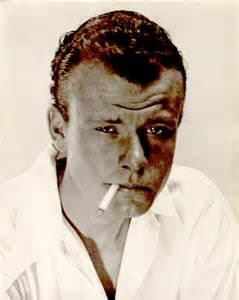
Harry Hay
1912 -

HARRY HAY, founder of the Mattachine Society and the Radical Faeries, was born (d: 2002); Although Harry Hay claimed 'never to have even heard of the earlier Gay liberation struggle in Germany- by the people around Adolf Brand, Magnus Hirschfeld and Leontine Sagan - he is known to have talked about it with European emigrés in America including Mattachine co-founder Rudi Gernreich. (However, Gernreich arrived in America at age 14, and Hay had already written his Gay manifesto when they met).

Hay, along with Roger Barlow and LeRoy Robbins directed a short film Even As You and I (1937) featuring Hay, Barlow, and filmmaker Hy Hirsch. A married man (beard/wife Anita Platky) and a member of the Communist Party USA, Hay composed the first manifesto of the American Gay rights movement in 1948, writing:

We, the Androgynes of the world, have formed this responsible corporate body to demonstrate by our efforts that our physiological and psychological handicaps need be no deterrent in integrating 10 percent of the world's population towards the constructive social progress of mankind.

He soon dispensed with the apologetic language and ideas. Though it may seem very dated today, the group was very radical compared to the rest of society at the time of its beginnings. It and Hay were among the first to advance the argument that Gay people represented a "cultural minority" as well as being just individuals, and even called for public marches of homosexuals, predicting later Gay pride parades. Hay's concept of the "cultural minority" came directly from his Marxist studies, and the rhetoric he and his colleague Charles Rowland employed often reflected the militancy of Communist tradition. As the Mattachine Society grew with chapters around the country, the organization saw the Communist ties of its founders, including Hay, as a threat during that McCarthy-ite witch-hunt era, and expelled them from leadership. The organization took a more cautious tack so that by the time of the Stonewall riots the Mattachine Society came to be seen by many as stodgy and assimilationist.

The Communist Party did not allow gay people to be members, claiming that homosexuality was a 'deviation'; perhaps more important was the fear that a member's (usually secret) homosexuality would leave them open to blackmail and was a security risk in an era of red-baiting. Concerned to save the party difficulties, as he put more energy into the Mattachine Society, Hay himself approached the CP's leaders and recommended his own expulsion. However, after much soul-searching, the CP, clearly reeling at the loss of a respected member and theoretician of 18 years standing, refused to expel Hay, instead dropping him as a 'security risk' but ostentatiously announcing him to be a 'Lifelong Friend of the People'.

Hay later became an outspoken critic of Gay assimilationism and went on to help found both Jesse Jackson's Rainbow Coalition and the gay men's group the Radical Faeries, as well as being active in the Native American movements.

"We pulled ugly green frog skin of heterosexual conformity over us, and that's how we got through school with a full set of teeth," Hay once explained. "We know how to live through their eyes. We can always play their games, but are we denying ourselves by doing this? If you're going to carry the skin of conformity over you, you are going to suppress the beautiful prince or princess within you."

In the early 1980s Hay protested the exclusion of the North American Man/Boy Love Association from participation in the LGBT movement. Though he was never a member of NAMBLA, he gave a number of speeches at its meetings, and in 1986 he marched in the Los Angeles Pride Parade, from which the organization had been banned, with a sign reading "NAMBLA walks with me."

In 1963, at age 51, he met inventor John Burnside, who became his life partner. They lived first in Los Angeles, and later in a Pueblo Indian reserve in New Mexico. After returning to Los Angeles to organize the Radical Faerie movement with Don Kilhefner, the couple moved San Francisco, where Hay died of lung cancer at age 90. Hay was the subject of the 2002 documentary by Eric Slade, "Hope Along The Wind: The Life of Harry Hay" (2002).

John Burnside III
2017 -

TODAY'S GAY WISDOM

From White Crane Issue #47 “The Word

Who Are The Gay People?

By John Burnside

Part II

What are they like, these Gay people?

Well, the ones I know best are at ease with themselves and with others. They are merry and loving, gentle and open. They are not dogmatic, judgmental, domineering, argumentative nor manipulating, nor do they respond to others who may try to engage them at such levels. They are laughing people, and equally ready with tears. They are very bright and witty, and they love good talk. In talk they place no restrictions on the range of their voices, love to giggle, will scream with astonishment and pretend dismay or swoon with mock embarrassment, and they are constantly acting out and giving wicked impersonations. I have never heard small talk among them, and they are always ready for intensely serious discourse. They love digression and are masters at it, almost never failing to return to the main concern. They love theater, and they are marvelously responsive audiences. They find delight in being alive and have a tremendous capacity for enjoyment.

They are great creators of fantasy, yet they strive always to be rooted thoroughly in reality. Life to them is for love and for play. They love non-possessively, with full regard for the whole being of another. They are ruled by their hearts as by their minds, and their first response to those they encounter is compassionate. Play means in Gay consciousness living every moment at its highest potential. For them the play of feeling and imagination is primary in all things, but a main thrust of their gift for creativity is expressed in what they call their projects. A project is something that one has dreamed up and has launched on its way to being realized. Most Gay people have several projects, with some on the back burner and one or more at any given time getting close attention.

These traits and qualities that Gay people show may well be those qualities of human nature that all people have if they are not deeply identified with and constrained in roles. Roles channel the energy of impulse into rigid preformed pathways. People are drawn into roles to gain power, possessions, and predominance, where they spend their lives in struggling over these with one another. As outcasts, Gays have the opportunity to learn that beyond basic necessities possessions are burdensome and dominance is only a puffing of ego. If a Faerie values money it is because money is useful to pay rent and fund projects. Power to control others is odious to him, and showing off would be a tedious waste of time. He dislikes and avoids rivalry and competition and is as disdainful of authority and rank in others as he is to letting himself be blindly followed. Renouncing these "rewards" means that the Gays have no hidden intent in relating to others; they can be trusted. As they decline to compete, they are no threat. Yet their many gifts make them valued counselors to the powerful. This is why Gay people so often walk where angels fear to tread!

A Faerie likes best to be among other Faeries, but every Faerie I know has a group of people who are not Gay with whom he shares an unbreakable bond. These are people of integrity and spirit whom he values and supports as they do him. A Faerie relates to others subject to subject so far as the others will meet him there. With children, animals, trees, and living things generally Faeries feel a close affinity. Faeries are most at home in a natural setting and they draw strength from nature.

The spirit of the Gay people is very evident in these times when, because of AIDS, death walks among us with terrible insistence and asks his awful question, asks who you really are. If I am he who built up a pile of power, ego, wealth, and status, I know death will take it all, but if I have made myself of things eternal like beauty and love, truth and laughter, the best part of me will never die. The famous AIDS quilt is surely one of the most moving and spontaneous creations of a people ever seen. Each cell of the quilt emits a light deriving from the singular beauty and indomitable spirit of one person, and the conjoining of seemingly infinitely many of these creates a field of surpassing beauty that glows of the tough yet tender love that makes of all Gay people one. The quilt celebrates the bursting through vast sadness of a light that death has been unable to smother. It affirms the great purpose that informed those individual lives and that will always be carried through, no matter what the pain, by Gay people: to be real, to be loving, and to reach for the best. the most joyous, and the deepest levels of experience that life can offer.


|8|O|8|O|8|O|8|O|8|O|8|O|8|O|8|

Gay Wisdom for Daily Living from White Crane Institute

"With the increasing commodification of gay news, views, and culture by powerful corporate interests, having a strong independent voice in our community is all the more important. White Crane is one of the last brave standouts in this bland new world... a triumph over the looming mediocrity of the mainstream Gay world." - Mark Thompson

Exploring Gay Wisdom & Culture since 1989!
www.whitecraneinstitute.org

|8|O|8|O|8|O|8|O|8|O|8|O|8|O|8|