Sunday, April 27, 2025

Via Daily Dharma: Happiness Without Conditions


Browse our online courses »
Happiness Without Conditions

Our fragile happiness depends on things happening a certain way. But there is something else: a happiness not dependent on conditions. The Buddha taught the way to find this perfect happiness.

Bhante Henepola Gunaratana, “Getting Started”


CLICK HERE TO READ THE ARTICLE
Classroom Mindfulness Put to the Test
By Emma Varvaloucas
Is mindfulness causing children more harm than good? 
Read more »

Women of Tibet: A Quiet Revolution
Directed by Rosemary Rawcliffe
On March 12, 1959, 15,000 unarmed Tibetan women took to the streets of Lhasa to oppose the violent occupation of their country by the Communist Chinese army. For the first time on film, three generations of Tibetan women and His Holiness the 14th Dalai Lama tell the story of one of the great movements of nonviolent resistance in modern history.
Watch now »

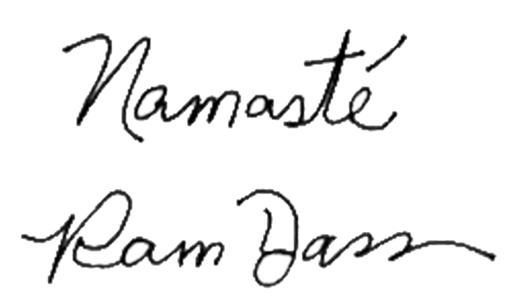
Via Ram Dass - Love Serve Remember Foundation \\ Words of Wisdom - April 27, 2025 💠


As I have gone from identity with ego to identity with soul or witness, I have found a space and a way in relation to the mystery of the universe that allows me to be with the suffering that lives on this plane, mine and others, in a way that doesn’t overwhelm me. I’m not overwhelmed by my impotence to take it all away and I don’t have to look away from it, and I deal with it as it arises.
 
- Ram Dass


Via FB


Saturday, April 26, 2025

Via White Crane Institute \\ LUDWIG WITTGENSTEIN


White Crane InstituteExploring Gay Wisdom & Culture since 1989
 
This Day in Gay History

April 26


LUDWIG WITTGENSTEIN, Austrian-born philosopher (d. 1951); an Austrian philosopher who worked primarily in the foundations of logic, the philosophy of mathematics, the philosophy of mind and the philosophy of language. His influence has been wide-ranging and he is generally regarded as one of the 20th century's most important philosophers.

Before his death at the age of 62, the only book-length work Wittgenstein had published was the Tractatus Logico-Philisophicus,["Philosophical Investigations"], which Wittgenstein worked on in his later years, was published shortly after he died. Both of these works are regarded as highly influential in analytic philosophy.

Ludwig Wittgenstein seems to have been uncomfortable with his sexuality. Certainly, he was very secretive about his sexual interests and activities. His secretiveness is not altogether surprising, considering the fact that homosexuality was illegal in Austria and Britain during his lifetime. Therefore, details of his emotional and sexual life are sparse.

William W. Bartley first broached the subject of Wittgenstein's homosexuality in his 1973 biography and received considerable censure and disapproval from the philosophy establishment. Apparently, in his student days in Vienna, Wittgenstein occasionally cruised the Prater, a large public park, where he met rough trade youths; he seems to have continued this activity later in England. However, Wittgenstein is also believed to have had long-term affairs with men of his own class, such as the philosopher Frank Ramsey and the architect Francis Skinner.


|8|O|8|O|8|O|8|O|8|O|8|O|8|O|8|

Gay Wisdom for Daily Living from White Crane Institute

"With the increasing commodification of gay news, views, and culture by powerful corporate interests, having a strong independent voice in our community is all the more important. White Crane is one of the last brave standouts in this bland new world... a triumph over the looming mediocrity of the mainstream Gay world." - Mark Thompson

Exploring Gay Wisdom & Culture since 1989!
www.whitecraneinstitute.org

|8|O|8|O|8|O|8|O|8|O|8|O|8|O|8|

Pete Buttigieg on Trump Tariffs, Taxing Billionaires, and Republican Gays

Via LGBTQ Nation \\ Pete Buttigieg just sold a MAGA bro on his vision for America


Via LGBTQ Nation \\ Anti-LGBTQ+ GOP legislator says gay marriage must be overturned because “God”


Via Dhamma Wheel | Right Effort: Abandoning Arisen Unhealthy States


TRICYCLE      COURSE CATALOG      SUPPORT      DONATE
RIGHT EFFORT
Abandoning Arisen Unhealthy States
Whatever a person frequently thinks about and ponders, that will become the inclination of their mind. If one frequently thinks about and ponders unhealthy states, one has abandoned healthy states to cultivate unhealthy states, and then one’s mind inclines to unhealthy states. (MN 19)

Here a person rouses the will, makes an effort, stirs up energy, exerts the mind, and strives to abandon arisen unhealthy mental states. One abandons all five arisen hindrances. (MN 141)
Reflection
Having worked through all five hindrances one at a time, we now focus on treating sense desire, ill will, restlessness, sluggishness, and doubt as a group. These are the five kinds of mental states that obstruct the ability of the mind to gather strength and become unified. Unhealthy states breed more unhealthy states, and it is helpful to abandon, not suppress or resist, them when you notice them arising in your experience.
Daily Practice
Become familiar with these unhealthy states and notice them at any point during your day when they come up—which is bound to be often. Just notice them one by one, recognize each as being not helpful, and let it go. That’s all. Gently guide your mind away from states that obstruct the mind toward states that are free of these obstacles. You will come to know your own mind better, and the practice will become easier to do.
Tomorrow: Establishing Mindfulness of Feeling and the Second Jhāna
One week from today: Developing Unarisen Healthy States

Share your thoughts and join the conversation on social media
#DhammaWheel

Questions?
 Visit the Dhamma Wheel orientation page.
Tricycle is a nonprofit and relies on your support to keep its wheels turning.
© 2025 Tricycle Foundation
89 5th Ave, New York, NY 10003

Via Daily Dharma: Practice in the Body


Browse our online courses »
Practice in the Body

We already have everything we need to get our practice out of our head and into our body, simply by being in the body that we’re in, as it is, in this one moment.

Sensei Dhara Kowal, “This Very Body”


CLICK HERE TO READ THE ARTICLE

‘Architectures of Emptiness’
By Arthur Sze
Arthur Sze’s twelfth book of poetry dances between silence and sound and asks how we can live fully in the face of catastrophe.
Read more »

Women of Tibet: A Quiet Revolution
Directed by Rosemary Rawcliffe
On March 12, 1959, 15,000 unarmed Tibetan women took to the streets of Lhasa to oppose the violent occupation of their country by the Communist Chinese army. For the first time on film, three generations of Tibetan women and His Holiness the 14th Dalai Lama tell the story of one of the great movements of nonviolent resistance in modern history.
Watch now »

Via FB


Via FB


Via FB


Via FB


Via FB


Friday, April 25, 2025

Via Dhamma Wheel | Right Living: Abstaining from Taking What is Not Given


TRICYCLE      COURSE CATALOG      SUPPORT      DONATE
RIGHT LIVING
Undertaking the Commitment to Abstain from Taking What is Not Given
Taking what is not given is unhealthy. Refraining from taking what is not given is healthy. (MN 9) Abandoning the taking of what is not given, one abstains from taking what is not given; one does not take by way of theft the wealth and property of others. (MN 41) One practices thus: “Others may take what is not given, but I will abstain from taking what is not given.” (MN 8)

One is to practice thus: “Here, regarding things cognized by you, in the cognized there will be just the cognized.“ When, firmly mindful, one cognizes a mental object, one is not inflamed by lust for mental objects; one experiences it with a dispassionate mind and does not remain holding it tightly. (SN 35.95)
Reflection
Five of our sense doors open onto the world, while the sixth, the mind door, opens inwardly to draw on sensory experience and mental objects such as memories, imagination, and thoughts. The mental objects are cognized, or known to us, one after another in a stream of consciousness. Here we are encouraged to encounter our thoughts without elaboration, as phenomena arising and passing away.
Daily Practice
See if you can regard your mental activity—the thoughts and images and words passing through the mind—with equanimity. That is, observe them closely but without becoming entangled in their content and without favoring some and opposing others. Thoughts are merely objects that, like sights and sounds and physical sensations, come and go based on various conditions. See if you can abide without “holding them tightly.”
Tomorrow: Abandoning Arisen Unhealthy States
One week from today: Abstaining from Misbehaving Among Sensual Pleasures

Share your thoughts and join the conversation on social media
#DhammaWheel

Questions?
 Visit the Dhamma Wheel orientation page.
Tricycle is a nonprofit and relies on your support to keep its wheels turning.
© 2025 Tricycle Foundation
89 5th Ave, New York, NY 10003