A personal blog by a graying (mostly Anglo with light African-American roots) gay left leaning liberal progressive married college-educated Buddhist Baha'i BBC/NPR-listening Professor Emeritus now following the Dharma in Minas Gerais, Brasil.
Calming and stilling are the willingness to commit to just being wholeheartedly present in one moment at a time, to commit to one breath, to commit to the sense of our feet touching the ground. To know this, we begin to train the mind.
In an essay from The Buddhist Years: Collected Writings by Jack Kerouac, a new collection of previously unpublished writings, the Dharma Bums author recalls his own introduction to the dharma and realizations about suffering.
Whatever you intend, whatever you plan, and whatever you have a tendency toward, that will become the basis upon which your mind is established. (SN 12.40) Develop meditation on appreciative joy, for when you develop meditation on appreciative joy, any discontent will be abandoned. (MN 62)
The near enemy of appreciative joy is ordinary joy. (Vm 9.100)
Reflection
The “sublime state” of appreciative joy does not simply mean joy as a pleasant mental feeling or the emotion of uplifted joy. It is not just feeling good but feeling good in a particular set of circumstances—when you observe or contemplate good things happening to others. Ordinary joy is self-referential, while appreciative joy is more universal and focused on the good fortune of others.
Daily Practice
Learn to discern the different ways joy can manifest in your experience. In particular, see if you can get a good felt sense of what the special quality of appreciative joy feels like. This is the emotion of feeling good about good things happening to other people. Practice calling to mind the goodness of others, and then settle into the emotion of wishing them well and appreciating their success in a way that is not about you.
Tomorrow: Refraining from Harsh Speech One week from today: Cultivating Equanimity
Share your thoughts and join the conversation on social media #DhammaWheel
In the overall context of the spiritual journey, it is important to remember that self-transformation is a continuous process, not a one-time event. One cannot say, “I used to be a nonspiritual person, but now I have been transformed into a spiritual person. My old self is dead.” We are constantly being transformed when we travel on the path.
Traleg Kyabgon Rinpoche, “Letting Go of Spiritual Experience”
RIGHT VIEW Understanding the Noble Truth of the Cessation of Suffering
What is the cessation of suffering? It is the remainderless fading away and ceasing, the giving up, relinquishing, letting go, and rejecting of craving. (MN 9)
When one knows and sees perception as it actually is, then one is not attached to perception. When one abides unattached, one is not infatuated, and one’s craving is abandoned. One’s bodily and mental troubles are abandoned, and one experiences bodily and mental well-being. (MN 149)
Reflection
Last week the emphasis was on how not knowing and seeing perception accurately can lead to attachment and the difficulties that it brings. Here the focus instead is on the benefits of understanding perception appropriately. Perception, the mental function of interpreting sensory data, is a natural and useful thing for the mind to do. In fact, it is a great ally helping us bring insight and understanding to the world of our experience.
Daily Practice
Practice making the step from mindfulness to insight. That is, when you are mindful of the sensations of the breath, for example, go on to notice that they are constantly changing and that it is the characteristic of all sensations to be impermanent and in flux. When observing the thoughts flowing through the mind, recognize they do not belong to anybody, but are interdependently arisen. This is perception facilitating right view.
Tomorrow: Cultivating Appreciative Joy One week from today: Understanding the Noble Truth of the Way to the Cessation of Suffering
Share your thoughts and join the conversation on social media #DhammaWheel
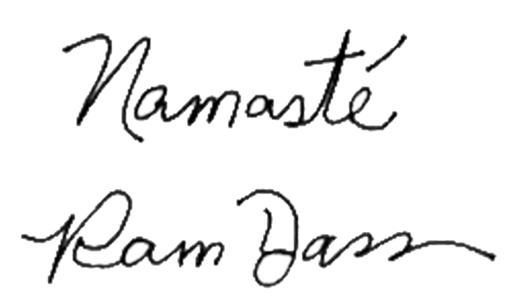
Maharaji said to me, "Ram Dass, love everybody." And I said, "I can't do it." And then he said again, love everybody, but then I realized it had to do with the soul, and not the ego, because the ego judges, but the soul loves everybody because everybody is a soul and a soul loves another soul. It's not that the small, limited, ego "I" loves you, but it's unconditional love, it comes from the ocean of infinite love.
We depend on change in order to live, so just acquaint yourself with the fact that it’s all inconstant. Pleasure isn’t for sure; pain isn’t for sure; happiness isn’t for sure; stillness isn’t for sure; distraction isn’t for sure. Whatever arises, you should tell it: “Don’t try to fool me. You’re not for sure.”
Ajaan Chah, “Make Your Practice a Continuous Stream”