
Thursday, September 18, 2025


Via Daily Dharma: Question Your Thoughts
| ||||||||
| ||||||||
|




Via Dhamma Wheel | Right Action: Reflecting upon Mental Action
| |||||||||||||||
| |||||||||||||||
| |||||||||||||||
| |||||||||||||||
|

Via White Crane Institute \\ MARCUS LEATHERDALE
| |||
| This Day in Gay History | |||
September 18 | |||


1952 -
MARCUS LEATHERDALE was a Canadian photographer born on this date (d: 2022); Leatherdale started his career in New York City during the early eighties.
Leatherdale first served as Robert Mapplethorpe's office manager for a while and was photographed in the nude by the master, grabbing a rope with his right hand and holding a rabbit in his left.
Thereafter he worked as an assistant curator to Sam Wagstaff. He soon became a darling of the then vibrant club scene and the fashionable media: Interview, Details, The New Yorker, Vanity Fair and Elle Decor presented his work. Later on he was featured in artsy publications as Artforum, Art News and Art in America. He documented the New York life style, the extraordinary people of Danceteria and Club 57 where he staged his first exhibits in 1980. Leatherdale was an acute observer of New York in the eighties. His models were the unknown but exceptional ones – like Larissa, Claudia Summers or Ruby Zebra – or well known artists – like Madonna, Winston Tong and Divine, Trisha Brown, Lisa Lyon, Andrée Putman, Kathy Acker, Jodie Foster and fellow photographer John Dugdale. For quite a while Leatherdale remained in Mapplethorpe's shadow, but was soon discovered as a creative force in his own right by Christian Michelides, the founder of Molotov Art Gallery in Vienna. Leatherdale flew to Vienna, presented his work there and was acclaimed by public and press.
This international recognition paved his way to museums and permanent collections such as the Rheinisches Landesmuseum Bonn, the Art Institute of Chicago, the Australian National Gallery in Canberra, the London Museum in Ontario and Austria's Albertina. Above all, his arresting portraits of New York City celebrities in the series Hidden Identities aroused long-lasting interest amongst curators and collectors.
In 1993, Leatherdale began spending half of each year in India's holy city of Banaras. Based in an ancient house in the centre of the old city, he began photographing the diverse and remarkable people there, from the holy men to celebrities, from royalty to tribals, carefully negotiating his way among some of India's most elusive figures to make his portraits. From the outset, his intention was to pay homage to the timeless spirit of India through a highly specific portrayal of its individuals. His pictures include princesses and boatmen, movie stars and circus performers, street beggars and bishops, mothers and children in traditional garb. Leatherdale explored how essentially unaffected much of the country has been by the passage of time; this approach is distinctly post-colonial. In 1999, Leatherdale relocated to Chottanagpur (Jharkhand) where he had been focusing on the Adivasis. His second home base was Serra da Estrela in the mountains of central Portugal.
The Medical Care Team in Chottanagpur was created by Amit and Ilona Ghosh, Nilika Lal, Marcus Leatherdale and Jorge Serio in 2002; it is a private service to help the local people medically and financially. As many people in India suffer needlessly due to misfortune and ignorance, the project helps to salvage lives which have been devastated by accidents or illness. By connecting patients with the appropriate doctors and proper facilities, the project helps get people back on their feet and regain their lost dignity.
Via The Tricycle Community \\ Three Teachings on Seizing the Moment
| ||||||||||||||||||||||||||
|

Wednesday, September 17, 2025


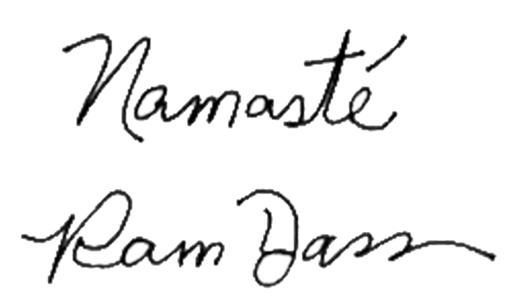
Via Ram Dass - Love Serve Remember Foundation \\\ Words of Wisdom - September 17, 2025 💠
| ||||||
|

Via White Crane Institute \\ RANDY P. CONNER, Ph.D.
| |||
| This Day in Gay History | |||
September 17 | |||
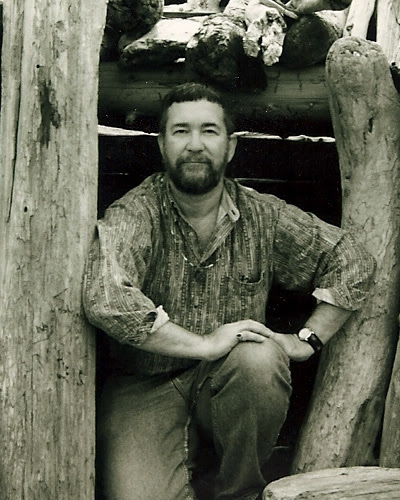 1952 - RANDY P. CONNER, Ph.D., born on this date (d: 2022), was a gay spiritual seeker, activist, author, artist, and teacher. Conner received his B.A. and M.A. degrees in English literature/composition from the University of Texas at Austin. In the 1970s he taught the first gay and lesbian workshop at the Student Union there. His studies concentrated on the intersections of ethnicity, gender, sexuality, and pursuit of the sacred. Conner received his doctorate in humanities and religion in 2007 from the California Institute of Integral Studies in San Francisco. He taught at several colleges including Florida State University, the University of Texas at Austin, and the California Institute of Integral Studies. He was most recently Associate Professor of World Humanities at Moraine Valley Community College near Chicago where he created a successful state- and college-approved LGBTQ+ humanities course. Conner’s spiritual path was focused on LGBTQ+ spirit in history and culture, especially as related to European Neo-Pagan, Indigenous Native American and African Diasporic traditions. He was an initiate and practitioner of both Haitian Vodou and Reglade Ocho (Santeria), studying primarily with Mama Lola, a well-known practitioner of these African Diasporic traditions. He received his “Elekes” (spiritual beads for the orishas/deities) as a Santero in Cuba, later earning the title of Oungan. Also a practitioner of Neopaganism and Wicca, he studied metaphysics and psychic arts with Tama Diaghilev, and Wicca/Witchcraft with ecofeminist leader Starhawk. Conner also studied Tarot and mystical symbology with spiritual teacher and scholar Angeles Arrien. He became a Radical Faery in the 1980s and attended many gatherings over the years. As an activist for LGBTQ+ rights, Conner testified in the mid-1970s at the Texas State Legislature for inclusion of gay and lesbian student organizations on campuses for which he was fired from his graduate teaching position. After moving to the Bay Area in 1978, he became a member of Bay Area Gay Liberation, campaigned against the Proposition 6 Briggs initiative, and for social/political justice for the queer and people of color communities. He also co-curated with his husband, David Hatfield Sparks, the El Mundo Surdo poetry series at Small Press Traffic in Noe Valley, created by Gloria Anzaldúa, his "hermana espiritual," and participated in Mainstream Exiles organized by San Francisco trans-activist Tede Mathews. Conner was a contributor to several LGBTQ+ publications including the Advocate, the old San Francisco Sentinel and White Crane Journal. He also served as fiction editor for RFD magazine and taught a course in gay spirit at the Harvey Milk Institute in the mid-1990s. Among his many essays, articles, books, speeches, presentations, and other publications, several were nominated for Lambda Literary Awards, including the seminal Blossom of Bone: Reclaiming Connections between Homoeroticism and the Sacred (Harper San Francisco 1993); the Encyclopedia of Queer Myth, Symbol and Spirit (Cassell 1997) and Queering Creole Spiritual Traditions: Lesbian, Gay, Bisexual and Transgender Participation in African-Inspired Traditions in the Americas (Routledge 2004). In 2019, Conner published his five-volume study, The Pagan Heart of the West: Embodying Ancient Beliefs and Practices from Antiquity to Present (Oxford). An expanded, revised edition of the Encyclopedia, re-titled The LGBTQ+ Companion to Symbol, Mythology, Folklore, and Spirituality, is forthcoming from Equinox Publications (London). These many interests and projects he shared with his long-time companion/husband of forty-three years, David Hatfield Sparks. Conner went to ride with Charon to the Otherworld on May 5, 2022. He is also survived by their daughter Mariah. | ||
|8|O|8|O|8|O|8|O|8|O|8|O|8|O|8 Gay Wisdom for Daily Living from White Crane Institute "With the increasing commodification of gay news, views, and culture by powerful corporate interests, having a strong independent voice in our community is all the more important. White Crane is one of the last brave standouts in this bland new world... a triumph over the looming mediocrity of the mainstream Gay world." - Mark Thompson Exploring Gay Wisdom & Culture since 1989! |8|O|8|O|8|O|8|O|8|O|8|O|8|O|8 |
Via Daily Dharma: The End of Clinging
| ||||||||||
| ||||||||||
|


Subscribe to:
Posts (Atom)