Sunday, April 6, 2025

Via Dhamma Wheel | Right Mindfulness and Concentration: Establishing Mindfulness of Mind and the Third Jhāna


TRICYCLE      COURSE CATALOG      SUPPORT      DONATE

RIGHT MINDFULNESS
Establishing Mindfulness of Mind
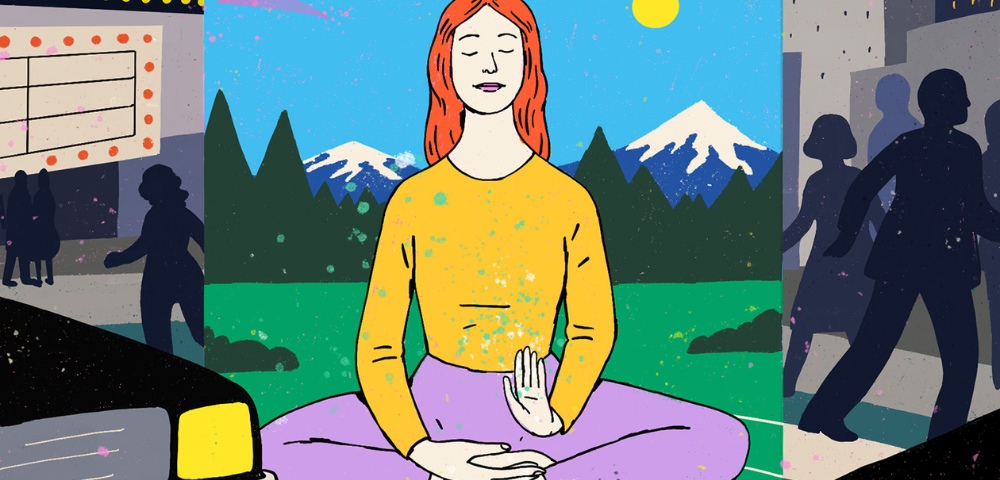
A person goes to the forest or to the root of a tree or to an empty place and sits down. Having crossed the legs, one sets the body erect. One establishes the presence of mindfulness. (MN 10) One is aware: “Ardent, fully aware, mindful, I am content.” (SN 47.10)
 
When the mind is beset by confusion, one is aware “the mind is beset by confusion”… One is just aware, just mindful: “There is mind.” And one abides not clinging to anything in the world. (MN 10)
Reflection
Not all practice sessions are filled with bliss. In fact, they are not meant to be. The idea is to be fully aware of whatever is happening in your experience, whether it is calm and peaceful or full of confusion. A rush of random states can still be observed one at a time. You can even feel content amidst confusion, as long as you abide without clinging to anything.

Daily Practice
When your mind is beset by confusion, just be aware that this is what is happening right now. You don’t have to feel like you are doing something wrong or try to change it. Just pay very close attention and follow along with the jumble of thoughts and emotions with as much equanimity as possible. You can actually be quite attentive to a stream of consciousness that is on a roller-coaster ride, if you don’t judge it and just examine it.


RIGHT CONCENTRATION
Approaching and Abiding in the Third Phase of Absorption (3rd Jhāna)
With the fading away of joy, one abides in equanimity; mindful and fully aware, still feeling pleasure with the body, one enters upon and abides in the third phase of absorption, on account of which noble ones announce: “One has a pleasant abiding who has equanimity and is mindful.” (MN 4)
Reflection
Some people move easily and naturally through the stages of absorption, but many people do not. This is not something to be forced if it does not come on its own, and we should never judge our progress against the schema of four jhānas. As we can see, mindfulness and concentration each involve the other, so at a certain point it becomes unnecessary and unhelpful to compare the two and distinguish two different practices.

Daily Practice
As you settle into the pleasant feeling tones of the second level of absorption, the pleasure gradually subsides and resolves into a state of equanimity or even-mindedness. The body still feels tranquil and at ease, but the mind becomes more balanced as it becomes more mindful and fully aware. Simply rest at ease, doing nothing and striving for nothing, and let the mind settle naturally.


Tomorrow: Understanding the Noble Truth of the Way to the Cessation of Suffering
One week from today:  Establishing Mindfulness of Mental Objects and Abiding in the Fourth Jhāna


Share your thoughts and join the conversation on social media
#DhammaWheel

Questions?
 Visit the Dhamma Wheel orientation page.


Tricycle is a nonprofit and relies on your support to keep its wheels turning.

© 2025 Tricycle Foundation
89 5th Ave, New York, NY 10003

Via Daily Dharma: Winter Always Turns to Spring


Browse our online courses »
Winter Always Turns to Spring

The winters of your life are very important, and how you live your winters, or how you develop yourself and hone your inherent potential during those winters, is how beautifully the cherry blossoms of your life will blossom.

Nakuul Mehta, “Nakuul Mehta’s Human Revolution”


CLICK HERE TO READ THE ARTICLE

The Eight Qualities of a Great Person
By Eihei Dogen Zenji
What makes a truly great person? According to Zen master Eihei Dogen, eight essential qualities lead to awakening—starting with having few desires and knowing when you have enough.
Read more »


White Crane InstituteExploring Gay Wisdom & Culture since 1989
 

This Day in Gay History

April 06


Photo credit: Mark Thompson
1931 -

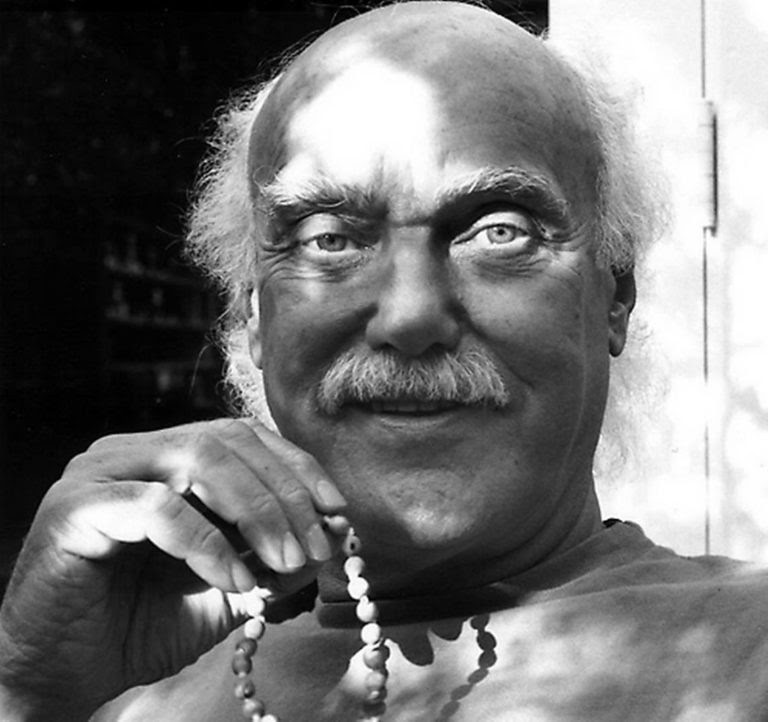
RAM DASS (ne Richard Alpert), born on this date (d: 2019); also known as Baba Ram Dass, Ram Dass was an American spiritual teacher, guru of modern yoga, psychologist, and writer. His best-selling 1971 book Be Here Now, which has been described by multiple reviewers as "seminal", helped popularize Eastern spirituality and yoga in the West. He authored or co-authored twelve more books on spirituality over the next four decades, including Grist for the Mill (1977), How Can I Help? (1985), and Polishing the Mirror (2013).

Ram Dass was personally and professionally associated with Timothy Leary at Harvard University in the early 1960s. Then known as Richard Alpert, he conducted research with Leary on the therapeutic effects of psychedelic drugs. In addition, Alpert assisted Harvard Divinity School graduate student Walter Pahnke in his 1962 "Good Friday Experiment" with theology students, the first controlled, double-blind study of drugs and the mystical experience. While not illegal at the time, their research was controversial and led to Leary's and Alpert's dismissal from Harvard in 1963.

In 1967, Alpert traveled to India and became a disciple of Hindu guru Neem Karoli Baba who gave him the name Ram Dass, meaning "Servant of Ram," but usually rendered as simply "Servant of God" for western audiences. In the coming years, he founded the charitable organizations Seva Foundation and Hanuman Foundation. He traveled extensively giving talks and retreats and holding fundraisers for charitable causes in the 1970s, 80s, and 90s. In 1997, he had a stroke which left him with paralysis and expressive aphasia. He eventually grew to interpret this event as an act of grace, learning to speak again and continuing to teach and write books. After becoming seriously ill during a trip to India in 2004, he gave up traveling and moved to Maui, Hawaii, where he hosted annual retreats with other spiritual teachers until his death in 2019.

The Hanuman Foundation strives to improve the spiritual well-being of society through education, media and community service programs. He co-founded the Seva Foundation by joining with health-care workers to treat the blind in India, Nepal, and developing countries. Co-founded in 1978 with public health leader Larry Brilliant and humanitarian activist Wavy Gravy, it has become an international health organization.

In the early 1970s, Ram Dass taught workshops on conscious aging and dying around the United States. Elisabeth Kübler-Ross was one of his students. Ram Dass helped create the Dying Project with its Executive Director Dale Borglum, whom he had met in India. At the time, Borglum was also executive director of the Hanuman Foundation. The Living/Dying Project, based in Marin, California, starting in 1986, was initially named the Dying Center and located in Santa Fe, New Mexico. The Dying Center was the first residential facility in the U.S. where people came to die "consciously".

The Love Serve Remember Foundation was organized to preserve and continue the teachings of Neem Karoli Baba and Ram Dass. Ram Dass also served on the faculty of the Metta Institute where he provided training on mindful and compassionate care of the dying.

Over the course of his life since the inception of his Hanuman Foundation, Ram Dass gave all of his book royalties and profits from teaching to his foundation and other charitable causes. The estimated amount of earnings he gave away annually ranges from $100,000 to $800,000.

In the 1990s, Ram Dass discussed his bisexuality. He stated, "I've started to talk more about being bisexual, being involved with men as well as women," and added his opinion that who gay people are "isn't gay, and it's not not-gay, and it's not anything—it's just awareness."

At 78, Ram Dass learned that he had fathered a son as a 24-year-old at Stanford during a brief relationship with history major Karen Saum, and that he was now a grandfather. The fact came to light when his son, Peter Reichard, a 53-year-old banker in North Carolina, took a DNA test after learning about his mother's doubt concerning his parentage.

In 2013, Ram Dass released a memoir and summary of his teaching, Polishing the Mirror: How to Live from Your Spiritual Heart. In an interview about the book, at age 82, he said that his earlier reflections about facing old age and death now seem naive to him. He said, in part: "Now, I'm in my 80s ... Now, I am aging. I am approaching death. I'm getting closer to the end. ... Now, I really am ready to face the music all around me."

He died on December 22, 2019, at the age of 88.


|8|O|8|O|8|O|8|O|8|O|8|O|8|O|8|

Gay Wisdom for Daily Living from White Crane Institute

"With the increasing commodification of gay news, views, and culture by powerful corporate interests, having a strong independent voice in our community is all the more important. White Crane is one of the last brave standouts in this bland new world... a triumph over the looming mediocrity of the mainstream Gay world." - Mark Thompson

Exploring Gay Wisdom & Culture since 1989!
www.whitecraneinstitute.org

|8|O|8|O|8|O|8|O|8|O|8|O|8|O|8|


Via Ram Dass - Love Serve Remember Foundation \\ Words of Wisdom - April 6, 2025 💠


"As I started to allow myself to be human more, just allowed what I am - things changed must faster in me. Things fell away more quickly. It was as if I was locked into a model which was based on that negativity, that dislike of myself. And once I just allowed that I am human with all the foibles, things started to flow and I could feel change occurring in myself.

And then I would start to experience my own beauty. And it frightened me, because it was so dissonant and discrepant from the model that I had cultivated of myself over the years - that I had to do good in order to be beautiful. And the idea that I just am… when you look at a tree or a rock or a river, it is in its own way beautiful. You look at decay and it is beautiful."
 
- Ram Dass

Via FB


Saturday, April 5, 2025

Via FB


Via FB


Via LGBTq Nation // The U.S. May Be Descending Into Fascism But SimNation Is Getting Even Gayer How do you say “I’m here, I’m queer, get used to it” in Simlish?


Via LGBTQ Nation Newsletter / A community's surprising response to a GOP book ban 📚


Via Bodhipaksa @ Wildmind // Eight Benefits of Consciously Connecting With Others


Can't see images? Click here...
wildmind


𑁍 Eight Benefits of Consciously Connecting With Others 𑁍

Dear friend of Wildmind.

Spiritual friendship is an important practice in the Buddhist tradition. To understand why, let's look — in purely secular terms — at eight benefits of supportive personal connections.

1. Friendships Help Shape Who You Become

The people you surround yourself with influence your habits, mindset, and values. Positive friendships encourage self-improvement, while toxic ones can drag you down.

Choose to be around people who embrace your most positive values.

2. Friends Reduce Loneliness and Foster Belonging

Isolation is as bad for your health as smoking! A supportive social circle is linked to greater happiness and longevity.

Connecting with others benefits both you and them.

3. Friends Keep You Accountable

Good friends gently steer you away from harmful behaviors, like self-sabotage, impulsiveness, or negativity, and toward better choices.

Choose to be around people who help you stay on track..

4. Friends Encourage You When You’re Struggling

Growth isn’t linear—everyone faces setbacks. True friends help you stay committed to your goals, even when motivation is low.

Choose to be around those who remind you of your strengths when you forget them.

5. Friends Model What’s Possible

Seeing friends model appreciation, resilience, kindness, and wisdom inspires you to embody those same qualities.

Choose to be with people who show you positive ways of behaving.

6. Friends Help You See Things In New Ways

Friends share their hard-won wisdom. And often they will open you up to surprising new ways of seeing things. 

Develop connections with people who model wisdom.

7. Friends Encourage Letting Go of What Doesn’t Serve You

Whether it’s unhealthy relationships, grudges, or materialism, good friends help you focus on what truly brings fulfillment.

Be with people who tell you what you need to hear, not just what you want to hear.

8. Friends Help You Grow Toward Your Best Self

The ultimate role of a true friend isn’t just to make you feel good temporarily—it’s to help you become wiser, kinder, and more resilient in the long term.

Choose to hang out with those who encourage the best in you.

Final Thought

You don’t have to be Buddhist to recognize that friendships can transform your life.

So I invite you to join the Wildmind community — a group that shares your aspirations to be your best self. Surrounding yourself with people who uplift and challenge you is one of the most powerful choices you can make.

With love and gratitude,
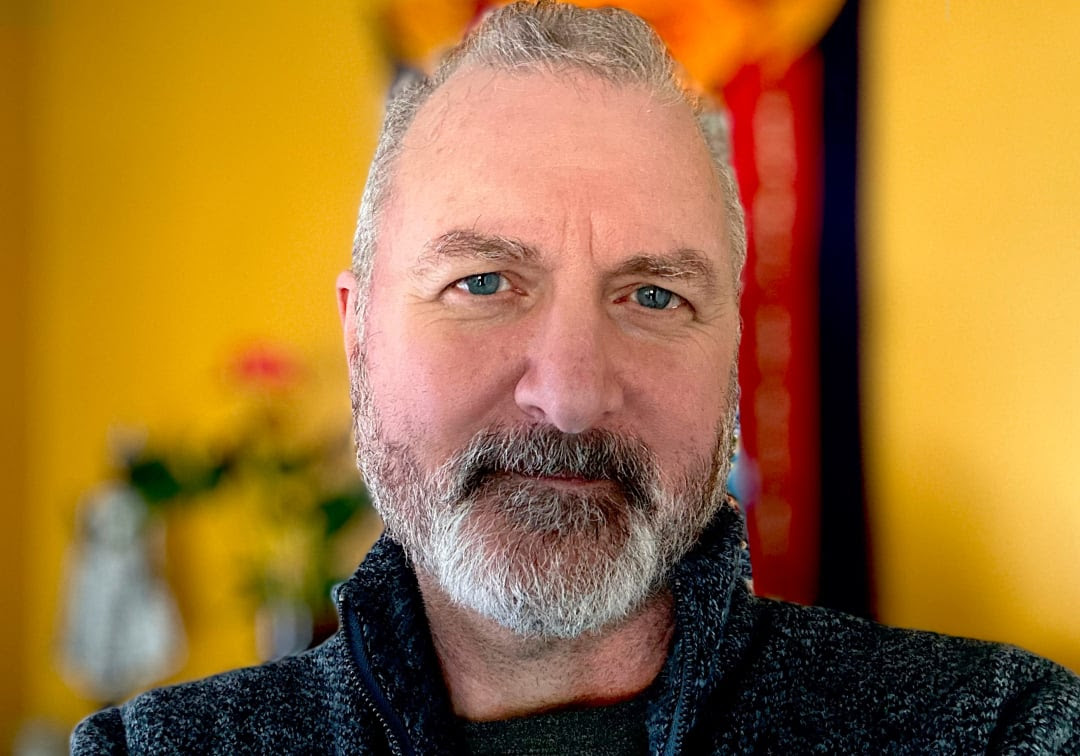
Bodhipaksa

👉 Click here to join Wildmind's Meditation Community


Via FB


Via The Economist // The secret life of the first millennial saint


White Crane Institute Exploring Gay Wisdom & Culture since 1989


Noteworthy
2000 -

CAKES DA KILLA (aka Rashard Bradshaw) is an American rap artist who fuses genres of hip hop, house, and electronic dance music. He came to prominence in the "queer explosion" of hip hop music stemming from New York in 2012 and is among the credited performers for the current trend of acceptance of LGBT people in the rap community. Bradshaw is currently based in Atlanta and his first full-length studio album Svengali was released in October  2022. We are unable to ascertain a precise date of birth, so he is included here.

Rashard Bradshaw started rapping in high school for fun before considering it as a career. He first began writing tracks to instrumentals he found on the internet and posting them to Facebook. In 2011, his homemade demos came to the attention of an executive producer named Stixx, who invited Bradshaw to appear on the mixtape Downtown Mayhem Vol. 1 alongside Rip The Ruler. Bradshaw then went on to release his own debut mixtape Easy Bake Oven, Vol. 1 through Stixx' Downtown Mayhem label.

As an emerging artist in the hip hop genre—along with fellow LGBT artists such as Le1f, Mykki Blanco, and House of Ladosha—Bradshaw gained popularity through media interest in LGBT figures and themes in hip hop and rap, having been written about in a Pitchfork article about said "movement". 

'I came outin the third grade. This is just me being me. People make it sound like it's controversial and revolutionary, and that's weird to me, because in hip-hop you have people glorifying negativity, like killing people and not taking care of your kids -- that should be scandalous. That should be what we talk about. And openly gay rapper shouldn't be breaking news. -- Bradshaw on being gay in hip hop


|8|O|8|O|8|O|8|O|8|O|8|O|8|O|8|

Gay Wisdom for Daily Living from White Crane Institute

"With the increasing commodification of gay news, views, and culture by powerful corporate interests, having a strong independent voice in our community is all the more important. White Crane is one of the last brave standouts in this bland new world... a triumph over the looming mediocrity of the mainstream Gay world." - Mark Thompson

Exploring Gay Wisdom & Culture since 1989!
www.whitecraneinstitute.org

|8|O|8|O|8|O|8|O|8|O|8|O|8|O|8|


Via Dhamma Wheel | Right Effort: Developing Unarisen Healthy States


TRICYCLE      COURSE CATALOG      SUPPORT      DONATE
RIGHT EFFORT
Developing Unarisen Healthy States
Whatever a person frequently thinks about and ponders, that will become the inclination of their mind. If one frequently thinks about and ponders healthy states, one has abandoned unhealthy states to cultivate healthy states, and then one’s mind inclines to healthy states. (MN 19)

Here a person rouses the will, makes an effort, stirs up energy, exerts the mind, and strives to develop the arising of unarisen healthy mental states. One develops the unarisen tranquility and concentration awakening factors. (MN 141)
Reflection
Sometimes healthy states of mind come up on their own, apparently spontaneously. Other times we have to make them happen. The word for “develop” in Pali (bhāvana) literally means “cause to be” or “make become” and so is very descriptive of the process. The more you experience healthy states, the more they develop, and the more the mind inclines toward what is helpful and skillful.

Daily Practice
Practice calling to mind thoughts that are likely to bring on healthy mental states. These might be thoughts of a loved one that evoke friendliness and lovingkindness. Or thinking about those in distress might bring about feelings of compassion and wanting to help. Among the best positive states to develop are peacefulness, or tranquility, and focusing the mind with concentration. The more you develop these states, the easier it gets.

Tomorrow: Establishing Mindfulness of Mind and Abiding in the Third Jhāna
One week from today: Maintaining Arisen Healthy States

Share your thoughts and join the conversation on social media
#DhammaWheel

Questions?
Visit the Dhamma Wheel orientation page.


Tricycle is a nonprofit and relies on your support to keep its wheels turning.

© 2025 Tricycle Foundation
89 5th Ave, New York, NY 10003