Monday, November 17, 2025

Via Dhamma Wheel | Right Mindfulness and Concentration: Establishing Mindfulness of Mind and the Third Jhāna


TRICYCLE      COURSE CATALOG      SUPPORT      DONATE
RIGHT MINDFULNESS
Establishing Mindfulness of Body
A person goes to the forest or to the root of a tree or to an empty place and sits down. Having crossed the legs, one sets the body erect. One establishes the presence of mindfulness. (MN 10) One is aware: “Ardent, fully aware, mindful, I am content.” (SN 47.10)
Reflection
The third foundation on which mindfulness is established, mindfulness of mind, involves noticing the impact of various emotions and attitudes on the mind. Consciousness simply reflects whatever object comes before it, but then we respond to the object with love or hate, wanting or not wanting, and all kinds of judgments favoring or opposing it. With mindfulness we are content with watching this as it occurs.
Daily Practice
After you gain skill in observing the bodily sensations that accompany breathing in and out and then bringing mindfulness to bear on pleasant and unpleasant feeling tones, next focus on the influence craving and aversion may or may not have on your mind in any given moment. When you like something, be aware of that. When you dislike something, be aware of that. This is the starting point of mindfulness of mind. 
RIGHT CONCENTRATION
Approaching and Abiding in the Third Phase of Absorption (3rd Jhāna)
With the fading away of joy, one abides in equanimity; mindful and fully aware, still feeling pleasure with the body, one enters upon and abides in the third phase of absorption, on account of which noble ones announce: “One has a pleasant abiding who has equanimity and is mindful.” (MN 4)
Tomorrow: Understanding the Noble Truth of the Way to the Cessation of Suffering
One week from today: Establishing Mindfulness of Mental Objects and Abiding in the Fourth Jhāna


Share your thoughts and join the conversation on social media
#DhammaWheel

Questions?
 Visit the Dhamma Wheel orientation page.
Tricycle is a nonprofit and relies on your support to keep its wheels turning.
© 2025 Tricycle Foundation
89 5th Ave, New York, NY 10003

Via Tricycle


Browse our online courses »
November 15, 2025

The Culture of Attention Is Collective


Tricycle’s Winter 2025 issue is here! In this issue, we consider social media addiction and the suffering we experience through scrolling, enjoy Zen lessons from Leonard Cohen, and reflect on the legacy of Joanna Macy. 

In this Letter from the EditorTricycle’s editor-in-chief, James Shaheen, contemplates the current digital landscape and what social media demands from us. He also considers what it might mean for us to withdraw from these demands, openly acknowledging the difficulty of doing so. He writes that social media’s “addictive allure has stolen the attention of millions, if not billions, much of it stoking outrage, deepening the polarizing divides that so afflict us today. …It turns out that pulling out isn’t so simple.” It’s not just a matter of individual will or self-control, he says, but a collective effort to change the culture of attention in the interconnected web of causes and conditions in which we are embedded. It’s about making the decision to turn our attention to the values our practice supports.

Also in the new issue, David L. McMahan considers how to grapple with this digital samsara; an essay from scholar Donald S. Lopez Jr. explores temptation and desire in the form of Mara; writer and activist Rebecca Solnit honors the legacy of the great ecologist Joanna Macy; and Shozan Jack Haubner reflects on the wisdom he received from musician and fellow Zen priest Leonard Cohen while caring for their dying teacher.

Enjoy these and other features in the new issue, now available online and in print

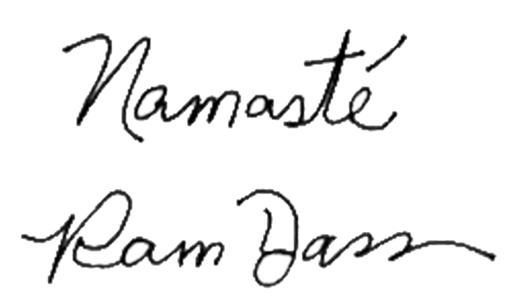
Via Ram Dass - Love Serve Remember Foundation //


"It’s like the moment of birth, the moment of death, it’s the same thing; it’s an incredible movement of consciousness into the mystery. It’s a window of opportunity. Every death or every birth I’m present at is like a gift from God, as far as I’m concerned.” 
 
- Ram Dass

Via LGBTQ Nation //


Saturday, November 15, 2025

Via FB


Via FB


Via FB


Via FB


Via FB


Via FB


Via FB


Via FB


Via FB


Via Daily Dharma: Nothing Is Sacred


Browse our online courses »
Nothing Is Sacred

To say that nothing is sacred is sacrilegious, and it also means at the same time that we should revere nothing, from the vast empty expanses of the universe to the void within ourselves.

Viet Thanh Nguyen, “On the Joy of Otherness”
 

CLICK HERE TO READ THE ARTICLE

I See Dead People . . . or Maybe I Don’t
By Brad Warner
A Soto Zen priest shares his experience with  hungry ghosts, visitations, and the overlapping nature of the Bardo Thodol and the Shobogenzo. 
Read more »
Dhamma Wheel
365 Days of Practice to Your Inbox
Join Tricycle’s daily email course for a year of contemplative study to deepen your understanding of the noble eightfold path.
Enroll now »
Follow Us
                  
Forward today's wisdom to a friend »
Unlock the wisdom of Buddhist teachings and deepen your practice with Tricycle’s online courses. 
 
Copyright © 2025 Tricycle Foundation
All rights reserved.
89 5th Ave | New York, NY 10003

Via Dhamma Wheel | Right Effort: Developing Unarisen Healthy States


TRICYCLE      COURSE CATALOG      SUPPORT      DONATE
RIGHT EFFORT 
Developing Unarisen Healthy States
Whatever a person frequently thinks about and ponders, that will become the inclination of their mind. If one frequently thinks about and ponders healthy states, one has abandoned unhealthy states to cultivate healthy states, and then one’s mind inclines to healthy states. (MN 19)
Reflection
What do you do when you are in the grip of an unhealthy mood, filled with a steady stream of unhealthy mental and emotional states? Sometimes you just have to take the initiative and change the channel, so to speak. Just as you might decide to prepare and eat a meal if you are hungry or take a walk if you are restless, so too you can decide to develop healthy states and, by various means, invite them to arise in your mind.
Daily Practice
You might adopt the practice of each day choosing a healthy state to develop and then working to deliberately bring it to mind. Maybe generosity one day, kindness another, or compassion all week. It is just a matter of making a decision to call to mind that particular positive quality. Choose to think kind thoughts about someone or decide to do a kind act, and you will find that the emotional state of kindness will naturally arise.
Tomorrow: Establishing Mindfulness of Mind and the Third Jhāna 
One week from today: Maintaining Arisen Healthy States

Share your thoughts and join the conversation on social media
#DhammaWheel

Questions?
 Visit the Dhamma Wheel orientation page.
Tricycle is a nonprofit and relies on your support to keep its wheels turning.
© 2025 Tricycle Foundation
89 5th Ave, New York, NY 10003