Wednesday, January 21, 2026

Via The Tricycle Community /// Three Teachings on Language


Support the Tricycle community with a donation »
January 22, 2026

Work With Words to Move Beyond Them
 
“A finger pointing at the moon” is a classic Zen expression that tells us not to confuse the teachings or texts that guide us toward awakening with awakening itself. Don’t confuse the finger for the moon. There is no substitute for direct experience. 

As poet and Zen priest Norman Fischer says, talking or writing about awakening can only get us so far. Language conditions perception. But what to do? We should focus our awareness on the limits of language in meditation, study, and mindfulness in daily life, Fischer says. By repeatedly tuning into our sensations and emotions, and viewing thoughts as incomplete representations of what is, over time we will learn to hold our words and views more lightly. We will discover a freer way of being.

We want to cultivate what Fischer calls “non-view: a spirit of openness, kindness, and flexibility with regard to language, to connect without being caught by—and separated from the world by—language.”

This week’s Three Teachings explores the ways we can work with words to move beyond them.
Forward today's teachings to a friend »
Beyond Language
By Norman Fischer

Pointing out how the Buddha himself saw the limitations of language, poet and Zen priest Norman Fischer contemplates the prison of language, and how we can use it to find freedom. [Words] “always fail, but the point is not to succeed but to make the attempt.”
Read more »
Words as Windows
By Ben Van Overmeire 

Scholar and professor Ben Van Overmeire considers the paradox in Zen of valuing literature and poetry, but also of privileging direct experience. Citing historical and contemporary Zen writers, as well as the tradition of koan practice, which uses words to jolt us into awakening, he concludes that attachment to words, like attachment to anything, is the danger. “If we let go of our attachment to words and letters, and instead let them point, amazing things can happen when we read and write.”
Read more »
When Our Blind Spots Fall in Love
By Vanessa Zuisei Goddard

Zen teacher and writer Vanessa Zuisei Goddard explains how our words, which can never keep up with the relentless pace of impermanence, impact our relationships. She then offers guidance for deeper connection through our imperfect words.
Read more »
Follow Us
                    
Tricycle is a nonprofit and relies on your support to keep its wheels turning.
Copyright © 2026 Tricycle Foundation
All rights reserved.
89 5th Ave | New York, NY 10003

Tuesday, January 20, 2026

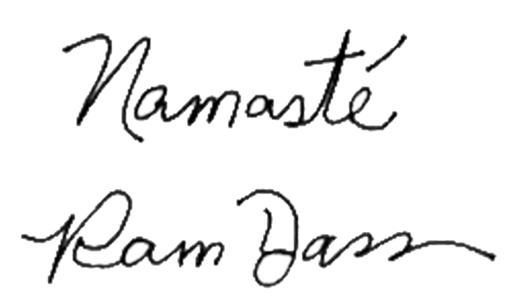
Via Ram Dass - Love Serve Remember Foundation /// Words of Wisdom - January 21, 2026 ⛄


“You start out trapped in boundaries; then you extricate yourself from the entrapment. Coming back in, you can take on the boundries as the way you costume yourself for the dance. You learn how to define limits, and realize who you are and what your unique role is. Realize that you can set boundaries without getting trapped by them because they are unique units.”
 
- Ram Dass

Source: Ram Dass – Here and Now – Ep. 82 – From Boundaries to the Human Agenda

Meditation Month Day 21


Day 21
If you're not yet subscribed to Tricycle, subscribe here »
PRACTICE PROMPT

Walk the pathless path.
 
The starting point of koan practice is also its final point, the clear awareness of not knowing. It begins by placing the practitioner right at the destination and invites them to walk the pathless path.

Our habitual mind, however, does not like this. It quietly hopes for special experiences instead, pleasant states that feel spiritual and otherworldly. Unfortunately, those pleasant experiences never last, and they subtly create attachment.

Take a few minutes to be honest with yourself: through your practice, what do you really wish for: a blissful, awesome and yet conditional experience, or unconditional freedom without a cause?

If it is the latter, realize that what you truly long for is already present in the very space of not knowing. Each time you rest in this open, questionless awareness, you are not merely moving toward freedom—you are it.
Related Content
Lessons from Life’s Low Point

With an excerpt from Haemin Sunim’s Love For Imperfect Things that illuminates the inevitability and upshot of setbacks, consider how not-knowing can help you in everyday life.

Read more »
Awakening to Impermanence

In the book Path of Heroes: Birth of Enlightenment, Tibetan lama Tarthang Tulku shares a teaching on the fleeting nature of life and the path toward clarity.
 
Follow Us
                  
Meditation Month is a free offering. Consider supporting it with a donation today.
 
© 2026 Tricycle Foundation
89 5th Ave, New York, NY 10003

Via Daily Dharma: Nonlocal Nature


Support the Tricycle community with a donation »
Nonlocal Nature

To meditate is to see that you are everywhere; your nature is nonlocal.

Thich Nhat Hanh, “True Nature of the Cosmos Body”


CLICK HERE TO READ THE ARTICLE

The Spiritual Guide Called Suffering
Anyen Rinpoche and Allison Choying Zangmo 
Learn how to break the cycle of on again, off again practice. 
Read more »

Via Dhamma Wheel | Right Speech: Refraining from False Speech


RIGHT SPEECH
Refraining from False Speech
False speech is unhealthy. Refraining from false speech is healthy. (MN 9) Abandoning false speech, one dwells refraining from false speech, a truth-speaker, one to be relied on, trustworthy, dependable, not a deceiver of the world. One does not in full awareness speak falsehood for one’s own ends or for another’s ends or for some trifling worldly end. (DN 1) One practices thus: "Others may speak falsely, but I shall abstain from false speech." (MN 8)

Such speech as you know to be true and correct but unbeneficial and which is also unwelcome and disagreeable to others—do not utter such speech. (MN 58)
Reflection
Even if something is true, that does not mean that it should always be said. The important point is whether or not it will be beneficial to speak. If a person is set in their views and what you say is unlikely to make a difference, then it is better to remain silent—all the more so if what you say would cause distress for the other person. But if by speaking up there is a good chance of helping them see more clearly, then go ahead and speak.
Daily Practice
Every Wednesday we give careful attention to the quality of our speech. Take on the practice of training yourself to become ever more aware of the truthfulness of what you say and ever more careful not to say something misleading or false. It can seem harmless to stretch the truth in small ways, but all speech is on a continuum from wrong speech to right speech, and discerning this  becomes subtler as you become more skillful.
Tomorrow: Reflecting upon Bodily Action
One week from today: Refraining from Malicious Speech

Share your thoughts and join the conversation on social media
#DhammaWheel

Questions?
 Visit the Dhamma Wheel orientation page.
Tricycle is a nonprofit and relies on your support to keep its wheels turning.
© 2026 Tricycle Foundation
89 5th Ave, New York, NY 10003