Friday, February 7, 2025

Via Bodhipaksa @ Wildmind // A new "mythbusting" article


wildmind


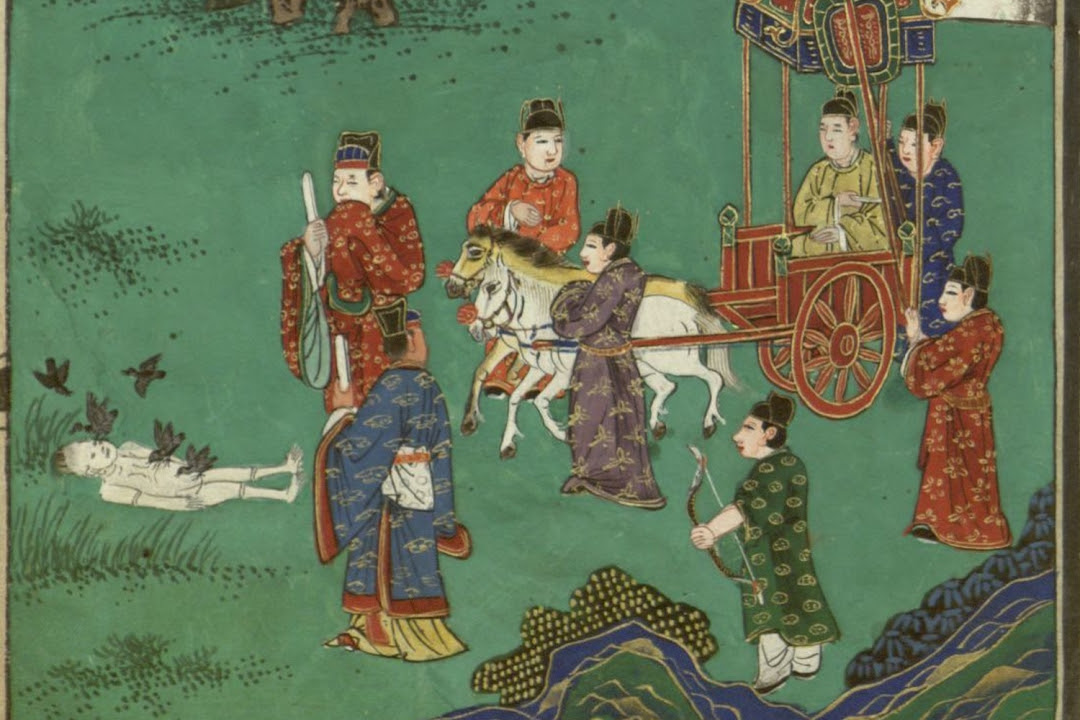
Mythbusting the Buddha’s “four sights”

Just as everyone "knows" that the Buddha was a prince, everyone "knows" that he left home in the middle of the night because on trips out of the palace he'd seen, for the first time, an old man, a sick man, a human corpse, and a holy wanderer.

But is there any evidence any of this actually happened?

Click here to read the article


Can't see images? Click here...

Via Dhamma Wheel | Right Living: Abstaining from Misbehaving Among Sensual Pleasures


TRICYCLE      COURSE CATALOG      SUPPORT      DONATE

RIGHT LIVING
Undertaking the Commitment to Abstain from Misbehaving Among Sensual Pleasures
Sensual misconduct is unhealthy. Refraining from sensual misconduct is healthy. (MN 9) Abandoning sensual misconduct, one abstains from misbehaving among sensual pleasures. (MN 41) One practices thus: "Others may engage in sensual misconduct, but I will abstain from sensual misconduct." (MN 8)

Sensual conduct is of two kinds: to be cultivated and not to be cultivated. Such sensual conduct as causes, in one who cultivates it, unhealthy states to increase and healthy states to diminish, such sensual conduct is not to be cultivated. But such sensual conduct as causes, in one who cultivates it, unhealthy states to diminish and healthy states to increase, such sensual conduct is to be cultivated. (MN 114)
Reflection
Misbehaving among sensual pleasures can include various forms of harmful sexuality, such as exploitation, causing humiliation, or sexual predation. It can also include all sorts of activities that are not sexual but involve sensual gratification. Our ability to inhabit a sensory and sensual world is not in itself a problem. The problem is that our senses can so easily lead us into attachments and aversions that cause difficulties.

Daily Practice
This practice is about the skillful use of the sense apparatus. Notice when sensory stimulation leads to craving and thus to grasping behavior. This is the path to suffering, as our senses lead us to wanting things we cannot have or hating things that are unpleasant. Notice also that there are ways to engage the senses that do not automatically lead to craving and grasping, and thus do not lead to suffering. Explore this.

Tomorrow: Developing Unarisen Healthy States
One week from today: Abstaining from Intoxication

Share your thoughts and join the conversation on social media
#DhammaWheel

Questions?
Visit the Dhamma Wheel orientation page.


Tricycle is a nonprofit and relies on your support to keep its wheels turning.

© 2025 Tricycle Foundation
89 5th Ave, New York, NY 10003

Via Daily Dharma: Touching Love


Support Tricycle with a donation »
Touching Love

Although we may not always live in a steady state of loving feeling, through practice we can learn to touch it many times a day.

Joseph Goldstein, “Triumph of the Heart”


CLICK HERE TO READ THE ARTICLE


The Discomfort of Compassion
By Constance Kassor
Compassion in Mahayana Buddhism means coming face-to-face with the suffering of all sentient beings. It’s not fun.
Read more »

RITA VON HUNTY (GUILHERME TERRERI) | EMBRULHA SEM ROTEIRO #014

NEONAZIFASCISMO

Via Tempero Drag


Thursday, February 6, 2025

Urgent Message from the USA


Via FB / Bsky


Via FB / Bsky


Via FB / Bsky


Via FB / Bsky


Via FB / Bsky - Ram Dass


Via FB / Bsky


Via FB / Bsky


Via FB


Via LGBTQ Nation


Via Bsky


Via FB / Bears Repeating


Via Dhamma Wheel | Right Action: Reflecting upon Mental Action


TRICYCLE      COURSE CATALOG      SUPPORT      DONATE

RIGHT ACTION
Reflecting Upon Mental Action
However the seed is planted, in that way the fruit is gathered. Good things come from doing good deeds, bad things come from doing bad deeds. (SN 11.10) What is the purpose of a mirror? For the purpose of reflection. So too mental action is to be done with repeated reflection: (MN 61)

When you have done an action with the mind, reflect upon that same mental action thus: "Has this action I have done with the mind led to my own affliction?" If, upon reflection, you know that it has, then tell someone you trust about it and undertake a commitment not to do it again. If you know it has not, then be content and feel happy about it. (MN 61)
Reflection
So much of what we do is never revealed in speech or bodily action. All mental activity is also a form of action and has karmic consequences. It is also the case that we can cause harm through our patterns of thought, including harm to ourselves. Karma is simply the workings of cause and effect, and every action we perform is accompanied by an internal mental intention, which is the focus of today’s practice.

Daily Practice
Here is an opportunity to look over some of your own mental patterns of activity and see if there have been any that contribute to self-harm. Perhaps there are ways you criticize yourself too harshly or undervalue your capabilities or secretly sabotage yourself. This is the sort of thing one often shares with a therapist, but it can be equally healing to share these mental actions with a good friend or someone else you trust. 

Tomorrow: Abstaining from Misbehaving Among Sensual Pleasures
One week from today: Reflecting upon Social Action

Share your thoughts and join the conversation on social media
#DhammaWheel

Questions?
Visit the Dhamma Wheel orientation page.


Tricycle is a nonprofit and relies on your support to keep its wheels turning.

© 2025 Tricycle Foundation
89 5th Ave, New York, NY 10003