A personal blog by a graying (mostly Anglo with light African-American roots) gay left leaning liberal progressive married college-educated Buddhist Baha'i BBC/NPR-listening Professor Emeritus now following the Dharma in Minas Gerais, Brasil.
We
rely on gifts from the universe to live (air, water, food). We live
together with all things. Why is it necessary to think we’re superior?
This is like our stomach thinking it’s more valuable than other parts of
our bodies.
Clarifying Dependent Origination With Bhante Henepola Gunaratana
Watch
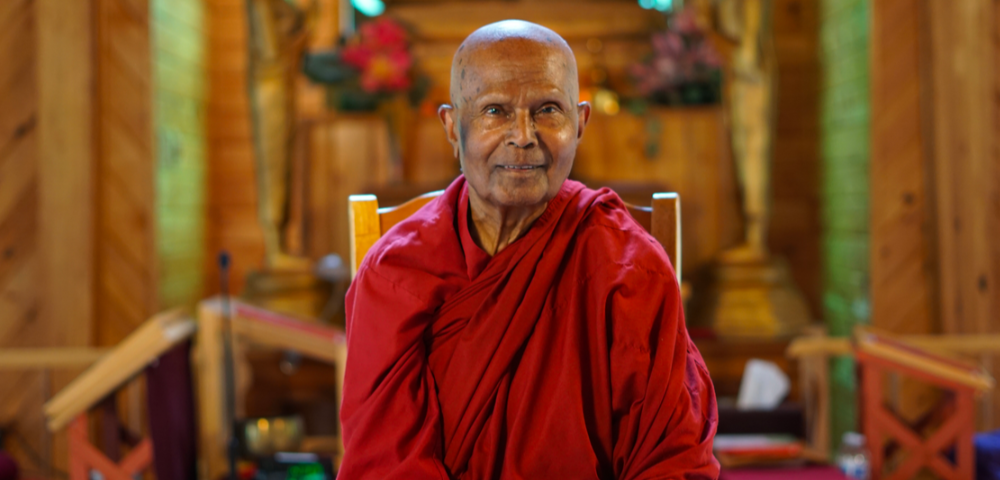
an illuminating teaching from Sri Lankan Theravada monk Bhante Henepola
Gunaratana on one of the Buddha’s most essential yet lesser-discussed
insights into the nature of suffering and liberation.
Whatever a person frequently thinks about and ponders, that will become the inclination of their mind. If one frequently thinks about and ponders unhealthy states, one has abandoned healthy states to cultivate unhealthy states, and then one’s mind inclines to unhealthy states. (MN 19)
Here a person rouses the will, makes an effort, stirs up energy, exerts the mind, and strives to abandon arisen unhealthy mental states. One abandons the arisen hindrance of doubt. (MN 141)
Reflection
When a thought or emotion arises that is obviously unhelpful or unhealthy, it is natural to make some effort to get rid of it in order not to encourage the damage that such states can do to oneself and others. “Abandoning” involves a particular kind of effort, one that neither encourages nor rejects the unhealthy state. It is not a matter of repressing or pushing away unhealthy states but of letting them simply “flow through” the mind.
Daily Practice
While in some circumstances it can be healthy to doubt, the kind of doubt meant here is that which is debilitating and holds us back from practice and understanding. When doubt as an obstacle arises in your experience, simply let it pass without trying to hold on to it or push it away. You can “abandon” doubt by not letting it get a foothold in your mind but instead watching it arise and pass away, as it will naturally do if you let it.
Tomorrow: Establishing Mindfulness of Feeling and Abiding in the Second Jhāna One week from today: Developing Unarisen Healthy States
Share your thoughts and join the conversation on social media #DhammaWheel
When my mother-in-law is in town, or when I get cut off in traffic—that’s when I need my practice. When the sink is full of dishes. What’s the point of sitting for an hour if I can’t forgive my partner for finishing all the almond milk?
Clarifying Dependent Origination With Bhante Henepola Gunaratana
Watch an illuminating teaching from Sri Lankan Theravada monk Bhante Henepola Gunaratana on one of the Buddha’s most essential yet lesser-discussed insights into the nature of suffering and liberation.
Take the attitude that there is nothing in your experience that you need to control or fix, and you’ll be available to experience the perfection that is always there, the truth that everything you need to awaken is with you right now.
Clarifying Dependent Origination With Bhante Henepola Gunaratana
Watch an illuminating teaching from Sri Lankan Theravada monk Bhante Henepola Gunaratana on one of the Buddha’s most essential yet lesser-discussed insights into the nature of suffering and liberation.
RIGHT LIVING Undertaking the Commitment to Abstain from Taking What is Not Given
Taking what is not given is unhealthy. Refraining from taking what is not given is healthy. (MN 9) Abandoning the taking of what is not given, one abstains from taking what is not given; one does not take by way of theft the wealth and property of others. (MN 41) One practices thus: “Others may take what is not given, but I will abstain from taking what is not given." (MN 8)
One is to practice thus: “Here, regarding things sensed by you, in the sensed there will be just the sensed." When, firmly mindful, one senses a sensation, one is not inflamed by lust for sensations; one experiences the sensation with a dispassionate mind and does not remain holding it tightly. (SN 35.95)
Reflection
The phrase “what is seen, heard, and sensed” is a shorthand way of referring to the first five of the senses, so the word sensed refers to the sense modalities of smelling, tasting, and touching. It can be challenging to simply be with what is given in direct experience, since we are so easily swept beyond what is given to add layers of judgment and interpretation. Right living involves remaining grounded in experience.
Daily Practice
When you smell, taste, or touch an object of any kind at any moment, see if you can focus just on the sensation, not allowing thoughts to take over and run rampant. Such proliferation is a way of “taking what is not given,” insofar as you are going beyond the information provided by the senses in the immediate experience and turning it into something different. Practice simply being with what is present—no more, no less.
Tomorrow: Abandoning Arisen Unhealthy States One week from today: Abstaining from Misbehaving Among Sensual Pleasures
Share your thoughts and join the conversation on social media #DhammaWheel