Friday, September 5, 2025

Via Dhamma Wheel | Right Living: Abstaining from Harming Living Beings


TRICYCLE      COURSE CATALOG      SUPPORT      DONATE
RIGHT LIVING
Undertaking the Commitment to Abstain from Harming Living Beings
Harming living beings is unhealthy. Refraining from harming living beings is healthy. (MN 9) Abandoning the harming of living beings, one abstains from harming living beings; with rod and weapon laid aside, gentle and kindly, one abides with compassion toward all living beings. (M 41) One practices thus: “Others may harm living beings, but I will abstain from the harming of living beings.” (MN 8)

This is something that leads to the welfare and happiness of a layperson in this present life: balanced living. Here, a person knows their wealth coming in and their wealth going out, and leads a balanced life, being neither too extravagant nor too frugal, [knowing that] “in this way my income exceeds my expenditures, and my expenditures do not exceed my income.” (AN 8.54)
Reflection
Indian culture is deeply rooted in commerce, as its early civilizations seem to have flourished on trade, and many of the Buddha’s followers were merchants. He thus had respect for commercial life, and the economic balance he mentions here can be seen as a middle-way lifestyle for the layperson. Just as a monk lives being neither too indulgent nor too ascetic, so also a layperson should live a financially balanced life.
Daily Practice
Right living for a householder or layperson involves prudence, self-control, and a balanced lifestyle. Notice the negative psychological effect when you are in debt or living beyond your means, and notice also the harmful effects of extravagance and self-indulgence. Contrast these to the sense of contentment and security that comes from living in equilibrium, when your income and expenses are in harmony with each other.
Tomorrow: Restraining Unarisen Unhealthy States
One week from today: Abstaining from Taking What is Not Given

Share your thoughts and join the conversation on social media
#DhammaWheel

Questions?
 Visit the Dhamma Wheel orientation page.
Tricycle is a nonprofit and relies on your support to keep its wheels turning.
© 2025 Tricycle Foundation
89 5th Ave, New York, NY 10003

Via FB


Via FB


Via NPR \\ Susan Stamberg, 'founding mother' of NPR, retires


Thursday, September 4, 2025

Via FB


Via FB


Via FB


Via FB


Via FB


Via FB


Via Daily Dharma: From Acceptance to Engagement


Browse our online courses »
From Acceptance to Engagement

Accepting reality doesn’t mean being complacent about it; acceptance can be the foundation of seeing clearly and lead to dedicated, unwavering engagement with injustice.

Kazu Haga, “The Intention of Spiritual Practice”


CLICK HERE TO READ THE ARTICLE

Making All of Life a Field of Awakening
By Shinshu Roberts
Learn the story behind Eihei Dogen’s legendary “Genjokoan.”
Read more »

Via Dhamma Wheel | Right Action: Reflecting upon Bodily Action


TRICYCLE      COURSE CATALOG      SUPPORT      DONATE
RIGHT ACTION
Reflecting Upon Bodily Action
However the seed is planted, in that way the fruit is gathered. Good things come from doing good deeds; bad things come from doing bad deeds. (SN 11.10) What is the purpose of a mirror? For the purpose of reflection. So too bodily action is to be done with repeated reflection. (MN 61)

When you are doing an action with the body, reflect upon that same bodily action thus: “Is this action I am doing with the body an unhealthy bodily action with painful consequences and painful results?” If, upon reflection, you know that it is, then stop doing it; if you know that it is not, then continue. (MN 61)
Reflection
It is never superfluous to be consciously aware of what you are doing as you are doing it. And it is never too late to stop doing something if you become aware that it is causing harm to yourself or someone else. A mindful person is also a thoughtful person, carefully attentive to what they are doing and aware of the effect of their actions on others. Notice how good things come from doing good deeds and bad from bad.
Daily Practice
Practice being both a mindful and a thoughtful person. Take note of how you are acting and how your actions are impacting others. Do not be afraid to suddenly stop what you are doing if you notice it having harmful effects, and be flexible enough to change your behavior for the better when you can. Right action is skillful action, and is measured not only by its outcome but more importantly by the wisdom that is guiding it.
Tomorrow: Abstaining from Harming Living Beings
One week from today: Reflecting upon Verbal Action

Share your thoughts and join the conversation on social media
#DhammaWheel

Questions?
 Visit the Dhamma Wheel orientation page.
Tricycle is a nonprofit and relies on your support to keep its wheels turning.
© 2025 Tricycle Foundation
89 5th Ave, New York, NY 10003

Via Gay Wisdom for Daily Living from White Crane Institute

White Crane InstituteExploring Gay Wisdom & Culture since 1989
 
This Day in Gay History

September 04


Noteworthy
The Wolfenden Report
1957 -

In 1954 the Conservative government in the United Kingdom set up a Departmental Committee to look into aspects of British sex laws. The resulting report, officially titled, The Report of the Departmental Committee on Homosexual Offences and Prostitution (better known as the WOLFENDEN REPORT, after Lord Wolfenden, the chairman of the committee) was published in Britain on September 4, 1957 after a succession of well-known men, including Lord Montagu, Michael Pitt-Rivers and Peter Woldeblood, were convicted of homosexual offenses.

Disregarding the conventional ideas of the day, the committee recommended that "homosexual behaviour between consenting adults in private should no longer be a criminal offence". All but James Adair were in favor of this and, contrary to some medical and psychiatric witnesses' evidence at that time, found that "homosexuality cannot legitimately be regarded as a disease, because in many cases it is the only symptom and is compatible with full mental health in other respects." The report added, "The law's function is to preserve public order and decency, to protect the citizen from what is offensive or injurious, and to provide sufficient safeguards against exploitation and corruption of others ... It is not, in our view, the function of the law to intervene in the private life of citizens, or to seek to enforce any particular pattern of behavior." The recommended age of consent was 21 (the age of majority in the UK then).

The report also discussed the rise in street prostitution at the time, which it associated with "community instability" and "weakening of the family". As a result there was a police crackdown on street prostitution following the report.


|8|O|8|O|8|O|8|O|8|O|8|O|8|O|8|

Gay Wisdom for Daily Living from White Crane Institute

"With the increasing commodification of gay news, views, and culture by powerful corporate interests, having a strong independent voice in our community is all the more important. White Crane is one of the last brave standouts in this bland new world... a triumph over the looming mediocrity of the mainstream Gay world." - Mark Thompson

Exploring Gay Wisdom & Culture since 1989!
www.whitecraneinstitute.org

|8|O|8|O|8|O|8|O|8|O|8|O|8|O|8|

Wednesday, September 3, 2025

Via FB


Via FB


Via FB


Via Daily Dharma: You Are Needed


Browse our online courses »
You Are Needed

Wherever you see fit to serve, your wise and embodied offerings are needed.

Ruth King, “Awakening Together”


CLICK HERE TO READ THE ARTICLE
The Mind That Goes Out and Returns
By Clark Strand
The winning poem from the Tricycle Haiku Challenge explores the theme of loss and impermanence—one red leaf at a time.
Read more »

Via Dhamma Wheel | Right Speech: Refraining from False Speech


RIGHT SPEECH
Refraining from False Speech
False speech is unhealthy. Refraining from false speech is healthy. (MN 9) Abandoning false speech, one dwells refraining from false speech, a truth-speaker, one to be relied on, trustworthy, dependable, not a deceiver of the world. One does not in full awareness speak falsehood for one’s own ends or for another’s ends or for some trifling worldly end. (DN 1) One practices thus: “Others may speak falsely, but I shall abstain from false speech.” (MN 8)

When one knows overt sharp speech to be true, correct, and unbeneficial, one should try not to utter it. (MN 139)
Reflection
It is easy for us to admonish other people and point out their faults, especially when we are right about them. The meaning of right speech does not end with the admonition to speak the truth; it also guides us to say only what is beneficial. What is gained by  calling someone a jerk if doing so does not help them become less of a jerk? Skillful speech not only speaks the truth but also works to improve any given situation.
Daily Practice
See if you can discern in any given situation what will be beneficial to say and what will not. Publicly calling out someone’s faults can feel gratifying, especially when it seems entirely justified, but it may do more harm than good. If what you want to say does not contribute in some way to an overall improvement of things, you should resist the temptation to speak out and should try not to utter hurtful speech, even if it is true.
Tomorrow: Reflecting upon Bodily Action
One week from today: Refraining from Malicious Speech

Share your thoughts and join the conversation on social media
#DhammaWheel

Questions?
 Visit the Dhamma Wheel orientation page.
Tricycle is a nonprofit and relies on your support to keep its wheels turning.
© 2025 Tricycle Foundation
89 5th Ave, New York, NY 10003

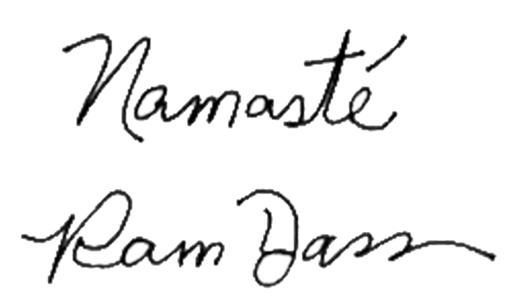
Via Ram Dass - Love Serve Remember Foundation \\Words of Wisdom - September 3, 2025 💠


There is a lovely story of a boy who goes to a Zen master and asks, “Master, I know you have many students, but if I study harder than all the rest of them, how long will it take me to get enlightened?”

The master said, “Ten years.”

The boy said, “Well if I work day and night and double my efforts, how long will it take?”

The master said, “Twenty years.”

Now the boy spoke of further achievement, and the master said, “Thirty years.”

The boy replied, “Why do you keep adding years?”

And the master answered, “Since you will have one eye on the goal, there will only be one eye left to have on the work. And it will slow you down immeasurably."
 
- Ram Dass