Thursday, October 9, 2025

Via Dhamma Wheel | Right Action: Reflecting upon Verbal Action


TRICYCLE      COURSE CATALOG      SUPPORT      DONATE
RIGHT ACTION
Reflecting Upon Verbal Action
However the seed is planted, in that way the fruit is gathered. Good things come from doing good deeds; bad things come from doing bad deeds. (SN 11.10) What is the purpose of a mirror? For the purpose of reflection. So too verbal action is to be done with repeated reflection. (MN 61)

When you have done an action with speech, reflect on that same verbal action thus: “Was this action I have done with speech an unhealthy bodily action with painful consequences and painful results?” If, on reflection, you know that it was, then tell someone you trust about it and undertake a commitment not to do it again. If you know it was not, then be content and feel happy about it. (MN 61)
Reflection
Speech is such an important form of action, especially in our modern world of constant communication. It helps to think of speaking words as a form of planting seeds— something we want to do with care and with the hope of good fruits arising in the future. It is helpful to reflect on what seeds you have sown, and it is a blessing to be able to look back on what you have said to someone and feel content and happy about it.
Daily Practice
Reflect on what you have said to others from time to time, especially soon after saying it, and check in on whether your communication has been harmful or helpful. If you feel that something is “off” in some way, do not hesitate to share your concerns with a trusted friend and look for ways to repair the damage. Taking care of our healthy relationships is a form of right action, and attending to our speech is a way of doing this.
Tomorrow: Abstaining from Taking What is Not Given
One week from today: Reflecting upon Mental Action

Share your thoughts and join the conversation on social media
#DhammaWheel

Questions?
 Visit the Dhamma Wheel orientation page.
Tricycle is a nonprofit and relies on your support to keep its wheels turning.
© 2025 Tricycle Foundation
89 5th Ave, New York, NY 10003

Via FB


Via FB


Wednesday, October 8, 2025

Via FB


Via FB


Via Daily Dharma: Turn Toward Discomfort


Browse our online courses »
Turn Toward Discomfort

When you try to ignore something or push it away, it actually seems to have a larger and more unrelenting presence. But when you turn toward and pay attention to the discomfort, it loses power over you.

Susan Bauer-Wu, “Tuning Into the Body”


CLICK HERE TO READ THE ARTICLE

Our Collective Body
By Martin Aylward
Discover the  importance of dissolving boundaries between ourselves and other beings. 
Read more »

Via Dhamma Wheel | Right Speech: Refraining from Malicious Speech


RIGHT SPEECH
Refraining from Malicious Speech
Malicious speech is unhealthy. Refraining from malicious speech is healthy. (MN 9) Abandoning malicious speech, one refrains from malicious speech. One does not repeat there what one has heard here to the detriment of these, or repeat here what he has heard there to the detriment of those. One unites those who are divided, is a promoter of friendships, and speaks words that promote concord. (DN 1) One practices thus: “Others may speak maliciously, but I shall abstain from malicious speech.” (MN 8)

If anyone should speak in praise of something, you should not on that account be pleased, happy, or elated. To be pleased, happy, or elated would only be an impediment to you. If others speak in praise of something, you should acknowledge the truth of what is true. (DN 1)
Reflection
This passage warns us of the dangers of praise and blame, and the importance of equanimity as a safeguard against them. Blaming people is one form malicious speech can take, but praising in certain ways can have the same effect. If you allow yourself to be angered by blame or flattered by praise, you lose your ability to see clearly and appraise objectively what is being said. Better to greet both with equanimity.
Daily Practice
Notice when you hear people speaking in praise of something and see if you can discern any hidden motive for doing so. If what they are saying is true, then you can acknowledge the truth of it. But if the praise is part of an underlying agenda of manipulating opinion in some way, then it is appropriate to be more careful. Practice maintaining equanimity and beware the influence of praise and blame.
Tomorrow: Reflecting upon Verbal Action
One week from today: Refraining from Harsh Speech

Share your thoughts and join the conversation on social media
#DhammaWheel

Questions?
 Visit the Dhamma Wheel orientation page.
Tricycle is a nonprofit and relies on your support to keep its wheels turning.
© 2025 Tricycle Foundation
89 5th Ave, New York, NY 10003


White Crane InstituteExploring Gay Wisdom & Culture since 1989
 
This Day in Gay History

October 08


Today's Gay Wisdom
Reverend Nancy Wilson
2017 -

"In such a toxic environment, the poor, the minorities, and the politically vulnerable populations will be the first to exhibit signs and symptoms of the deteriorating immunological picture. It is the canary-in-the-mines syndrome. When miners wanted to know if a particular mineshaft was safe from poisonous gases, they sent a canary in first. If the canary returned, the miners felt safe to go in. On our planet today, poor people, people of color, women and children, and gays and lesbians are the canaries (or sitting ducks if you prefer). Those who have any kind of privilege (gender, race, class, sexuality, age) are better able, for a time, to buffer and insulate themselves from the toxic environment — from AIDS, cancer, and other diseases. But not forever.

"There is also a moral and religious toxicity in reaction to so much upheaval, change, and worldwide political challenges. This phenomenon is called in many religions "fundamentalism." In a century of increasing relativity in values, morality, and religion, fundamentalism provides absolutes and identifies the enemies. It is a kind of collective mental illness that includes obsessive thinking, tunnel vision, and functions much like other addictions." 

- Rev. Nancy Wilson, Our Tribe: Queer Folks, God, Jesus and the Bible


|8|O|8|O|8|O|8|O|8|O|8|O|8|O|8|

Gay Wisdom for Daily Living from White Crane Institute

"With the increasing commodification of gay news, views, and culture by powerful corporate interests, having a strong independent voice in our community is all the more important. White Crane is one of the last brave standouts in this bland new world... a triumph over the looming mediocrity of the mainstream Gay world." - Mark Thompson

Exploring Gay Wisdom & Culture since 1989!
www.whitecraneinstitute.org

|8|O|8|O|8|O|8|O|8|O|8|O|8|O|8|

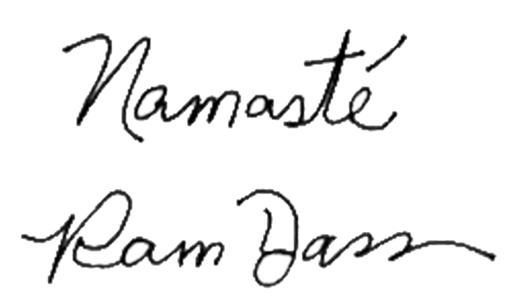
Via Ram Dass - Love Serve Remember Foundation \\ Words of Wisdom - October 8, 2025 🍁


"Compassionate action gives us an opportunity to wake up to some of our motives and to act with more freedom. It gives us the chance to put ourselves out on the edge, and if we are willing to take a clean look at what we see there, we can come to know ourselves better.

We can’t, of course, change what is arising in us at any moment, because we can’t change our pasts and our childhoods. But when we listen to our own minds and stop being strangers to ourselves, we increase the number of ways we can respond to what arises."
 
- Ram Dass

Via FB


Via FB


Via FB


Via FB


Via FB


Via FB


Tuesday, October 7, 2025

Via Daily Dharma: Open to What Is


Browse our online courses »
Open to What Is

Open to what is. Let go of those add-ons we’re conditioned to pile on: Don’t be afraid of what you are feeling.

Sharon Salzberg, “Forever Connected”


CLICK HERE TO READ THE ARTICLE

Via Dhamma Wheel | Right Intention: Cultivating Compassion


TRICYCLE      COURSE CATALOG      SUPPORT      DONATE
RIGHT INTENTION
Cultivating Compassion
Whatever you intend, whatever you plan, and whatever you have a tendency toward, that will become the basis on which your mind is established. (SN 12.40) Develop meditation on compassion, for when you develop meditation on compassion, any cruelty will be abandoned. (MN 62)

Compassion is like a mother with a son who is ill, for she just wants the illness to go away. (Vm 9.108)
Reflection
While lovingkindness is a universal intention of unbounded kindness and an indiscriminate wish for well-being that can radiate in all directions, compassion is what this changes into when it encounters a person or group of people suffering or being harmed. At that point the general urge for safety is focused on the intention to alleviate that suffering. Compassion is a particular form of lovingkindness, focused by suffering.
Daily Practice
In order to feel compassion, you have to be willing to see the suffering of others. It can be hard to open to this, but your lovingkindness will not transform into compassion unless you do. Practice being willing to witness suffering when you encounter it, and pay attention to the texture of your inner experience as it moves through phases: resistance to the pain, opening to it, feeling the hurt of it, then maturing into true compassion.
Tomorrow: Refraining from Malicious Speech
One week from today: Cultivating Appreciative Joy

Share your thoughts and join the conversation on social media
#DhammaWheel

Questions?
 Visit the Dhamma Wheel orientation page.
Tricycle is a nonprofit and relies on your support to keep its wheels turning.
© 2025 Tricycle Foundation
89 5th Ave, New York, NY 10003

Via LGBTQ Nation