Wednesday, January 28, 2026

Via FB


Via FB


Via FB


Via FB


Meditation Month Day 28


Day 28
If you're not yet subscribed to Tricycle, subscribe here »
PRACTICE PROMPT

You are ever-present.
 
Think of a TV screen that does not share the destiny of the characters in the program. The images and the screen are not actually separate, yet the images cannot change or contaminate the screen. In the same way, no matter how frightening or dangerous the “program” of your life may appear, the awareness in which it all unfolds remains untouched and free.

No effort by any character can make the screen appear, because it has always already been there. Likewise, no amount of sin or wrongdoing by the character can make the screen disappear. You are the ever-present, immaculate screen, not the personality in the show called “life.”
Related Content
The Courage to Say I Can’t 

In an excerpt from his book When Things Don’t Go Your Way: Zen Wisdom for Difficult Times, Haemin Sunim offers advice on finding the right path for yourself, not someone else.

Read more »
The Empty Room

In his book Silent Illumination: A Chan Buddhist Path to Natural Awakening, Chan teacher Guo Gu explains that we are all buddhas, and we are all already free.
 
Follow Us
                  
Meditation Month is a free offering. Consider supporting it with a donation today.
 
© 2026 Tricycle Foundation
89 5th Ave, New York, NY 10003

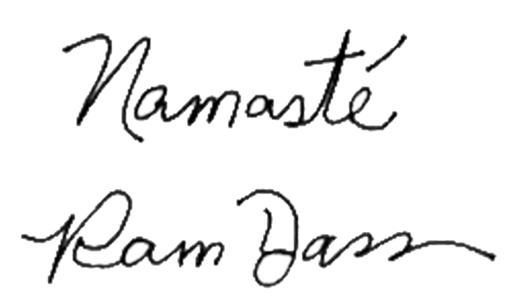
Via Ram Dass - Love Serve Remember Foundation /// Words of Wisdom - January 28, 2026 ❄️


“The predicament is that once you awaken you cannot go back to sleep. You will try with all of your ingenuity, I absolutely assure you… because what lies before you is the fire - and burn, baby, burn.”
 
- Ram Dass

Source: Ram Dass – Here and Now – Ep. 85 – Dharmic Fire

Via Daily Dharma: The Fabric of Our Lives


Support the Tricycle community with a donation »
The Fabric of Our Lives

If we can keep walking the middle path with equanimity—neither attached nor averse to the oscillating conditions that arise and cease—the fabric of our lives, held together by stitches of right action, can be free from unnecessary suffering.

Tara Anand, “Reflections from the Yarn Bowl”


CLICK HERE TO READ THE ARTICLE

Using Disappointment
By Pema Chödrön
In her commentary to Chögyam Trungpa’s The Myth of Freedom and the Way of Meditation, Pema Chödrön describes dashed expectations as ego’s antidote.
Read more »

Buddhism for Beginners
Tricycle's free learning platform
Explore Tricycle’s free and comprehensive introduction to Buddhist teachings, history, and practices. Go in order, starting with the basics and moving into specifics, or jump in wherever works best for you.
Explore more »
Follow Us
                    
Forward today's wisdom to a friend »
Tricycle is a nonprofit and relies on your support to keep its wheels turning.
Copyright © 2026 Tricycle Foundation
All rights reserved.
89 5th Ave | New York, NY 10003

Via Dhamma Wheel | Right Speech: Refraining from Malicious Speech


RIGHT SPEECH
Refraining from Malicious Speech
Malicious speech is unhealthy. Refraining from malicious speech is healthy. (MN 9) Abandoning malicious speech, one refrains from malicious speech. One does not repeat there what one has heard here to the detriment of these, or repeat here what he has heard there to the detriment of those. One unites those who are divided, is a promoter of friendships, and speaks words that promote concord. (DN 1) One practices thus: "Others may speak maliciously, but I shall abstain from malicious speech." (MN 8)

When others address you, their speech may be gentle or harsh … One is to train thus: "My mind will be unaffected, and I shall utter no bad words; I shall abide with compassion for their welfare, with a mind of lovingkindness, without inner hate." (MN 21)
Reflection
Our natural tendency is to soften to gentle words and retaliate against harsh speech. But the former can allow us to be exploited by the flatterer, and the latter allows the worst in others to bring out the worst in us. Equanimity in the face of harsh speech is not indifference or detachment; it is simply being aware without reactivity. It is not allowing our minds to be thrown off by what others say to us.
Daily Practice
This is a challenging practice but a helpful one. It encourages us to maintain a balanced state of mind in the face of any kind of speech. It may be easier to practice this at first with overhearing things in the media or the conversations of others, working up to being able to wish for the welfare of even those who speak harshly directly to you. It is not as hard as it sounds once you learn not to take everything others say personally.
Tomorrow: Reflecting upon Verbal Action
One week from today: Refraining from Harsh Speech

Share your thoughts and join the conversation on social media
#DhammaWheel

Questions?
 Visit the Dhamma Wheel orientation page.
Tricycle is a nonprofit and relies on your support to keep its wheels turning.
© 2026 Tricycle Foundation
89 5th Ave, New York, NY 10003