A personal blog by a graying (mostly Anglo with light African-American roots) gay left leaning liberal progressive married college-educated Buddhist Baha'i BBC/NPR-listening Professor Emeritus now following the Dharma in Minas Gerais, Brasil.
Frivolous speech is
unhealthy. Refraining from frivolous speech is healthy. (MN 9)
Abandoning frivolous speech, one refrains from frivolous speech. One
speaks at the right time, speaks only what is fact, and speaks about
what is good. One speaks what is worthy of being overheard, words that
are reasonable, moderate, and beneficial. (DN 1) One practices thus:
"Others may speak frivolously, but I shall abstain from frivolous
speech." (MN 8)
When a person commits an offense of some kind, you should not hurry to
reprove them but rather consider whether or not to speak. If you will
not be troubled, the other person will be hurt, and you can help them
emerge from what is unhealthy and establish them in what is healthy—then
it is proper to speak. It is a trifle that they will be hurt compared
with the value of helping establish them in what is healthy. (MN 103)
Reflection
So many of our
speech patterns are habitual and unfold automatically. The practice of
right speech gives us an opportunity to notice this, because we are
bringing greater awareness to the action of speaking. It also enables us
to change our habitual patterns because it gives us time to respond
differently. The ability to pause and reflect before responding is
particularly important when in the presence of offensive speech.
Daily Practice
The next time
you feel offended by something someone says to you, slow down enough to
not react automatically and to take some time to consider whether or not
to speak. Not every putdown requires a comeback. The critical factor in
the analysis above is whether or not what you say will make a
difference. It is okay to hurt someone’s feelings if you "can help them
emerge from what is unhealthy" and get on a better track.
Tomorrow: Reflecting upon Social Action One week from today: Refraining from False Speech
Share your thoughts and join the conversation on social media #DhammaWheel
Let
your mind be open like the sky, and then let all the thoughts float
freely like clouds. Let yourself remain in that state, and then you will
actually experience being aware of awareness in your day-to-day life.
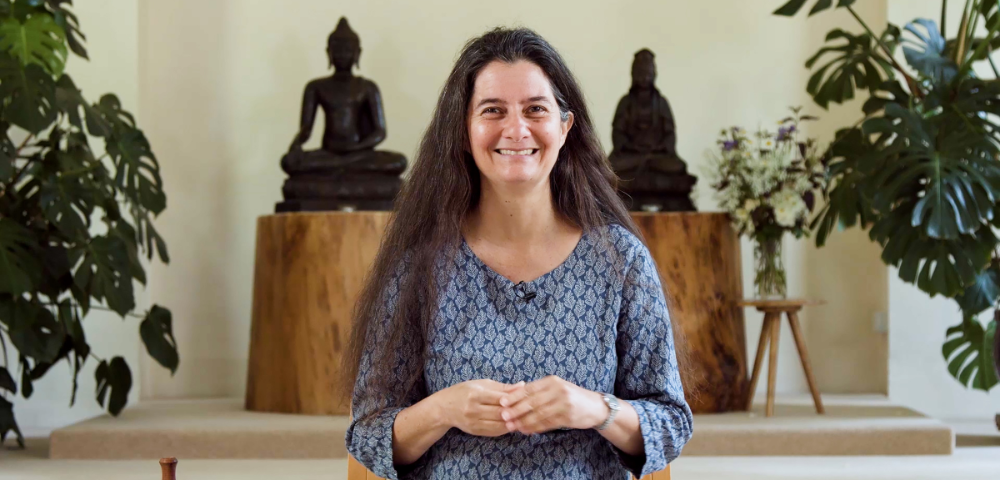
We
live in an age of distraction, where our attention is constantly pulled
in different directions to different things. In our newest Dharma
Talk, international meditation teacher Zohar Lavie explains the
transformative power of paying attention.
Whatever you intend,
whatever you plan, and whatever you have a tendency toward, that will
become the basis on which your mind is established. (SN 12.40) Develop
meditation on equanimity, for when you develop meditation on equanimity,
all aversion is abandoned. (MN 62)
The manifestation of equanimity is the subsiding of attraction and
aversion. (Vm 9.93) Having smelled an odor with the nose, one is neither
glad-minded nor sad-minded but abides with equanimity, mindful and
fully aware. (AN 6.1)
Reflection
Equanimity, the
fourth brahma-vihara, or sublime way of abiding, is defined here in
terms of its manifestation—how it presents itself in experience.
Equanimity manifests as the absence of the two extremes of attraction
(greed) and aversion (hatred), which so often rule the mind. Equanimity
is the still center point on a continuum between the two, where the mind
neither draws toward nor tilts away from an object.
Daily Practice
Equanimity can
be practiced with any of the sense modalities, and here we are invited
to engage with the practice in the sensory realm of smelling odors.
Practice lingering in the presence of an obviously pleasant or an
intensely unpleasant odor and see if you can manifest the attitude of
equanimity. You can experience pleasure and displeasure and not
automatically want more or less of it. See what this feels like, and
then sustain the non-reactive attitude toward feeling tones.
Tomorrow: Refraining from Frivolous Speech One week from today: Cultivating Lovingkindness
Share your thoughts and join the conversation on social media #DhammaWheel