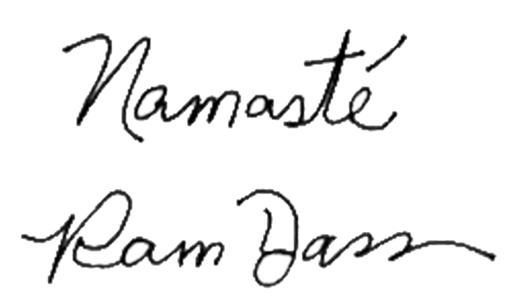
Friday, July 11, 2025

Via FB


Via FB


Via FB


Via FB


Via Ram Dass LGBTQ+ July Meetup: The Fishbowl & The Caucus

LGBTQ+ Satsang
 

✨ July Satsang Spotlight : The Fishbowl & The Caucus: Finding Unity in Diversity with Seth Pearson✨


Sunday, July 13 | 8:00–9:30 PM ET

JOIN THE ZOOM CALL
 

🌈🔥 Hey everybody, why are you busy making yourself separate? We are all one." — Ram Dass 🔥🌈

Via Dhamma Wheel | Right Living: Abstaining from Harming Living Beings


TRICYCLE      COURSE CATALOG      SUPPORT      DONATE
RIGHT LIVING
Undertaking the Commitment to Abstain from Harming Living Beings
Harming living beings is unhealthy. Refraining from harming living beings is healthy. (MN 9) Abandoning the harming of living beings, one abstains from harming living beings; with rod and weapon laid aside, gentle and kindly, one abides compassionate to all living beings. (M 41) One practices thus: “Others may harm living beings, but I will abstain from the harming of living beings.” (MN 8)

This is something that leads to the welfare and happiness of a person in this present life: accomplishment in protection. Here a person sets up protection and guards over the resources one has acquired . . . [thinking], “How can I prevent thieves from carrying it off, fire from burning it, floods from sweeping it away, and dishonest people from taking it?” (AN 8.54)
Reflection
There is a practical side to the teachings of the historical Buddha that can be easy to overlook. He didn't just guide monks and nuns toward awakening; he also advised laypeople on how to live wisely. Here the emphasis is on the value of guarding the things you own and the beings under your protection. Life is precious, and the duty of a householder to protect their family, animals, and possessions was taken quite seriously. 
Daily Practice
It is easy to cause harm to living beings by neglecting to be careful in all you do. Now more than ever a commitment to non-harming means developing ways not only to avoid hurting living beings but also to nurture and protect them. Look at yourself and your life through the eyes of another: a pet, a wild animal, an ocean, an eco-system. And ask yourself, What more can I do to ensure their safety and well-being?
Tomorrow: Restraining Unarisen Unhealthy States
One week from today: Abstaining from Taking What is Not Given

Share your thoughts and join the conversation on social media
#DhammaWheel

Questions?
 Visit the Dhamma Wheel orientation page.
Tricycle is a nonprofit and relies on your support to keep its wheels turning.
© 2025 Tricycle Foundation
89 5th Ave, New York, NY 10003

Via Daily Dharma: The Spirits That Protect You


Browse our online courses »
The Spirits That Protect You

There are times we feel guided and protected by beings beyond our sight. Recognizing this as a kind of grace is a source of serenity. Whether it’s literally true or there is some other energy that gives us this sense of guidance and protection, the Buddha included this among the benefits of practicing metta.

Bhante Henepola Gunaratana, “11 Benefits of Loving-Friendliness Meditation”


CLICK HERE TO READ THE ARTICLE

The Liberating Practices of Sympathetic Joy and Gratitude
By Lisa Ernst
Learn how to move from envy to expansive appreciation. 
Read more »

Thursday, July 10, 2025

Incompetent! - A Randy Rainbow Song Parody

Via FB


Via FB


Via LGBTQ Nation


Via FB


Via FB


Via GBF // Living with an Undefended Heart – Mary Stancavage

 Our latest dharma talk is now available on the GBF website, Podcast and YouTube channel. 

Enjoy!

-------------------------------------------------------------

What does it mean to live with an undefended heart?

Here Mary Stancavage’s explores the profound practice of living what she has been investigating for years. She begins by acknowledging that we all build emotional armor as a response to pain and suffering, often unconsciously, to protect ourselves from further hurt. This armor manifests as fixed views, fear, judgment, perfectionism, and numbing behaviors, which ultimately isolate us and prevent authentic connection.

Mary emphasizes that this defensive stance is a denial of reality and contributes to suffering, echoing the Buddha’s teachings about clinging and the second noble truth. She shares that meditation and mindful sitting helped her face and welcome difficult emotions—grief, anger, sadness—with kindness and openness, revealing that embracing these feelings gently can transform fear and alienation into freedom and connection.

Mary then outlines a practical and compassionate path toward chipping away at this armor using the Buddhist Eightfold Path as a safety net. Key practices include:

  • Wise speech—saying what needs to be said even when it's hard
  • Compassionate intention
  • Non-harming that extends beyond mere avoidance to active kindness and generosity.

She distinguishes between healthy boundaries and defenses, cautioning against “idiot compassion” that allows others to abuse us. Mary also highlights the importance of remaining present with whatever arises in the moment without resistance, cultivating equanimity as a deep intimacy with reality as it is.

Mary concludes by inviting listeners to reflect on the challenges and joys of this lifelong journey, reminding us that an open heart is an act of resistance in a world full of suffering and injustice, and that through love, kindness, and presence, we participate in collective liberation and healing.

______________

Mary Stancavage has practiced meditation, yoga, and cultivated a spiritual practice for over 35 years and in 2009 was empowered to teach Buddhadharma. She teaches classes, retreats, coaches and mentors individuals and has facilitated several Year-to-Live groups. She has served as a volunteer hospital chaplain and been involved with leadership in several non-profit organizations over the years both in meditation and in the social justice arena. She is currently a member of the Guiding Teachers Council for Insight Community of the Desert, and is a Board Member of both Meditation Coalition and CLUE: Clergy and Laity United for Economic Justice.

For the last several years, Mary has investigated what it means to live with an undefended heart and more information on this can be found on her website, https://marystancavage.orgFun fact: Mary has an MA from UCLA and spent several seasons working as an archaeologist in Syria

Via FB


The Most Powerful Spiritual Practice for Daily Life | Eckhart Tolle

Via Dhamma Wheel | Right Speech: Refraining from False Speech


RIGHT SPEECH
Refraining from False Speech
False speech is unhealthy. Refraining from false speech is healthy. (MN 9) Abandoning false speech, one dwells refraining from false speech, a truth-speaker, one to be relied on, trustworthy, dependable, not a deceiver of the world. One does not in full awareness speak falsehood for one’s own ends or another’s ends, or for some trifling worldly end. (DN 1) One practices thus: “Others may speak falsely, but I shall abstain from false speech.” (MN 8)

When one knows covert speech to be true, correct, and beneficial, one may utter it, knowing the time to do so. (MN 139)
Reflection
There is nothing wrong with speaking privately and even secretly to someone as long as what is said is true and beneficial. There are times when discretion is entirely appropriate. The thing to guard against is resorting to covert speech as a way of hiding something that is not worthy of being spoken in the open. A good rule of thumb is to refrain from saying anything in private you would be ashamed of saying publicly.
Daily Practice
The restraint of false speech is important because what you say has an effect not only on other people but also on yourself. Pay attention to the quality of your mind when you speak covertly to someone and check to make sure that you are not drifting into states of mind that are harmful, such as ill will, hatred, or cruelty. You can learn to be intuitively aware of the quality of your emotions as you speak. 
Tomorrow: Reflecting upon Bodily Action
One week from today: Refraining from Malicious Speech

Share your thoughts and join the conversation on social media
#DhammaWheel

Questions?
 Visit the Dhamma Wheel orientation page.
Tricycle is a nonprofit and relies on your support to keep its wheels turning.
© 2025 Tricycle Foundation
89 5th Ave, New York, NY 10003

Via Daily Dharma: Nirvana Is Right Here


Browse our online courses »
Nirvana Is Right Here

Maybe we think that nirvana is a place where there are no problems, no more delusions. Maybe we think nirvana is something very beautiful, something unattainable. We always think nirvana is something very different from our own life. But we must really understand that it is right here, right now.

Maezumi Roshi, “Appreciate Your Life”


CLICK HERE TO READ THE ARTICLE

Past, Present, and Future on the Tip of a Hair
By Thich Nhat Hanh
In this excerpt from The Sun My Heart, Thich Nhat Hanh explores the connections between the Avatamsaka Sutra and Einstein’s theory of relativity.
Read more »

Via Ram Dass - Love Serve Remember Foundation \\ Words of Wisdom - July 9, 2025 💠


You've got to remember that the ego is built on fear, it's not built on love. It's built on fear of non-survival, so you create a structure to make you safe. And it's a beautiful instrument, but if you're identified with it, you're fearful all the time. And because you're fearful you're always going to overcompensate and make ego decisions that are a little inappropriate, because they'll be colored by your looking from inside this place.

When you're outside of it, you see that you use your ego as you need to make decisions. You come back into somebody-ness. You and I are meeting behind this dance that we're doing, which is charming and fascinating. That's the beauty of playing with the ego and the higher consciousness. It's only when those two planes work that the ego becomes functional.
 
- Ram Dass