Wednesday, October 1, 2025

Bodhisattva

Via FB


Via Fb \ Buddha's Teaching \\ ✨ The Young Monk and the Master’s Lesson on Suffering ✨


One day, a young monk walked slowly behind his master, his head heavy with thoughts. After some time, he finally spoke:
“Master, why does suffering always follow me? No matter where I go, no matter how much I try, pain and worry never leave my side.”
The old master stopped, smiled softly, and pointed at a clay pot nearby. Inside it was a small plant.
“Do you see this plant, child?” the master asked.
“Yes, Master,” the monk replied.
“This plant grows because someone waters it every day. Without water, without care, it would wither away. Now tell me, who waters your suffering?”
The monk thought for a moment and then said, “I… I think it is my own mind.”
The master nodded. “Yes. Every time you hold on to the past, you give it water. Every time you worry about the future, you give it sunlight. Every time you repeat your pain in your head, you give it soil to grow stronger roots. That is why suffering walks with you—it is the plant you yourself keep alive.”
The monk’s eyes filled with tears. “Then, Master, how do I stop watering it?”
The master placed a hand on his shoulder and whispered:
“Plant another seed. Water peace, kindness, and gratitude. Feed your mind with compassion instead of fear. Suffering will wither on its own, because nothing can survive without your attention.”
From that day, the monk began to change his thoughts—less watering of suffering, more watering of joy. And little by little, his life transformed.
💡Takeaway: What you water will grow. Stop feeding your suffering, and start feeding your peace.

Via FB


Via FB \\ Paz!


Via FB


Via FB


Via White Crane Institute \\ MICHAEL THOMAS FORD


White Crane InstituteExploring Gay Wisdom & Culture since 1989
 
This Day in Gay History


1968 -

MICHAEL THOMAS FORD is an American author of primarily gay-themed literature, born on this date. He is best known for his "My Queer Life" series of humorous essay collections and for his award-winning novels Last SummerLooking for ItFull CircleChanging Tides and What We Remember.

Michael Thomas Ford is the author of more than fifty books for both young readers and adults. He is best known for his best-selling novels Last SummerLooking for It, and Full Circle and for his five essay collections in the "Trials of My Queer Life" series. His work has been nominated for eleven Lambda Literary Awards, twice winning for Best Humor Book and twice for Best Romance Novel. He was also nominated for a Horror Writers Association Bram Stoker Award (for his novel The Dollhouse That Time Forgot) and a Gay lactic Spectrum Award (for his short story "Night of the Were puss"). Although he received many literature awards.

Ford began his writing career in 1992 with the publication of 100 Questions & Answers about AIDS: What You Need to Know Now (Macmillan), one of the first books about the AIDS crisis for young adults. Named an American Library Association Best Book for Young Adults, the book became the most widely used resource in HIV education programs for young people and was translated into more than a dozen languages.

The follow-up to that book, The Voices of AIDS (William Morrow, 1995), was a collection of interviews with people whose lives have been affected by the HIV-AIDS crisis. This book too was named an ALA Best Book, as well as a National Science Teachers Association-Children's Book Council Outstanding Science Trade Book for Children and a Booklist magazine Editors' Choice.

Ford's next book, 1996's The World Out There: Becoming Part of the Lesbian and Gay Community (The New Press), was a handbook for people coming out and wanting to know what it means to be part of the queer world. It earned him his first Lambda Literary Award nomination in the YA category, as well as a Firecracker Alternative Book Award nomination.

1998 saw the release of two books, the first being OutSpoken (William Morrow), a collection of interviews with gay and lesbian people that was again aimed at young adults. The book was named both a National Council of Social Studies-Children's Book Council Notable Children's Book in the field of Social Studies and a Booklist magazine "Top of the List" selection, and received a Lambda Literary Award nomination, Ford's second in the YA division.

Ford's second book to come out that year was Alec Baldwin Doesn't Love Me (Alyson Books), the first of what has come to be known as the "Trials of My Queer Life" series. The book received a Lambda Literary Award for Best Humor book, winning out over titles by lesbian comic Kate Clinton, columnist Dan Savage, and cartoonist Alison Bechdel.

Ford next wrote 'That's MrFaggot to You (Alyson Books, 1999). Ford obtained a Lambda Literary Award, edging out previous winner comedian Bob Smith. That same year he began recording his weekly radio show for the GayBC Radio Network.

In October 2008, Ford returned to his young adult roots with the publication of Suicide Notes (HarperCollins), the blackly comic story of a young man forced to come to terms with his emerging sexuality after a failed attempt at ending his life puts him in a psychiatric hospital.

In 2009 Ford released his fifth novel with Kensington, What We Remember, a portrait of a family torn apart when the father, believed to have committed suicide, is found to have been murdered. As the mystery around his death is unraveled, so too is the tragic history of a family that isn't what it seems. What We Remember won the 2009 Lambda Literary Award for Gay Men's Mystery.

In December 2009 Ballantine released Ford's Jane Bites Back, the first of a three-book series about Jane Austen, who still exists as a vampire bookshop owner living in the New York suburbs, who has to deal with two suitors and a dark figure from her past. In May 2010 Ford published The Road Home, his sixth novel for Kensington Books.

Mike lives in rural Ohio with his partner and two rescue dogs. He does not like to shave.


|8|O|8|O|8|O|8|O|8|O|8|O|8|O|8|

Gay Wisdom for Daily Living from White Crane Institute

"With the increasing commodification of gay news, views, and culture by powerful corporate interests, having a strong independent voice in our community is all the more important. White Crane is one of the last brave standouts in this bland new world... a triumph over the looming mediocrity of the mainstream Gay world." - Mark Thompson

Exploring Gay Wisdom & Culture since 1989!
www.whitecraneinstitute.org

|8|O|8|O|8|O|8|O|8|O|8|O|8|O|8|

Via Daily Dharma: Moments of Presence

Moments of Presence

True engagement with the world begins not in grand gestures but in small, steady moments of presence at critical times. When we touch the stillness within, we begin to touch the world with more care.

Brother Pháp Hữu, “True Presence”


CLICK HERE TO READ THE FULL ARTICLE
Forward today's wisdom to a friend »

As a nonprofit organization, Tricycle depends on the generosity of individuals like you.

Please make a tax-deductible gift here »

The Continuity of Consciousness
By Lama Zopa Rinpoche
The late Tibetan Buddhist teacher Lama Zopa Rinpoche explains reincarnation.
Read more »

Via Dhamma Wheel | Right Speech: Refraining from False Speech


RIGHT SPEECH
Refraining from False Speech
False speech is unhealthy. Refraining from false speech is healthy. (MN 9) Abandoning false speech, one dwells refraining from false speech, a truth-speaker, one to be relied on, trustworthy, dependable, not a deceiver of the world. One does not in full awareness speak falsehood for one’s own ends or for another’s ends or for some trifling worldly end. (DN 1) One practices thus: “Others may speak falsely, but I shall abstain from false speech.” (MN 8)

When one knows overt sharp speech to be true, correct, and beneficial, one may utter it, knowing the time to do so.  (MN 139)
Reflection
It is important to speak the truth, even if it is inconvenient for some to hear it. It is even more important to speak up when what you say is likely to be beneficial. When you can help a person or situation emerge from what is unhealthy or unwholesome and become established instead on a more healthy course, it is worthwhile and even necessary to say something. Even so, good timing and sensitivity are useful skills to employ.
Daily Practice
Speech is such a rich area for mindfulness practice. It is important to be aware of not only your own internal intentions as you speak but also the context and how your words are likely to be heard and received by others. Right speech is skillful speech, and one of the skills to be learned is knowing when and how to say things that are difficult for people to hear. You will need to balance being truthful, helpful, and timely.
Tomorrow: Reflecting upon Bodily Action
One week from today: Refraining from Malicious Speech

Share your thoughts and join the conversation on social media
#DhammaWheel

Questions?
 Visit the Dhamma Wheel orientation page.
Tricycle is a nonprofit and relies on your support to keep its wheels turning.
© 2025 Tricycle Foundation
89 5th Ave, New York, NY 10003

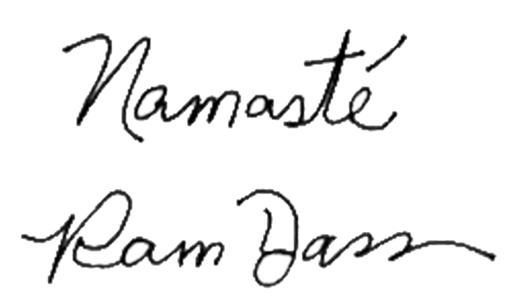
Via Ram Dass - Love Serve Remember Foundation \\ Words of Wisdom - October 1, 2025 🍁


"If you don’t cozy up to the mystery, you’re missing life… We are here to awaken, to become free beings with hearts open, not caught in our minds, to be instruments for the relief of suffering of all of it, of which we are a part."
 
- Ram Dass
Today's quote comes from our upcoming LIVE 10-day course, Walking Each Other Home: Meeting the Mystery of Death & Aging, beginning October 6th. >> Explore & Register Here