Monday, April 6, 2026

Via FB


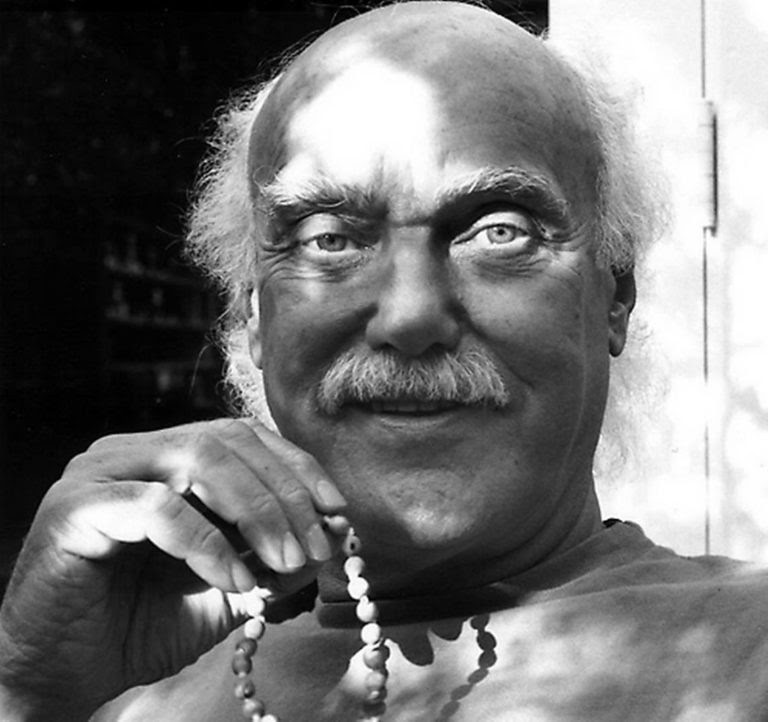
Via White Crane Institute \\ RAM DASS (ne Richard Alpert)


White Crane InstituteExploring Gay Wisdom & Culture since 1989
 
This Day in Gay History

April 06

Born


Photo credit: Mark Thompson
1931 -

RAM DASS (ne Richard Alpert), born on this date (d: 2019); also known as Baba Ram Dass, Ram Dass was an American spiritual teacher, guru of modern yoga, psychologist, and writer. His best-selling 1971 book Be Here Now, which has been described by multiple reviewers as "seminal", helped popularize Eastern spirituality and yoga in the West. He authored or co-authored twelve more books on spirituality over the next four decades, including Grist for the Mill (1977), How Can I Help? (1985), and Polishing the Mirror (2013).

Ram Dass was personally and professionally associated with Timothy Leary at Harvard University in the early 1960s. Then known as Richard Alpert, he conducted research with Leary on the therapeutic effects of psychedelic drugs. In addition, Alpert assisted Harvard Divinity School graduate student Walter Pahnke in his 1962 "Good Friday Experiment" with theology students, the first controlled, double-blind study of drugs and the mystical experience. While not illegal at the time, their research was controversial and led to Leary's and Alpert's dismissal from Harvard in 1963.

In 1967, Alpert traveled to India and became a disciple of Hindu guru Neem Karoli Baba who gave him the name Ram Dass, meaning "Servant of Ram," but usually rendered as simply "Servant of God" for western audiences. In the coming years, he founded the charitable organizations Seva Foundation and Hanuman Foundation. He traveled extensively giving talks and retreats and holding fundraisers for charitable causes in the 1970s, 80s, and 90s. In 1997, he had a stroke which left him with paralysis and expressive aphasia. He eventually grew to interpret this event as an act of grace, learning to speak again and continuing to teach and write books. After becoming seriously ill during a trip to India in 2004, he gave up traveling and moved to Maui, Hawaii, where he hosted annual retreats with other spiritual teachers until his death in 2019.

The Hanuman Foundation strives to improve the spiritual well-being of society through education, media and community service programs. He co-founded the Seva Foundation by joining with health-care workers to treat the blind in India, Nepal, and developing countries. Co-founded in 1978 with public health leader Larry Brilliant and humanitarian activist Wavy Gravy, it has become an international health organization.

In the early 1970s, Ram Dass taught workshops on conscious aging and dying around the United States. Elisabeth Kübler-Ross was one of his students. Ram Dass helped create the Dying Project with its Executive Director Dale Borglum, whom he had met in India. At the time, Borglum was also executive director of the Hanuman Foundation. The Living/Dying Project, based in Marin, California, starting in 1986, was initially named the Dying Center and located in Santa Fe, New Mexico. The Dying Center was the first residential facility in the U.S. where people came to die "consciously".

The Love Serve Remember Foundation was organized to preserve and continue the teachings of Neem Karoli Baba and Ram Dass. Ram Dass also served on the faculty of the Metta Institute where he provided training on mindful and compassionate care of the dying.

Over the course of his life since the inception of his Hanuman Foundation, Ram Dass gave all of his book royalties and profits from teaching to his foundation and other charitable causes. The estimated amount of earnings he gave away annually ranges from $100,000 to $800,000.

In the 1990s, Ram Dass discussed his bisexuality. He stated, "I've started to talk more about being bisexual, being involved with men as well as women," and added his opinion that who gay people are "isn't gay, and it's not not-gay, and it's not anything—it's just awareness."

At 78, Ram Dass learned that he had fathered a son as a 24-year-old at Stanford during a brief relationship with history major Karen Saum, and that he was now a grandfather. The fact came to light when his son, Peter Reichard, a 53-year-old banker in North Carolina, took a DNA test after learning about his mother's doubt concerning his parentage.

In 2013, Ram Dass released a memoir and summary of his teaching, Polishing the Mirror: How to Live from Your Spiritual Heart. In an interview about the book, at age 82, he said that his earlier reflections about facing old age and death now seem naive to him. He said, in part: "Now, I'm in my 80s ... Now, I am aging. I am approaching death. I'm getting closer to the end. ... Now, I really am ready to face the music all around me."

He died on December 22, 2019, at the age of 88.

|8|O|8|O|8|O|8|O|8|O|8|O|8|O|8|

Gay Wisdom for Daily Living from White Crane Institute

"With the increasing commodification of gay news, views, and culture by powerful corporate interests, having a strong independent voice in our community is all the more important. White Crane is one of the last brave standouts in this bland new world... a triumph over the looming mediocrity of the mainstream Gay world." - Mark Thompson

Exploring Gay Wisdom & Culture since 1989!
www.whitecraneinstitute.org

|8|O|8|O|8|O|8|O|8|O|8|O|8|O|8|

Via Daily Dharma: Follow Your Own Path

Follow Your Own Path

Live truthfully. Follow your own path rather than your parents’ fears or society’s expectations. A wholesome life grounded in ethics, courage, and openness is possible.

Venerable Gotami, “Why I Became a Nun at 23”

CLICK HERE TO READ THE ARTICLE


Via Dhamma Wheel | Right View: Understanding the Noble Truth of the Way to the Cessation of Suffering


TRICYCLE      COURSE CATALOG      SUPPORT      DONATE
RIGHT VIEW
Understanding the Noble Truth of the Way to the Cessation of Suffering
And what is the way leading to the cessation of suffering? It is just this noble eightfold path: that is, right view, right intention, right speech, right action, right living, right effort, right mindfulness, right concentration. (MN 9)

One perfects their ethical behavior by abandoning the taking of what is not given … (DN 2)
Reflection
A lot of human activity revolves around giving and taking, and the early Buddhist teachings are very sensitive to both. We are encouraged to give as generously as possible, as this loosens attachments and cultivates goodwill toward others. Great care is called for around the matter of taking, and the precept about taking what is not given is far stricter than a simple injunction against stealing.
Daily Practice
Being very scrupulous about things that do not belong to us is a practice in itself. It requires us to be more aware of our relationship to things and more attentive to the social cues given by others. Notice how it feels when somebody touches something you regard as not belonging to you (say a stick on the ground) and when they touch something you cherish (such as your phone). See how ownership triggers suffering?
Tomorrow: Cultivating Equanimity
One week from today: Understanding the Noble Truth of Suffering

Share your thoughts and join the conversation on social media
#DhammaWheel

Questions?
 Visit the Dhamma Wheel orientation page.
Tricycle is a nonprofit and relies on your support to keep its wheels turning.
© 2026 Tricycle Foundation
89 5th Ave, New York, NY 10003

Amitabha mantra chanted 108 times in Sanskrit: Limitless Blessings and Merit


Sunday, April 5, 2026

Via easy autostereogram // Buddha


Via Ram Dass - Love Serve Remember Foundation //


"There will be doubts and doubts and doubts. Most people don’t have faith, that’s why they don’t get into the spiritual planes of consciousness; faith and trust, that’s the way you get there."
 
- Ram Dass

Source: Ram Dass Here & Now - Ep. 120 – Dharmic Effort and Faith

https://www.facebook.com/share/p/17Cj6zUDsM/


Via FB


Via FB


Via Daily Dharma: Being Nice


Support the Tricycle community with a donation »
Being Nice

Our practice asks us to take nice to the next level, to make it inclusive beyond casual greetings and expand our motive from courtesy to empathy and taking care.

Les Kaye, “The Flowing Nature of Being Nice”


CLICK HERE TO READ THE ARTICLE

Via Dhamma Wheel | Right Mindfulness and Concentration: Establishing Mindfulness of Mind and the Third Jhāna


TRICYCLE      COURSE CATALOG      SUPPORT      DONATE
RIGHT MINDFULNESS
Establishing Mindfulness of Mind
A person goes to the forest or to the root of a tree or to an empty place and sits down. Having crossed the legs, one sets the body erect. One establishes the presence of mindfulness. (MN 10) One is aware: “Ardent, fully aware, mindful, I am content.” (SN 47.10)
 
When the mind is beset by confusion, one is aware “the mind is beset by confusion”… One is just aware, just mindful: “There is mind.” And one abides not clinging to anything in the world. (MN 10)
Reflection
Not all practice sessions are filled with bliss. In fact, they are not meant to be. The idea is to be fully aware of whatever is happening in your experience, whether it is calm and peaceful or full of confusion. A rush of random states can still be observed one at a time. You can even feel content amidst confusion, as long as you abide without clinging to anything.
Daily Practice
When your mind is beset by confusion, just be aware that this is what is happening right now. You don’t have to feel like you are doing something wrong or try to change it. Just pay very close attention and follow along with the jumble of thoughts and emotions with as much equanimity as possible. You can actually be quite attentive to a stream of consciousness that is on a roller-coaster ride, if you don’t judge it and just examine it.
RIGHT CONCENTRATION
Approaching and Abiding in the Third Phase of Absorption (3rd Jhāna)
With the fading away of joy, one abides in equanimity; mindful and fully aware, still feeling pleasure with the body, one enters upon and abides in the third phase of absorption, on account of which noble ones announce: “One has a pleasant abiding who has equanimity and is mindful.” (MN 4)
Reflection
Some people move easily and naturally through the stages of absorption, but many people do not. This is not something to be forced if it does not come on its own, and we should never judge our progress against the schema of four jhānas. As we can see, mindfulness and concentration each involve the other, so at a certain point it becomes unnecessary and unhelpful to compare the two and distinguish two different practices.
Daily Practice
As you settle into the pleasant feeling tones of the second level of absorption, the pleasure gradually subsides and resolves into a state of equanimity or even-mindedness. The body still feels tranquil and at ease, but the mind becomes more balanced as it becomes more mindful and fully aware. Simply rest at ease, doing nothing and striving for nothing, and let the mind settle naturally.
Tomorrow: Understanding the Noble Truth of the Way to the Cessation of Suffering
One week from today:  Establishing Mindfulness of Mental Objects and Abiding in the Fourth Jhāna


Share your thoughts and join the conversation on social media
#DhammaWheel

Questions?
 Visit the Dhamma Wheel orientation page.
Tricycle is a nonprofit and relies on your support to keep its wheels turning.
© 2026 Tricycle Foundation
89 5th Ave, New York, NY 10003

Artimis II