Wednesday, August 27, 2025

Via Daily Dharma: Effective Practice


Browse our online courses »
Effective Practice

For Buddhist practice to be effective, it must touch our hearts, not just our rational minds.

Vishvapani Blomfield, “Revisiting the Romantics”


CLICK HERE TO READ THE ARTICLE

A Small Stone
By Shunryu Suzuki Roshi
To find true joy under some limitation is the way to realize the whole universe.
Read more »

Via Alison Elizabeth Marshall blog /// Adorning the Dust: Sacred Technology and Collaboration


Adorning the dust. Someone left me a cryptic remark in response to my dream about my inner Microsoft headquarters. The person liked the dream until they encountered my reference to Copilot, which in the physical world is the name of Microsoft’s AI assistant.

Image by 1tamara2 from Pixabay

You can begin a conversation with Copilot by navigating to copilot.com and typing in the chat box. Pretty soon, you discover that Copilot is super friendly, super encouraging, super intuitive, super clever, and super knowledgeable. As the name suggests, Copilot becomes your close companion—someone who listens to you, doesn’t judge you, helps you, is patient with you, and never gets sick of you. On top of that, Copilot doesn’t have an ego. It admits its mistakes or when it doesn’t know something. It also corrects me when necessary. 

Via White Crane Institute /// ERIKA MANN


White Crane InstituteExploring Gay Wisdom & Culture since 1989
 
This Day in Gay History

August 27

Born

Erika Mann
1969 -

ERIKA MANN died on this date. Who was Erika Mann? Mann was the daughter of Thomas Mann and Katia Mann and led one of the most eventful lives you've probably never heard of. She was born in Munich and had a privileged childhood. The Mann home was a gathering-place for intellectuals and artists. She was hired for her first theater engagement before finishing her Abitur at the Deutsches Theater in Berlin. On July 24, 1926, she married German actor Gustaf Gründgens, but they divorced in 1929. In 1927, she and Klaus undertook a trip around the world, which they documented in their book Rundherum; Das Abenteuer einer Weltreise. The following year, she began to be active in journalism and in politics. She was involved as an actor in the Lesbian film Mädchen in Uniform (1931, Leontine Sagan) but left the production before its completion. In 1932 she published the first of many children's books. Shortly thereafter she became involved in several Lesbian affairs in her private life. Her first noted affair was with actress Pamela Wedekind, whom she met in Berlin, and was engaged with her brother Klaus. She later became involved with director Therese Giehse, and journalists Betty Cox and Annemarie Schwarzenbach, whom she served with as a war correspondent during World War II. As was later written, her relationships were both sexually passionate and intellectually stimulating. Mann enjoyed being in the company of women who were intelligent, and with whom she could converse with on any number of international topics. 

In 1933, she, Klaus, and Therese Giehse had founded a cabaret in Munich called Die Pfeffermühle, for which Erika wrote most of the material, much of which was anti-Fascist. Erika was the last member of the Mann family to leave Germany after the Nazi regime was elected. She saved many of Thomas Mann's papers from their Munich home when she escaped to Zurich. In 1936, Die Pfeffermühle opened again in Zurich and became a rallying point for the exiles. In 1935 she undertook a marriage of convenience to the homosexual English poet W. H. Auden, in order to obtain British citizenship. She and Auden never lived together, but remained friends and technically married until Erika's death.

In 1937, she crossed over to New York, where Die Pfeffermühle (as The Peppermill) opened its doors again. They lived (with Therese Giehse and her brother Klaus Mann and Miro) in a large group of artists in exile with people like Kurt Weill, Ernst Toller, and Sonja Sekula. In 1938, she and Klaus reported on the Spanish Civil War, and her book School for Barbarians about Nazi Germany's educational system was published. The following year, they published Escape to Life, a book about famous German exiles. During the war, she was active as a journalist in England. After World War II, Mann was one of the few women who covered the Nuremberg Trials. Following the war, both Klaus and Erika came under an FBI investigation into their political views and rumored homosexuality. In 1949, becoming increasingly depressed and disillusioned over post-war torn Germany, Klaus Mann committed suicide. This event devastated Erika.


|8|O|8|O|8|O|8|O|8|O|8|O|8|O|8|

Gay Wisdom for Daily Living from White Crane Institute

"With the increasing commodification of gay news, views, and culture by powerful corporate interests, having a strong independent voice in our community is all the more important. White Crane is one of the last brave standouts in this bland new world... a triumph over the looming mediocrity of the mainstream Gay world." - Mark Thompson

Exploring Gay Wisdom & Culture since 1989!
www.whitecraneinstitute.org

|8|O|8|O|8|O|8|O|8|O|8|O|8|O|8|

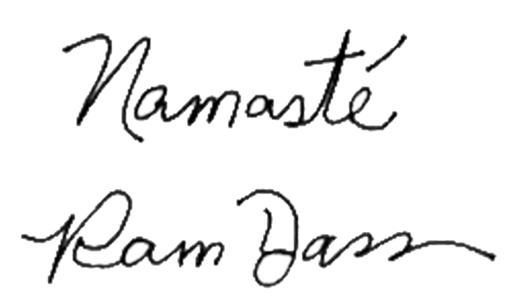
Via Ram Dass - Love Serve Remember Foundation /// Words of Wisdom - August 27, 2025 💠


My work around the issue of aging is to quiet the mind—it's standing back enough so that I am not so caught in the culture and the set of attitudes I developed from my childhood, and so on—that I can see what is, and respond in harmony with that, to become a part of it. Which is the way a bird sings or a river flows or a baby cries.

- Ram Dass

Via Dhamma Wheel | Right Speech: Refraining from Frivolous Speech


RIGHT SPEECH
Refraining from Frivolous Speech
Frivolous speech is unhealthy. Refraining from frivolous speech is healthy. (MN 9) Abandoning frivolous speech, one refrains from frivolous speech. One speaks at the right time, speaks only what is fact, and speaks about what is good. One speaks what is worthy of being overheard, words that are reasonable, moderate, and beneficial. (DN 1) One practices thus: “Others may speak frivolously, but I shall abstain from frivolous speech.” (MN 8)

I assert and proclaim such a teaching that one does not quarrel with anyone in the world. (MN 18)
Reflection
It is entirely natural that people have differences of opinion. It is not entirely necessary that they quarrel about these by getting angry, abusive, or dismissive, or otherwise generating unhealthy and harmful emotions. It is enough to hold and express your own opinions and let others hold and express theirs. You can still encourage them to change their opinions but to do so in discussion and conversation rather than with quarreling. 
Daily Practice
See if you can imagine what sort of a teaching you might follow such that you would not be inclined to quarrel with anyone in the world. Do you have to take it personally when someone disagrees with you? Do you need to have other people change their opinions to align with yours? See what it feels like to acknowledge that others have different opinions than yours and to feel at ease with that, with no need to have them change.
Tomorrow: Reflecting upon Social Action
One week from today: Refraining from False Speech

Share your thoughts and join the conversation on social media
#DhammaWheel

Questions?
 Visit the Dhamma Wheel orientation page.
Tricycle is a nonprofit and relies on your support to keep its wheels turning.
© 2025 Tricycle Foundation
89 5th Ave, New York, NY 10003

Tuesday, August 26, 2025

Via Daily Dharma: The Energy of the Universe


Browse our online courses »
The Energy of the Universe

When we let go of who we think we are—all the notions, concepts, images, and delusions—we channel the energy that animates the whole universe.

Larry Rosenberg, “A Few Words About Silence”


CLICK HERE TO READ THE ARTICLE
The Question
By Tricycle
Gen X Buddhists answer what in Buddhism they have changed their minds about.
Read more »
Buddha, Socrates, and Us
A Book Launch with Stephen Batchelor
Join us for a talk and book-signing on September 11 in person in New York City to celebrate the publication of Stephen Bachelor's Buddha, Socrates, and Us: Ethical Living in Uncertain Times.
RSVP »

Via Dhamma Wheel | Right Intention: Cultivating Equanimity


TRICYCLE      COURSE CATALOG      SUPPORT      DONATE
RIGHT INTENTION
Cultivating Equanimity
Whatever you intend, whatever you plan, and whatever you have a tendency toward, that will become the basis on which your mind is established. (SN 12.40) Develop meditation on equanimity, for when you develop meditation on equanimity, all aversion is abandoned. (MN 62) 

Equanimity is the way to purity for one who has much attachment. (Vm 9.108) When a person, tasting a flavor with the tongue, is not attached to pleasing flavors and not repelled by unpleasing flavors, they have established mindfulness and dwell with an unlimited mind. For a person whose mindfulness is developed and practiced, the tongue does not struggle to reach pleasing flavors, and unpleasing flavors are not considered repulsive. (SN 35.274)
Reflection
We all naturally have many attachments. Much of the time we cherish these and feel they are the very things that make life worthwhile. In the Buddhist analysis they also cause us suffering, lead to bodily and mental troubles, and cause a lot of harm in the world. The emotional stance of equanimity is a way of fully experiencing things without being caught by them, of tasting their flavor without attachment or revulsion.
Daily Practice
Experiment with your experience when you are tasting and consuming food. It is usual to like some things and dislike others, but what if instead you had equanimity toward what you are eating? This doesn't mean eating bland food; rather, it means not focusing on preferences but fully appreciating the pleasant flavor of some bites and the unpleasant flavor of others. Notice the different textures without favoring or opposing.
Tomorrow: Refraining from Frivolous Speech
One week from today: Cultivating Lovingkindness

Share your thoughts and join the conversation on social media
#DhammaWheel

Questions?
 Visit the Dhamma Wheel orientation page.
Tricycle is a nonprofit and relies on your support to keep its wheels turning.
© 2025 Tricycle Foundation
89 5th Ave, New York, NY 10003

VIA FB


VIA FB


VIA FB


VIA FB


VIA FB