Tuesday, March 3, 2026

Via Daily Dharma: Open-Ended Phenomena


Support the Tricycle community with a donation »
Open-Ended Phenomena

As persons, we’re responsible to culture and to others, and we are constantly changing, open-ended phenomena, not isolated, self-existent phenomena. We are part of a spatial, temporal, and social complex, not standing outside of it in a dualistic relation.

Jay L. Garfield, “To Be or Not to Be”


CLICK HERE TO READ THE ARTICLE
The Temple of a Thousand Buddhas
By Zim Pickens
Read about the history of the Mahabodhi temple of Patan, the latest feature in our Sacred Sites series.
Read more »

Via Dhamma Wheel | Right Intention: Cultivating Appreciative Joy


TRICYCLE      COURSE CATALOG      SUPPORT      DONATE
RIGHT INTENTION
Cultivating Appreciative Joy
Whatever you intend, whatever you plan, and whatever you have a tendency toward, that will become the basis upon which your mind is established. (SN 12.40) Develop meditation on appreciative joy, for when you develop meditation on appreciative joy, any discontent will be abandoned. (MN 62) 

The manifestation of appreciative joy is elimination of discontent. (Vm 9.95)
Reflection
It turns out that feeling good about the success or well-being of other people is good for you. The natural inclination of the self is toward selfishness, which is aimed at getting what we want and need. This is a useful function up to a point, but if we are ever to evolve beyond it, we need to reverse the process and cultivate care and concern for others. Wishing them well and celebrating their good fortune is a good place to start.
Daily Practice
Keep on the lookout today for what happens to other people and wish them well when you see or hear of someone having good fortune. This is actually an excellent remedy for your own discontent. If you are not happy about your lot in life, you can immediately lift yourself into a better state by taking joy in the good fortune of others. Rather than resent their success you can use it to help raise your own mood.
Tomorrow: Refraining from Harsh Speech
One week from today: Cultivating Equanimity

Share your thoughts and join the conversation on social media
#DhammaWheel

Questions?
 Visit the Dhamma Wheel orientation page.
Tricycle is a nonprofit and relies on your support to keep its wheels turning.
© 2026 Tricycle Foundation
89 5th Ave, New York, NY 10003

Monday, March 2, 2026

Via White Crane Institute /// RICH BENJAMIN


White Crane InstituteExploring Gay Wisdom & Culture since 1989
 
This Day in Gay History

March 01


1965 -

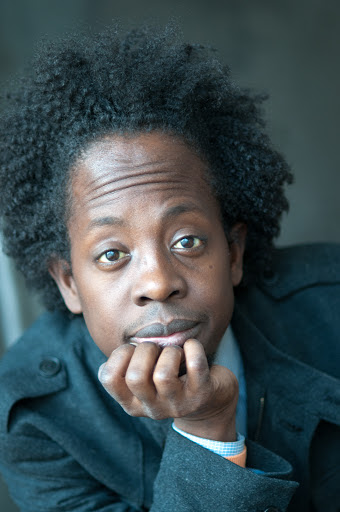
RICH BENJAMIN is an American cultural critic, anthropologist, and author. Benjamin is perhaps best known for the non-fiction book Searching for Whitopia: An Improbable Journey to the Heart of White America. He is also a lecturer and a public intellectual, who has discussed issues on NPR, PBS, CNN and MSNBC. His writing appears in The New York Times, The New Yorker, The Guardian and The New York Review of Books.

His maternal grandfather, Pierre-Eustache Daniel Fignolé, was a Haitian politician who became Haiti's provisional head of state for three weeks in 1957. He was one of the most influential leaders in the pre-Duvalier era.

Benjamin's work focuses on US politics and culture, democracy, money, high finance, class, Blacks, Whites, Latinos, public policy, global cultural transformation, and demographic change. He has been contributing essays to The New Yorker since 2017.

Benjamin's book, Searching for Whitopia, was the subject of a TED Talk that has been viewed more than 2.8 million times. The book has received coverage on NPR and MSNBC. In 2021 Benjamin delivered the Poynter Lecture at Yale Law School on "conservatism and Trumpism in the era of digital media—on how right-wing ideology, white fear, and the digital media ecosystem threaten democracy in America."

He has presented his research on money, blockchain, and decentralization at a conference on technology. In 2021, he served as a Fellow at the Cullman Center for Scholars and Writers at the New York Public Library. Benjamin was in Princeton, NJ in 2023 for his research and teaching post as the Anschutz Distinguished Fellow in American Studies at Princeton University.

In 2023-2024, Benjamin served as a Harvard-Radcliffe Fellow at the Institute for Advanced Study at Harvard University. There he continued research on his major field of interest, high finance—the social-scientific dimensions of quants, flash trading, hedge funds, extreme wealth, and risk.

His new memoir "Talk To Me," details his family's story, including that of his grandfather who was ousted in a coup in 1957.

|8|O|8|O|8|O|8|O|8|O|8|O|8|O|8|

Gay Wisdom for Daily Living from White Crane Institute

"With the increasing commodification of gay news, views, and culture by powerful corporate interests, having a strong independent voice in our community is all the more important. White Crane is one of the last brave standouts in this bland new world... a triumph over the looming mediocrity of the mainstream Gay world." - Mark Thompson

Exploring Gay Wisdom & Culture since 1989!
www.whitecraneinstitute.org

|8|O|8|O|8|O|8|O|8|O|8|O|8|O|8|

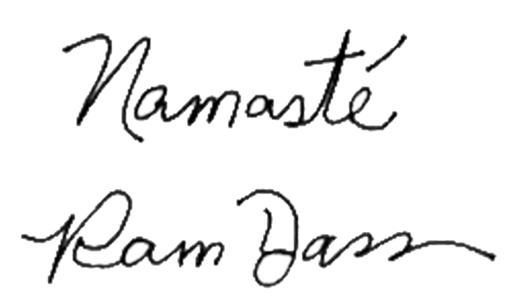
Via Ram Dass - Love Serve Remember Foundation /// Words of Wisdom - March 1, 2026 🏔️


“The only thing you have to offer to another human being is your own state of being.”
 
- Ram Dass

Source: Ram Dass – Here and Now – Ep. 108 – Geography of the Journey

Via FB


Via FB


Via FB


Via FB


Via FB


Via Tibet Travel ( Tibet Vista ) /// The Most Scary Monastery in the World: Here You Will Know Life is Easy, Why Do We Make It So Hard!


Via FB


Via FB


Via Daily Dharma: Types of Action


Support the Tricycle community with a donation »
Types of Action

In the Buddhist tradition, doing something includes thinking and speaking, as well as conduct; when you generate beneficial and nonharmful thoughts and communicate wisely and kindly, that’s a type of action.

Kimberly Brown, “You Can Only Do What You Can Do”


CLICK HERE TO READ THE ARTICLE
Visionary Buddhism
By Kurt Spellmeyer
Emptiness gets you only halfway. 
Read more »

Via Dhamma Wheel | Right View: Understanding the Noble Truth of the Cessation of Suffering


TRICYCLE      COURSE CATALOG      SUPPORT      DONATE
RIGHT VIEW
Understanding the Noble Truth of the Cessation of Suffering
What is the cessation of suffering? It is the remainderless fading away and ceasing, the giving up, relinquishing, letting go, and rejecting of craving. (MN 9)

When one knows and understands flavors as they actually are, then one is not attached to flavors. When one abides unattached, one is not infatuated, and one’s craving is abandoned. One’s bodily and mental troubles are abandoned, and one experiences bodily and mental well-being. (MN 149)
Reflection
Just as suffering is constructed moment by moment by attaching to the details of sensual experience, wanting the flavors we like and not wanting the flavors we don’t like, so too that very moment of suffering can be deconstructed by abandoning the wanting and not wanting and replacing it with equanimity. We still experience the flavor, directly and intently, but without being entangled with it—only aware of it.
Daily Practice
Practice eating with equanimity. Simply take a bite, chew it slowly and carefully, attending fully to every nuance of texture and flavor, and then swallow when appropriate. All this is done with great awareness but without favoring or opposing any aspect of the experience. When you experience flavors “unattached” and “without infatuation,” you are, in that brief moment at least, entirely free of suffering.
Tomorrow: Cultivating Appreciative Joy 
One week from today: Understanding the Noble Truth of the Way to the Cessation of Suffering

Share your thoughts and join the conversation on social media
#DhammaWheel

Questions?
 Visit the Dhamma Wheel orientation page.
Tricycle is a nonprofit and relies on your support to keep its wheels turning.
© 2026 Tricycle Foundation
89 5th Ave, New York, NY 10003

Sunday, March 1, 2026

Via Daily Dharma: The Gain of Letting Go


Support the Tricycle community with a donation »
The Gain of Letting Go

While letting go can be extremely beneficial, the practice can be even more significant when we also learn to let go into something valuable. From this side, letting go is more about what is gained than what is lost.

Gil Fronsdal, “What We Gain When We Learn to Let Go”


CLICK HERE TO READ THE ARTICLE
Seeking Refuge
By Sunita Puri
Facing burnout, a palliative care physician finds solace in nature.
Read more »