Friday, July 25, 2025

Via Dhamma Wheel | Right Action: Reflecting upon Mental Action


TRICYCLE      COURSE CATALOG      SUPPORT      DONATE

RIGHT ACTION
Reflecting Upon Mental Action
However the seed is planted, in that way the fruit is gathered. Good things come from doing good deeds, bad things come from doing bad deeds. (SN 11.10) What is the purpose of a mirror? For the purpose of reflection. So too mental action is to be done with repeated reflection. (MN 61)

When you have done an action with the mind, reflect upon that same mental action thus: “Has this action I have done with the mind led to both my own affliction and the affliction of another?” If, upon reflection, you know that it has, then tell someone you trust about it and undertake a commitment not to do it again. If you know it has not, then be content and feel happy about it. (MN 61)
Reflection
Mental action is at least as important and influential as physical and verbal action. Every thought, memory, or image that goes through your mind constitutes a mental act, and it is based on these mental events that other actions are put into play. It is okay to reflect from time to time on what has gone through your mind and inquire whether on the whole it has been healthy or unhealthy. This is a form of mental housekeeping.

Daily Practice
Now and then, step out of merely thinking thoughts and reflect on them. A mirror creates an image of whatever passes before it and reveals what it looks like from another perspective. Learn to do that with your own mind by stepping back and gazing on your thoughts rather than “inhabiting” them, as you normally do. This is one way of understanding the practice of mindfulness—becoming aware of what is happening.

Tomorrow: Abstaining from Misbehaving Among Sensual Pleasures
One week from today: Reflecting upon Social Action

Share your thoughts and join the conversation on social media
#DhammaWheel

Questions?
Visit the Dhamma Wheel orientation page.


Tricycle is a nonprofit and relies on your support to keep its wheels turning.

© 2025 Tricycle Foundation
89 5th Ave, New York, NY 10003

Via Three Teachings by Joanna Macy Inbox The Tricycle Community


Browse our online courses »
July 24, 2025

The Work of Our Time
 
On July 19, the world lost Joanna Macy, tireless scholar, Buddhist, ecologist, and activist. But her legacy and teachings endure, and will continue to inspire us all. 

“Macy was widely respected for her roll-up-the-sleeves leadership in grassroots efforts to address the social and environmental crises of our day. Through books, talks, workshops, and trainings, she helped thousands overcome fear and apathy in the face of uncertainty and respond to societal upheaval with constructive, collaborative action. A longtime Buddhist practitioner, she brought a dharma-inflected sensibility to her life’s work, embodying a compassionate interpersonal ethic akin to her friend Thich Nhat Hanh’s interbeing,” writes Joan Duncan Oliver in an obituary for Macy.

Famously linking Buddhism and general systems theory, Macy drew a pathway from intellectual understanding to embodied knowing. By focusing on mutual causality, she celebrated conversation and connection. 

In that spirit, this week’s Three Teachings highlights three of the many conversations the renowned ecological and social activist had with Tricycle over the years. For more from Macy, see here.
Forward today's teachings to a friend »

The Dharma and Destiny of a Planet People
With Joanna Macy

At Tricycle’s 2022 Buddhism and Ecology Summit, Macy discussed our interdependence as “planet people,” and the strength we can derive from recognizing our shared and interconnected identities.
Watch now »

The Work of Our Time
With Joanna Macy

In April 2020, when the COVID-19 pandemic was escalating around the world, Macy spoke with Tricycle’s editor-in-chief, James Shaheen, about moving forward in times of great despair, and transforming grief into action.
Listen now »

Allegiance to Life
With Joanna Macy

In a 2012 interview with Tricycle publisher Sam Mowe, Macy discussed a widening sense of self, the tactic of “don’t-know” mind in relation to environmental action, the common source of pain and the power to heal. 
Read more »

Follow Us
                  

Via FB


Wednesday, July 23, 2025

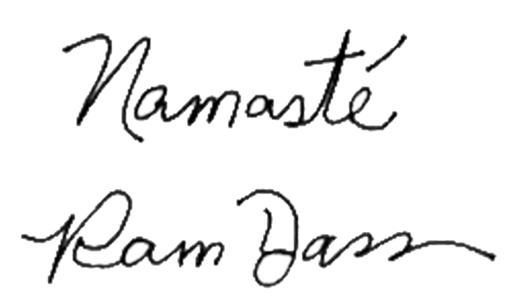
Via Ram Dass - Love Serve Remember Foundation //


Compassionate action allows us to wake up to some of our motives and to act with more freedom. It gives us the chance to put ourselves out on the edge, and if we are willing to take a clean look at what we see there, we can come to know ourselves better. We can’t change what is arising in us at any moment, because we can’t change our pasts and our childhoods. But when we stop being strangers to ourselves, we increase the number of ways we can respond to what arises.
 
- Ram Dass

Via Daily Dharma: This Very Moment


Browse our online courses »
This Very Moment

The only place we can rest is in this very moment, living deeply and richly and fully right now, meeting each person and event with an open heart. This is where we have a chance to meet joy, to come home to our breath and our true nature.

Laura Burges, “Living from the Inside Out”


CLICK HERE TO READ THE ARTICLE

A Pathless Land
By C. W. Huntington, Jr.
A translator considers the trouble with desiring and striving to be awakened.
Read more »

Via Dhamma Wheel | Right Speech: Refraining from Harsh Speech


RIGHT SPEECH
Refraining from Harsh Speech
Harsh speech is unhealthy. Refraining from harsh speech is healthy. (MN 9) Abandoning harsh speech, one refrains from harsh speech. One speaks words that are gentle, pleasing to the ear, and affectionate, words that go to the heart, are courteous, and are agreeable to many. (DN 1) One practices thus: “Others may speak harshly, but I shall abstain from harsh speech.” (MN 8)

How does there come to be non-insistence on local language and non-overriding of normal usage? In different localities they call the same thing by different words. So whatever they call it in such and such a locality, without adhering to that word one speaks accordingly, thinking: “These people, it seems, are speaking with reference to this.” (MN 139)
Reflection
One way of speaking harshly is to dominate how words are used and understood. Too often we listen to others barely enough to project our own meaning onto their words and wait impatiently for the opportunity to jump back in and speak again. Right speech is a two-way street and involves learning from others at least as much as conveying our own perspectives to them. Refraining from speaking without listening is healthy.
Daily Practice
Practice listening when you are talking with people. Actively attend to what they say and try to understand in their own terms what they mean. Assume you don’t automatically understand them and practice inquiring into their words and phrases and attending to their non-verbal clues with an open mind. It may be that people are saying things from which you can learn something new. Right speech includes right listening.
Tomorrow: Reflecting upon Mental Action
One week from today: Refraining from Frivolous Speech

Share your thoughts and join the conversation on social media
#DhammaWheel

Questions?
 Visit the Dhamma Wheel orientation page.
Tricycle is a nonprofit and relies on your support to keep its wheels turning.
© 2025 Tricycle Foundation
89 5th Ave, New York, NY 10003