Monday, August 10, 2026

Via Ram Dass - Love Serve Remember Foundation /// Words of Wisdom - August 9, 2026 🌻


"Most of us primarily have to get our psychological and life games in order before we are ready for the higher spiritual practices. Often we want more than we are ready to have. We take on practices that could bring you to God, or to enlightenment. But because we are so caught in psychological stuff, in ego trips, we merely take them and convert them to things around our ego.

Really, there are very few people who have their psychological scene so cooled out, who are no longer needing to prove themselves, who have eaten their own unworthiness. They can begin to hear these higher motives for spiritual work."
 
- Ram Dass

Source: Ram Dass – Here and Now – Ep. 147 – Motives for Spiritual Practice

Via Daily Dharma: Saying "I Am"


Saying "I Am"
When we just say, “I am,” and open our eyes around us, we intuitively see that those others are also included in “I am.”

Ruben L. F. Habito, “Be Still & Know”

Via Dhamma Wheel | Right View: Understanding the Noble Truth of the Origin of Suffering


Via FB


Saturday, August 8, 2026

Via Tricycle: The Buddhist Review // Aging Isn’t a Character Flaw


Aging Isn’t a Character Flaw

Three teachings on growing old and the wisdom of facing it head on

 
READ IN APP
 
Photo by David Gabriel Fischer | https://tricy.cl/3hMRsJG

“I am of the nature to grow old,” begins the five remembrances, a set of verses found in the Upajjhatthana Sutta (Subjects for Contemplation) that are meant to be recited regularly to remind us of the truth of impermanence: that everything is always changing and our time is short and precious. “I am of the nature to grow ill. I am of the nature to die,” the remembrances continue. Other Buddhist practices for contemplating or facing mortality include charnel ground visualization and mindfulness of death. All of these practices help us appreciate the limited time we do have, and encourage us to stop resisting the inevitable.

This may sound pretty morbid, but the point is just the opposite.

“It’s funny,” Buddhist priest Lewis Richmond, teacher of the Tricycle Online Course Aging as a Spiritual Practice, says. “The point of stressing the reality of aging, illness, and mortality is not to make people depressed. It’s a way to remind people of the nature of reality: everything ages and eventually passes away.”

Whether you’re caring for an elderly family member, noticing physical signs of decline in yourself, fending off relentless messaging that growing old should be avoided at all costs, or all of the above, this week’s Three Teachings shows that connecting with aging can be beautiful, empowering, and freeing.

Aging Is Reality
By Lewis Richmond

Buddhist priest and meditation teacher Lewis Richmond, a transmitted disciple of Shunryu Suzuki Roshi, writes that facing mortality is a core Buddhist practice because it gets at the Buddha’s teaching of impermanence. “Confronting your aging, the possibility of sickness, and the inevitability of death, makes you a natural Buddhist. There’s wisdom to be had in delving into all aspects of your aging being.”

Read for FREE

Buddha Was Asleep in Our Home
By Paula Arai

In a compilation detailing how Buddhist women have applied the dharma to daily life, professor Paula Arai writes about Saya, an aging practitioner who finds solace in nature’s cycles of birth and death. Caring for seedlings as well as her declining mother, Saya says, “Being in touch with the circle of life was my liberation.”

Read more

Taken Away and Given
By Douglas Penick

Detailing different encounters with old age, including his own and that of Siddhartha Gautama before he became the Buddha, writer Douglas Penick asks, “What does old age give?”

Read more


What does aging or confronting old age give you? Tell us in the comments or the chat!

Leave a comment


Via Tricycle: The Buddhist Review //


OPENINGS
The High Line Buddha
By Liz Kineke
In New York City, a new large-scale installation by Vietnamese artist Tuan Andrew Nguyen pays homage to monuments of yore.

Via Daily Dharma: The Heart of Darkness


The Heart of Darkness
It is only when one identifies totally with mumyo, the heart of darkness, that the walls of the proud ego-self are shattered and the true light of wisdom can shine through in one’s actions.

Reverend Patti Nakai, “Confronting the Heart of Darkness”

Via Dhamma Wheel | Right Mindfulness and Concentration: Establishing Mindfulness of Body and the First Jhāna


Friday, August 7, 2026

Via White Crane Institute //


White Crane InstituteExploring Gay Wisdom & Culture since 1989
 
This Day in Gay History

August 07


Today's Gay Wisdom
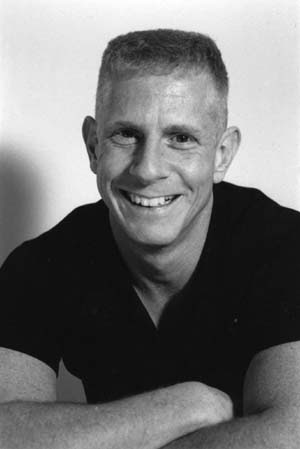
Dave Nimmons
2017 -

Changing the World from the Margins

David Nimmons - Manifest Love

I really do believe that we as Gay people have an involved role in the world. I see Gays as a kind of perpetual Peace Corps. We are meant for something far beyond ourselves and our own selfish concerns. This is a part of the meaning of being Gay. --Reverend Malcolm Boyd


The national project by that name, Manifest Love, is a whole new kind of project for Gay/queer men. It exists to help Gay men find new ways to be with and for each other. Men who take part get a chance to explore our shared patterns, look at our values around community, nurturance, and affection. We offer concrete new ways to experience ourselves and conduct our relationships. By helping frame more nurturant patterns with each other, we envision and create the more sustaining queer world we want to live in.

There is no simple box for what we do. It is part social movement, part applied spirituality. Our gatherings are not encounter weekends, human potential groups, some dating service or sect. Nobody will ask you to loan your life's savings or tell you how to vote. You can go to the bathroom as often as you want and do whatever you want, when you're there.

The Manifest Love movement invites a range of queer men to create a new kind of world together, one that better reflects our best values and aspirations. Our focus is to craft the lives--social, intimate, sexual, communal, voluntary, moral--that we want to experience with each other. Call it a great Gay experiment in applied affection. To date, about 1,800 of us have taken part in these events from San Francisco to Providence; from Ukiah, California, to Ellsworth, Maine. You may have heard something of the discussions of these ideas now bubbling at Gay gatherings and conferences. If so, you may already be familiar with the basic thrust of this work. Men come because they are hungry for some changes in how we are with each other and what we can be for each other.

This work tries to link ethical analysis to action, to more mindfully foster creative forms of beloved community. Local chapters work to promote critical understanding of our cultural innovations and to find concrete ways to manifest sustaining values in our communities. A key focus is on creating individual and collective acts to help us reflect, experience, and practice values of care and nurture in new ways. We call them Loving Disturbances.

Loving Disturbances are just that: innovations and experiments in applied affection. They are concrete real-world experiments devised to nudge the patterns and practices of Gay lives in more affirming and humane directions. They are social actions that bring values into being, and are the action core of Manifest Love's local work. They may happen at a bar, on the street, or in a meeting, between friends or tricks or neighbors. They may happen alone or with others. The point is to broaden the habitual patterns of queer men's cultures to help us meet and interact in new ways, and have fun doing it. A Loving Disturbance aims to leave a corner of queer world just a little better off--a tad more affectionate or less defended, slightly more in line with the values discussed here, a moment aglow with an aura of promise fulfilled.

In local groups, we devote much time to helping men brainstorm all manner of new institutions and practices we could create with each other, to enlarge the possibilities of our interactions. In Providence, a group decided to do a "gang affection bang" when a gaggle of friends teamed up on one of their own to cook him a meal, bake him cookies, clean his house, give him massage, walk his dog, sing him a serenade, take him to a movie, and generally celebrate his presence in their lives. The Minneapolis troop invented the idea of a "group date." Troops in Boulder and Atlanta have experimented with creating various events for voluntary, nonsexual, touch that are free and available to all. In San Francisco, men experimented with using their eyes differently to cruise for affection, not just sex.  Each Loving Disturbance is an example of that shameless kind of love Plato talked about.

If we could somewise contrive to have a city or an army composed of lovers and those they loved. . . when fighting side by side, one might almost consider them able to make even a little band victorious over all the world. -- Plato, Symposium

Work in local troops affords a chance to reflect on yourself and the givens of your Gay world, why you sought it out in the first place, and how it's working for you. Most important, it is a chance to reflect on what all of us are doing here together, at a deeper level than we usually think about it. If the ideas here have struck a chord with you, you are invited to join the ongoing conversations of men talking with each other, seeking new ways of being for and with each other.

In an interview with a French Gay magazine, Foucault once made this observation: [Homosexuality] would make us work on ourselves and invent, I do not say discover, a manner of being that is still improbable.

It is to the invention of improbability we are now called. Its exact shapes and forms depend on us. But basically, it comes down to this: If we want to rewrite the code of conduct in this Queer Kingdom, everybody has to grab a pen. The only way to get a more trusting and affectionate queer men's world is to make it. Because, it turns out, when we're all being that way with each other, the next thing you know . . that's what we are to each other.

Be the change you wish to see in the world. -- Mahatma Gandhi

We cannot yet know what will happen when this confederacy of beloved men unabashedly claims our values before the world. If we better understood and celebrated our best practices, Gay lives would never look the same. Then, of course, all hell might break lose. In a world beset by violence, with male nurturance and caretaking in short supply, for a society confused and guilty in its sexuality, where practices of intimacy and the pursuit of pleasure are viewed with suspicion, where relations between the sexes are fraught with risk and confusion--in such a straining world, might not the lessons of such men help us all? As our distinct habits diffuse, how might that change the life of our larger culture?

Who knows what it could look like if our gender were less prone to violent solutions; if new varieties of communalism and caretaking now seen in many of our lives were a broader norm; if celebratory sexual exploration were a more accepted feature of our culture, enjoyed and explored, not hidden and lied about; if we structured our intimate communities in more inclusive ways; if our national life included more freely loving, publicly altruistic men; if we could find new understandings across gender lines. In a dozen demonstrable ways, our habits have the potential to shift the most deeply held values of the majority culture. How might that transform the experiences and fears of women, of children, and of men? What promise does it hold to sweeten the shared life of our planet?

If, as facts suggest, society harbors a hidden army of lovers in its midst, the challenge is to celebrate and nurture these gifts, this genius, It is a cultural patrimony we can offer to our shared life as a nation. Equally important, it is a gift to ourselves that will transform our own experience with and for each other. For now we know only this. A resolute community of fiercely loving males can only heal the world. We, whom Plato called the best of boys, the bravest of men, can compose his army of lovers. When we more fully manifest love in word and deed and we live out the values of our hidden hearts, the larger culture can only follow. It always has.

David Nimmons, formerly President of New York's Lesbian and Gay Community Services Center, is founder of Manifest Love, a national project helping Gay men find new ways to be with, and for, each other. This text was excerpted by the author from his recent St. Martin's Press book The Soul Beneath the Skin.


|8|O|8|O|8|O|8|O|8|O|8|O|8|O|8|

Gay Wisdom for Daily Living from White Crane Institute

"With the increasing commodification of gay news, views, and culture by powerful corporate interests, having a strong independent voice in our community is all the more important. White Crane is one of the last brave standouts in this bland new world... a triumph over the looming mediocrity of the mainstream Gay world." - Mark Thompson

Exploring Gay Wisdom & Culture since 1989!
www.whitecraneinstitute.org

|8|O|8|O|8|O|8|O|8|O|8|O|8|O|8|

Via Daily Dharma: The Dharma Changes


The Dharma Changes
Since we never cease to change, the same must hold true of the dharma.

Kurt Spellmeyer, “Liberating Impermanence”

Via Dhamma Wheel | Right Effort: Restraining Unarisen Unhealthy States


Upajjhatthana Sutta: Subjects for Contemplation

 Upajjhatthana Sutta: Subjects for Contemplation

translated from the Pali by
Thanissaro Bhikkhu
Alternate format: [SuttaReadings.net icon]
X

The updated version is freely available at

This version of the text might be out of date. Please click here for more information

"There are these five facts that one should reflect on often, whether one is a woman or a man, lay or ordained. Which five?

"'I am subject to aging, have not gone beyond aging.' This is the first fact that one should reflect on often, whether one is a woman or a man, lay or ordained.

"'I am subject to illness, have not gone beyond illness.' ...

"'I am subject to death, have not gone beyond death.' ...

"'I will grow different, separate from all that is dear and appealing to me.' ...

"'I am the owner of my actions,[1] heir to my actions, born of my actions, related through my actions, and have my actions as my arbitrator. Whatever I do, for good or for evil, to that will I fall heir.' ...

"These are the five facts that one should reflect on often, whether one is a woman or a man, lay or ordained.

"Now, based on what line of reasoning should one often reflect... that 'I am subject to aging, have not gone beyond aging'? There are beings who are intoxicated with a [typical] youth's intoxication with youth. Because of that intoxication with youth, they conduct themselves in a bad way in body... in speech... and in mind. But when they often reflect on that fact, that youth's intoxication with youth will either be entirely abandoned or grow weaker...

"Now, based on what line of reasoning should one often reflect... that 'I am subject to illness, have not gone beyond illness'? There are beings who are intoxicated with a [typical] healthy person's intoxication with health. Because of that intoxication with health, they conduct themselves in a bad way in body... in speech... and in mind. But when they often reflect on that fact, that healthy person's intoxication with health will either be entirely abandoned or grow weaker...

"Now, based on what line of reasoning should one often reflect... that 'I am subject to death, have not gone beyond death'? There are beings who are intoxicated with a [typical] living person's intoxication with life. Because of that intoxication with life, they conduct themselves in a bad way in body... in speech... and in mind. But when they often reflect on that fact, that living person's intoxication with life will either be entirely abandoned or grow weaker...

"Now, based on what line of reasoning should one often reflect... that 'I will grow different, separate from all that is dear and appealing to me'? There are beings who feel desire and passion for the things they find dear and appealing. Because of that passion, they conduct themselves in a bad way in body... in speech... and in mind. But when they often reflect on that fact, that desire and passion for the things they find dear and appealing will either be entirely abandoned or grow weaker...

"Now, based on what line of reasoning should one often reflect... that 'I am the owner of my actions, heir to my actions, born of my actions, related through my actions, and have my actions as my arbitrator. Whatever I do, for good or for evil, to that will I fall heir'? There are beings who conduct themselves in a bad way in body... in speech... and in mind. But when they often reflect on that fact, that bad conduct in body, speech, and mind will either be entirely abandoned or grow weaker...

"Now, a disciple of the noble ones considers this: 'I am not the only one subject to aging, who has not gone beyond aging. To the extent that there are beings — past and future, passing away and re-arising — all beings are subject to aging, have not gone beyond aging.' When he/she often reflects on this, the [factors of the] path take birth. He/she sticks with that path, develops it, cultivates it. As he/she sticks with that path, develops it and cultivates it, the fetters are abandoned, the obsessions destroyed.

"Further, a disciple of the noble ones considers this: 'I am not the only one subject to illness, who has not gone beyond illness.'... 'I am not the only one subject to death, who has not gone beyond death.'... 'I am not the only one who will grow different, separate from all that is dear and appealing to me.'...

"A disciple of the noble ones considers this: 'I am not the only one who is owner of my actions, heir to my actions, born of my actions, related through my actions, and have my actions as my arbitrator; who — whatever I do, for good or for evil, to that will I fall heir. To the extent that there are beings — past and future, passing away and re-arising — all beings are the owner of their actions, heir to their actions, born of their actions, related through their actions, and have their actions as their arbitrator. Whatever they do, for good or for evil, to that will they fall heir.' When he/she often reflects on this, the [factors of the] path take birth. He/she sticks with that path, develops it, cultivates it. As he/she sticks with that path, develops it and cultivates it, the fetters are abandoned, the obsessions destroyed."

Subject to birth, subject to aging, subject to death, run-of-the-mill people are repelled by those who suffer from that to which they are subject. And if I were to be repelled by beings subject to these things, it would not be fitting for me, living as they do. As I maintained this attitude — knowing the Dhamma without paraphernalia — I overcame all intoxication with health, youth, & life as one who sees renunciation as rest.
For me, energy arose, Unbinding was clearly seen. There's now no way I could partake of sensual pleasures. Having followed the holy life, I will not return.

Notes

1.
Kamma.