Monday, April 21, 2025

Via Dhamma Wheel | Right View: Understanding the Noble Truth of the Origin of Suffering


TRICYCLE      COURSE CATALOG      SUPPORT      DONATE
RIGHT VIEW
Understanding the Noble Truth of the Origin of Suffering
What is the origin of suffering? It is craving, which brings renewal of being, is accompanied by delight and lust, and delights in this and that—that is, craving for sensual pleasures, craving for being, and craving for non-being. (MN 9)

When one does not know and see mental objects as they actually are, then one is attached to thoughts. When one is attached, one becomes infatuated, and one’s craving increases. One’s bodily and mental troubles increase, and one experiences bodily and mental suffering. (MN 149)
Reflection
Of the six kinds of objects that make up our experience, mental objects are the most challenging to work with. The feeling tones that arise with sensory objects give rise to craving, as we delight in the pleasure and are averse to the pain, but thoughts come with the added challenge of rich content. We can’t help but get drawn into the story and entangled in the plot, at which point our mental troubles usually increase.
Daily Practice
Practice regarding the mental objects coursing through your mind as thoughts and thoughts only. See if you can focus on their arising and passing away as a series of events occurring in the mind, without getting drawn into the content of the thoughts. Never mind, in other words, what the thought is about, but regard it simply as a passing mental phenomenon to be treated much like the passing physical sensations of the body. 
Tomorrow: Cultivating Compassion
One week from today: Understanding the Noble Truth of the Cessation of Suffering 

Share your thoughts and join the conversation on social media
#DhammaWheel

Questions?
 Visit the Dhamma Wheel orientation page.
Tricycle is a nonprofit and relies on your support to keep its wheels turning.
© 2025 Tricycle Foundation
89 5th Ave, New York, NY 10003

Via Daily Dharma: Giving in to Anger


Browse our online courses »
Giving in to Anger

When you give in to aversion and anger, it’s as though, having decided to kill someone by throwing him into a river, you wrap your arms around his neck, jump into the water with him, and you both drown.


Chagdud Tulku Rinpoche, “Putting Down the Arrow”


CLICK HERE TO READ THE ARTICLE

Via White Crane Institute \\ The first “SIP-IN”


White Crane InstituteExploring Gay Wisdom & Culture since 1989
 
This Day in Gay History

April 21


The Sip-in at Julius's
1966 -

The first “SIP-IN” held at Julius’s bar in Greenwich Village. The MATTACHINE SOCIETY in hopes of overturning the State Liquor Authority's regulations against serving homosexuals in bars staged a direct action they called “a sip-in” inspired by the Black civil rights movement successes in lunch bars and transportation. While there was no law on the books against such a thing, the SLA often penalized bars that served homosexuals on the grounds that their gatherings were "disorderly." Bartenders ordered patrons to sit facing away from other customers to prevent cruising, denied them drinks, or just kicked them out as precautionary moves under the SLA's watch. At the same time, bars frequented by gays were often targeted by police in entrapment schemes.

By 1965, influenced by Frank Kameny’s addresses in the early 1960s, Dick Leitch, the president of the New York Mattachine Society, advocated direct action, and the group staged the first public homosexual demonstrations and picket lines in the 1960s. Frank Kameny, founder of Mattachine Washington in 1961, had advocated militant action reminiscent of the black civil rights campaign, whilst also arguing for the morality of homosexuality. The State Liquor Authority of New York State did not allow homosexuals to be served in licensed bars in the state under penalty of revocation of the bar's license to operate. This denial of public accommodation had been confirmed by a court decision in the early 1940's. A legal study, commissioned by Mattachine New York on the city’s alcohol beverage law concluded that there was no law that prohibited homosexuals gathering in bars but that there was a law that prohibited disorderly behavior in bars, which the SLA had been interpreting as homosexual behavior.

Leitsch, then, announced to the press that three members of Mattachine New York would turn up at a restaurant on the lower east side, announce their homosexuality and upon refusal of service make a complaint to the SLA. This came to be known as the ‘Sip In’ and only succeeded at the third attempt in the Julius Bar in Greenwich Village. The ‘Sip In’, though, did gain extensive media attention and the resultant legal action against the SLA eventually prevented them from revoking licenses on the basis of homosexual solicitation in 1967. In the years before 1969 the organization also was effective in getting New York City to change its policy of police entrapment of gay men, and to rescind its hiring practices designed to screen out Gay people. There is a delightful  article on this early demonstration in the New York Times here: http://www.nytimes.com/2016/04/21/nyregion/before-the-stonewall-riots-there-was-the-sip-in.html?_r=0


|8|O|8|O|8|O|8|O|8|O|8|O|8|O|8|

Gay Wisdom for Daily Living from White Crane Institute

"With the increasing commodification of gay news, views, and culture by powerful corporate interests, having a strong independent voice in our community is all the more important. White Crane is one of the last brave standouts in this bland new world... a triumph over the looming mediocrity of the mainstream Gay world." - Mark Thompson

Exploring Gay Wisdom & Culture since 1989!
www.whitecraneinstitute.org

|8|O|8|O|8|O|8|O|8|O|8|O|8|O|8|


Sunday, April 20, 2025

Two Easter Poems from Gay Buddhist Fellowship - San Francisco


Via Dhamma Wheel | Right Mindfulness and Concentration: Establishing Mindfulness of Body and the First Jhāna

TRICYCLE      COURSE CATALOG      SUPPORT      DONATE
RIGHT MINDFULNESS
Establishing Mindfulness of Body
A person goes to the forest or to the root of a tree or to an empty place and sits down. Having crossed the legs, one sets the body erect. One establishes the presence of mindfulness. (MN 10) One is aware: “Ardent, fully aware, mindful, I am content.” (SN 47.10)
 
When standing, one is aware: “I am standing”… One is just aware, just mindful, “there is body.” And one abides not clinging to anything in the world. (MN 10)
Reflection
Mindfulness can be practiced in any position. Sitting and walking are the most familiar positions, but you can also practice standing or lying down. It is simply a matter of “establishing the presence of mindfulness” in the same way you do in sitting practice. Notice the same emphasis on being just aware, just mindful of the bodily sensations without mental elaboration. Can you stand to practice without clinging to anything in the world?
Daily Practice
When you find yourself having to stand in place for any length of time, such as waiting in line or watching an event, take the opportunity to practice mindfulness. Turn your attention inward, to the flow of your direct experience, and notice, for example, all the micro-adjustments made by your body to maintain balance. This in itself can become a compelling practice, as you notice how much is going on that you normally overlook.
RIGHT CONCENTRATION
Approaching and Abiding in the First Phase of Absorption (1st Jhāna)
Having abandoned the five hindrances, imperfections of the mind that weaken wisdom, quite secluded from sensual pleasures, secluded from unwholesome states, one enters and abides in the first phase of absorption, which is accompanied by applied thought and sustained thought, with joy and the pleasure born of seclusion. (MN 4)
Reflection
Absorption practice begins by finding the sweet spot in the center of the mind, the place where there is neither too much energy (restlessness) nor too little (sluggishness), neither wanting (sense desire) nor non-wanting (ill will) something or anything. When these hindrances, along with doubt, are abandoned temporarily, the mind naturally settles down into a state of tranquil alertness and equanimity.
Daily Practice
Sit quietly and comfortably in a peaceful place and allow everything swirling around in your mind and body to gradually settle down. Like dust settling in the air or particulates settling in water, there is nothing to force or make happen. Patience will be rewarded by the experience of deeper and deeper modes of peacefulness, clarity, and stability of mind. Don’t try to measure anything; just let it all be what it is.
Tomorrow: Understanding the Noble Truth of the Origin of Suffering
One week from today: Establishing Mindfulness of Feeling and Abiding in the Second Jhāna


Share your thoughts and join the conversation on social media
#DhammaWheel

Questions?
 Visit the Dhamma Wheel orientation page.
Tricycle is a nonprofit and relies on your support to keep its wheels turning.
© 2025 Tricycle Foundation
89 5th Ave, New York, NY 10003

Via Daily Dharma: Let Go of Ideas


Browse our online courses »
Let Go of Ideas

As soon as you notice you are attached to an idea, discard it. Notice, but don’t hold on. Don’t make it an intellectual pursuit. Steal the notion with your breath. The breath will help you see that you are Buddha already, that Christ is not separate from you.

Matthias Esho Birk, “Immature Practice Imitates, Mature Practice Steals”


CLICK HERE TO READ THE ARTICLE
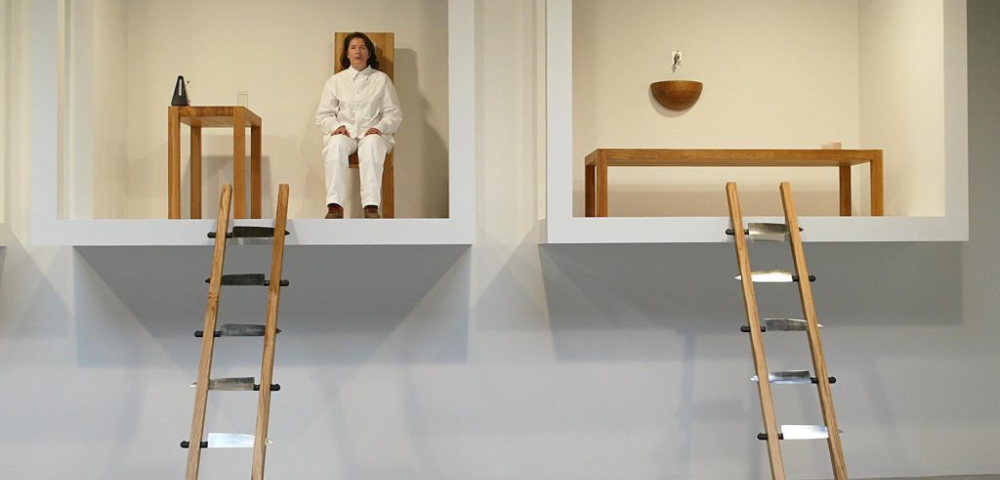
Naked Reality
By Vicki Mackenzie
Learn how Buddhist practice shaped Marina Abramovic’s performance art.
Read more »

Tricycle’s Buddhism & Ecology Summit
April 22–24, 2025
Join us from April 22–24, 2025, for Tricycle’s Buddhism & Ecology Summit: Experiencing Interconnectedness in the Natural World, a series of conversations with Buddhist teachers, writers, and environmental activists. This is a donation-based event sponsored by The BESS Family Foundation.
Sign up »


White Crane InstituteExploring Gay Wisdom & Culture since 1989
 
This Day in Gay History

April 20

Born

GEORGE TAKEI, American actor, born; a Japanese-American actor best known for his role in the TV series Star Trek, in which he played the helmsman Hikaru Sulu on the USS Enterprise. Most recently, he played Hiro Nakamura’s father Kaito Nakamura on the NBC television show, Heroes.

Takei is also known for his baritone voice and deep-throated catch phrase, "Oh my!"  In October 2005, Takei revealed in an issue of Frontiers magazine that he is Gay, and has been in a committed relationship with his partner, Brad Altman, for the last eighteen years. He said, "It's not really coming out, which suggests opening a door and stepping through. It's more like a long, long walk through what began as a narrow corridor that starts to widen." Nevertheless, Takei's sexuality had long been an open secret among Trek fans since the 1970s, and Takei did not conceal his active membership in Gay organizations including Frontrunners, where Takei met Altman, along with fellow runners Kevin and Don Norte, with whom he became friends.

"We are masculine, we are feminine, we are caring, we are abusive. We are just like straight people, in terms of our outward appearance and our behavior. The only difference is that we are oriented to people of our own gender." This is said to have been taken from a December 2005 telephone interview with Howard Stern, in which Takei described Altman as "a saint" for helping to take care of Takei's terminally ill mother.

Alex Cho, former editor of Frontiers, has stated that the Takei article was initiated by someone in the Takei camp when a close personal friend called the papers to ask them if they would be interested in the story. The friend remains unidentified but according to Cho, Takei offered his story voluntarily and not under any pressure from the media. Kevin Norte and Don Norte, when asked if they were involved in initiating the article, declined to comment.

When asked whether his character Sulu was Gay, Takei's response was that he would like to believe that sexual orientation would not even be an issue in the twenty-third century. Of all the show's principal characters, Sulu was the only male never depicted with a romantic interest; having said that, in the alternate universe depicted in "Mirror Mirror", alternate-Sulu tried many times to seduce Uhura, and "normal" Sulu is revealed to have fathered a daughter, Demora, during the opening sequence of the film Star Trek Generations (Demora's origins were further explored in Peter David's novel Captain's Daughter).

In his new book, My Lost Freedom, Takei details his experience growing up in Japanese-American internment camps during World War II in his new children's book. It is an autobiographical account of his experience as a 5-year-old in a Japanese-American internment camp during World War II. The book aims to reach children and their parents. The book recounts Takei's time as a child in a Japanese internment camp in Rohwer, Arkansas, a dark chapter in American history.

|8|O|8|O|8|O|8|O|8|O|8|O|8|O|8|

Gay Wisdom for Daily Living from White Crane Institute

"With the increasing commodification of gay news, views, and culture by powerful corporate interests, having a strong independent voice in our community is all the more important. White Crane is one of the last brave standouts in this bland new world... a triumph over the looming mediocrity of the mainstream Gay world." - Mark Thompson

Exploring Gay Wisdom & Culture since 1989!
www.whitecraneinstitute.org

|8|O|8|O|8|O|8|O|8|O|8|O|8|O|8|

Via Ram Dass - Love Serve Remember Foundation \\ Words of Wisdom - April 20, 2025 💠


“When you start to appreciate that God is everywhere or the Spirit is everywhere, then the question becomes why aren't I seeing it? And then you realize it's the eyes of the beholder. It's which level you're choosing to look at or which level your desires are allowing you to look at. Because I said before if you're too hungry you just see what's edible. And it's only when you start to yearn to know your true self or yearn to see beyond or realize the ephemeral nature of all the stuff that you grab hold of in the world, that you start to turn your direction somewhere else. And that's why they often say that despair is a prerequisite for spiritual awakening. Meaning despair that everything you're collecting isn’t going to be enough.”
 
- Ram Dass
This quote is sourced from the Intimacy with All Things LIVE 10-day immersion that begins TOMORROW, April 21st. Join Sharon Salzberg, Frank Ostaseski, Gary Zukav, Krishna Das and many more amazing teachers for a donation-based 10-day journey into the ways we can navigate intimacy in our lives and in the world around us... LEARN MORE HERE

Via FB


Via FB


Via FB