Sunday, July 12, 2026

Via White Crane Institute \\\ HENRY DAVID THOREAU


White Crane InstituteExploring Gay Wisdom & Culture since 1989
 
This Day in Gay History

July 12

Henry David Thoreau
1817 -

HENRY DAVID THOREAU, American writer, philosopher born (d: 1862); In the fall of 1856, when he was thirty-nine years old, the author of Walden found “a rare and remarkable fungus, such as I have heard of but never seen before. The whole length [is] six and three quarter inches. It may be divided into three parts, picus, stem and base, -- or scrotum, for it is a perfect phallus. One of those fungi named impudicus, I think. In all respects, [it is] a most disgusting object, yet very suggestive. It was as offensive to the eye as to the scent, the cap rapidly melting and defiling what it touched with a fetid, olivaceous, semi-liquid matter. In an hour or two the plant scented the whole house wherever placed, so that it could not be endured.

"I was afraid to sleep in my chamber where it had lain until the room had been well ventilated. It smelled like a dead rat in the ceiling, in all the ceilings of the house. Pray, what was Nature thinking of when she made this? She almost puts herself on a level with those who draw in privies.”

Both Mohandas Gandhi and Dr. Martin Luther King Jr. credited Thoreau with inspiring their nonviolent activism with his 1849 essay now called “Civil Disobedience.”

“Thoreau was a great writer, philosopher, poet,” wrote Gandhi, “and withal a most practical man, that is, he taught nothing he was not prepared to practice in himself. He was one of the greatest and most moral men America has produced.” Dr. King insisted that “Civil Disobedience,” which he first read as a student at Morehouse College, was his “first contact with the theory of nonviolent resistance... Fascinated by the idea of refusing to cooperate with an evil system, I was so deeply moved that I re-read the work several times...The teachings of Thoreau came alive in our civil rights movement.”

Thoreau's sexuality has long been a subject of speculation; even his contemporaries commented on his apparent lack of interest in conventional romance. The most exhaustive examination of the evidence on both sides of this question is Walter Harding's article, "Thoreau's Sexuality," published in the Journal of Homosexuality (1991). Basing his conclusions mostly on evidence from Thoreau's Journal, Harding suggests that Thoreau's affectional orientation was probably homosexual, though there is no evidence that he was physically intimate with either men or women.

Although Thoreau proposed marriage to one woman (and was proposed to by another), Harding concludes that the preponderance of the evidence indicates that he had a fundamental attraction to other men, an attraction sublimated through his writing and his passion for nature.

It's fascinating that his journals never mention women and some of whose essays express his thoughts on the relations of men. His essay "Chastity and Sensuality," and the long discourse on "Friendship" in A Week are prolific expressions of the beauty, and the agony, of love between men.

Some of these discussions are said to refer to his brother or to Ralph Waldo Emerson. Others clearly refer to two men whom Thoreau found particularly attractive: Tom Fowler, whom Thoreau chose as a guide on a trip to the Maine woods; and Alek Therien, the Canadian wood-chopper who visited Thoreau at Walden Pond (more on that in a bit).

In 1991, a quarter of a century after publishing his biography of Thoreau, his biographer Walter Harding, added an important postscript to his analysis of his subject: an essay in the Journal of Homosexuality arguing that Thoreau had “a specific sexual interest in members of his own sex.” This aspect of Thoreau’s sensibility has remained strangely quarantined from mainstream Thoreau scholarship, despite Harding and scholars such as Henry Abelove, Jonathan Ned Katz, and Michael Warner.

Another Thoreau biographer, Robert Richardson, has consistently downplayed it and is so allergic to all things Freudian that he took the precaution of omitting Thoreau’s childhood and adolescence from his biography. Telling.

Of course, Thoreau could not have thought of himself as a homosexual as we understand the term, but as a careful reader of Darwin and a close observer of nature, Thoreau wondered what it meant that he dispersed no seed of his own. (He half-asserted, half-speculated in his journal that “The end of marriage is not the propagation of the species— If you & I succeed there will have been men enough—any more than the object of the blossom is to mature the seed.”) He also knew that in his relationships with men, his emotions were often more turbulent and demanding than his partners: “Methinks that I carry into friendship the tenderness & nicety of a lover,” he admitted in his diary.

Most touchingly in 1854 Thoreau wrote in Walden of a visit paid him by a wandering French-Canadian wood-chopper Alex Therien. So taken was Thoreau with this rugged laborer--"a true Homeric or Paphlagonian man," as he put it in his journal--and so eager was he "to fasten [him]self like a blood-sucker... to any full-blooded man that [came his] way," that he indulged in a moment of "Homerotic" fantasy: he asked the woodsman to read to him from the Iliad, and in particular "Achilles' reproof to Patroclus for his sad countenance."

Throughout his life Thoreau was falling in and out of love with his male acquaintances. He meditated on the higher meaning of male friendship in his notebooks. He never married.

|8|O|8|O|8|O|8|O|8|O|8|O|8|O|8|

Gay Wisdom for Daily Living from White Crane Institute

"With the increasing commodification of gay news, views, and culture by powerful corporate interests, having a strong independent voice in our community is all the more important. White Crane is one of the last brave standouts in this bland new world... a triumph over the looming mediocrity of the mainstream Gay world." - Mark Thompson

Exploring Gay Wisdom & Culture since 1989!
www.whitecraneinstitute.org

|8|O|8|O|8|O|8|O|8|O|8|O|8|O|8|

Via FB


Via FB \ Thanks DW!


Via FB


Via FB


Via FB


Via FB


Via FB


Via FB


BHNN Guest Podcast – Ep. 263 – Dharma Lessons from 50 Years of Buddhist Practice with Gil Fronsdal


July 10, 2026

Sharing meaningful stories from a life of practice, Gil Fronsdal chats about the impact of spiritual community, simplicity, and generosity. Today’s podcast is brought...

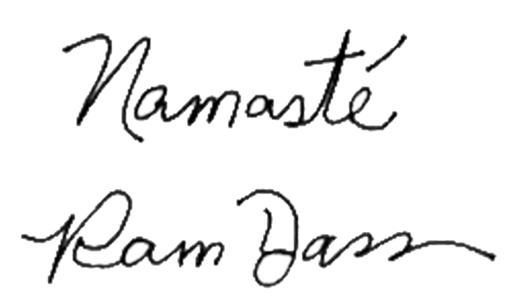
Via Ram Dass - Love Serve Remember Foundation \\\ Words of Wisdom - July 12, 2026 🌞


"The minute you understand that it’s all yoga, it’s all a way of coming into union, everything becomes a vehicle. Everybody you meet."
 
- Ram Dass

Source: Ram Dass – Here and Now – Ep. 142 – It’s All Yoga

Via Daily Dharma: Skillful Attention


Skillful Attention
Skillful attention is not the same as watching the news or reading social media. It’s choosing to direct our mindfulness and compassion to other living beings, and to make a real connection to their experience with our minds and hearts.

Kimberly Brown, “Overwhelmed? Pay Attention”

CLICK HERE TO READ THE ARTICLE

Via Dhamma Wheel | Right View: Understanding the Noble Truth of the Origin of Suffering


Via FB \\ Tibet, the Land of Buddha


The 17th Karmapa makes a heartfelt plea to all Tibetans after his recent re-union with His Holiness the Dalai Lama.

“Recently in Zurich, Switzerland, I had the fortunate opportunity to once again see His Holiness the Dalai Lama in person and listen to his teachings. This experience filled me with a mix of joy and sadness. Unlike seeing him on television, seeing him in person this time revealed how much he has aged. Even when speaking, his voice was noticeably weaker than before. This was deeply moving and difficult to bear.
His Holiness has devoted all his energy of body, speech and mind for our sake, and seeing how frail his physical condition has become filled me with both anguish and a renewed sense of gratitude. These feelings seemed to compete with each other in my mind.
Given his physical condition and apparent fatigue, I refrained from saying much, only expressing that there is nothing more important than praying for his long life for the sake of the Dharma and all beings. I wrote down all other matters I wished to discuss and presented them in writing. His Holiness spent about 10 minutes carefully reviewing this.
He mentioned there are prophecies that he will live to be over 110 years old. He expressed that his main wishes are to make a pilgrimage to Mount Wutai in China, and to emphasize that the complete teachings of the greater and lesser vehicles, including tantra, are a unique treasure found only in Tibet's Land of Snows. He stressed the importance of preserving, maintaining and spreading these teachings.
In short, seeing His Holiness in person and hearing his words this time instilled in me an unprecedented sense of his preciousness. It also impressed upon me that we must fulfill all of His Holiness's wishes for this lifetime promptly and swiftly, without delay or distraction.
His Holiness has already made inconceivable efforts and sacrifices for our sake. Now, considering his age and physical condition, there is no greater purpose than for him to rest and take care of his health. Everyone, both ourselves and others, must be mindful of this and show genuine concern.
Moreover, while His Holiness is still alive and well, if he could return to Tibet and set foot on its soil, it would fulfill the hopes of all Tibetans inside Tibet, both living and deceased, and accomplish the lama's wishes. Therefore, it is crucial that all our Tibetan brothers and sisters maintain pure and harmonious relationships, working together to swiftly fulfill His Holiness's vision. We must offer whatever support we can, even if it's just dedicating prayers day and night without pause. We have reached a critical time.
Regardless of regional affiliations, religious denominations, views or positions, for the welfare of Tibet as a whole, we must prioritize what's important and let go of minor issues. It's crucial that we don't mistake gold for copper or sell sandalwood as common ash.
Most importantly, keeping in mind that we have such a wish-fulfilling jewel of a lama, I urge everyone to work with great determination for the general cause of the Dharma and the welfare of the Tibetan people.
Presented by Karma Ogyen Trinley Dorje on August 28, 2024.”
Translation by Ven. Tongkhor Rinpoche
The 17th Karmapa makes a heartfelt plea to all Tibetans after his recent re-union with His Holiness the Dalai Lama.


Via Asangoham - Jesus in the Himalayas


Saturday, July 11, 2026

Via Daily Dharma: Don’t Follow Thoughts

Don’t Follow Thoughts
Under the influence of thoughts, the mind does not remain focused on a single point; it alternates between movement and stillness. It is important not to follow thoughts and to focus without fixation.

Khenpo Sherab Sangpo, “Entering Shamatha Meditation”

CLICK HERE TO READ THE ARTICLE

Via Dhamma Wheel | Right Mindfulness and Concentration: Establishing Mindfulness of Body and the First Jhāna


Via Tricycle: The Buddhist Review \\\ Can (and Should) AI Help Your Practice?


BUDDHIST WISDOM TO LIVE BY

July 11, 2026
AI and Buddhist Practice: A Free Event
Can artificial intelligence help your practice, and should it?

Join us for our next event with the Buddhism & AI Initiative to explore this question. With a new panel of experts, we’ll look at the potential for AI to impact practice: the possible benefits and risks, how some practitioners are already using AI in their practice, and why others are turning away from it.

During the 90-minute discussion on July 23 at 4:00 p.m. ET, you’ll hear from founder and executive director of the Khyentse Vision Project, Dolma Gunther; the Head of Practice at Tassajara Zen Mountain Center, Sessei Meg McNeil; CEO of Happier Meditation (formerly 10% Happier), Ben Rubin; and award-winning author of Reclaim Your Mind and accomplished product designer, Jay Vidyarthi.

This virtual event is free and open to all with the option to make a donation. Learn more about the event and sign up here.

Via Nautilus \\ Memory loss may not be the earliest sign of Alzheimer's


Join Nautilus

WEEKLY DIGEST

Memory Loss May Not Be the Earliest Sign of Alzheimer’s

Your cognitive flexibility may go first.

Memory loss is by far the most notorious symptom of Alzheimer’s disease, but it might not be the initial sign of the illness. According to a new study published in Nature Communications, there’s an even earlier tell—impaired cognitive flexibility. 

Cognitive flexibility is one of the brain’s executive functions governing our ability to switch between different tasks, adapt to novel situations, learn new rules, and so on. To study changes in this vital function, neuroscientists at Texas A&M University used mice genetically engineered to produce the amyloid-beta plaques associated with Alzheimer’s disease (5xFAD mice).

Read the full story