A personal blog by a graying (mostly Anglo with light African-American roots) gay left leaning married college-educated Buddhist Baha'i BBC/NPR-listening Professor Emeritus now following the Dharma in Minas Gerais, Brasil.
Thursday, September 17, 2026
Via Daily Dharma: Mindfulness and Self-Esteem
|
|
Wednesday, September 16, 2026
Via Daily Dharma: Nothing but This
|
|
Via FB \\ Buddhism
Via Google AI:
Via FB \\ Buddhism
#PresentMoment #GentleStrength #DailyBuddhaWisdom
Via Reaching Out
| |||||||||||||
| |||||||||||||
|
Via Daily Dharma: Making It Happen
|
|
Via GBF \\ "The Sacred Dance of Joy: Practicing Mudita in Daily Life: with JD Doyle
A new dharma talk has been added to the GBF website and podcast:
The Sacred Dance of Joy: Practicing Mudita in Daily Life - JD Doyle
______________
How can we remember that we were created for joy when our minds are busy and our hearts feel weighed down by the world’s troubles?
In this uplifting talk, JD Doyle invites us to explore mudita—traditionally translated as appreciative, altruistic, or relational joy—as one of the four essential heart practices (brahma viharas) in Buddhism.
Opening with the Persian poet Hafez’s poem The Sacred Dance for Life, JD reminds us that joy is not a performance or something we must force, but an inherent capacity of the heart waiting to be uncovered when we step out of our habitual anxiety. Drawing on Thich Nhat Hanh’s insight that happiness has the nature of “interbeing,” JD emphasizes that mudita is fundamentally relational—shifting us away from the narrow, individualistic “what’s in it for me?” mindset and inviting us to take genuine delight in the well-being of others and the world around us.
To help us navigate the mental habits that block this natural warmth, JD breaks down the traditional frameworks and practical obstacles we encounter on the path to joy:
- The Measuring Mind: How our constant comparing, ranking, and obsessing over what we lack creates fear and closes the heart to present-moment delight.
- The Near Enemy (Exuberance & Frivolity): How bubbling excitement can tip us forward into overconsumption, or how frivolity—as Norman Fischer describes—acts as a superficial attempt to cover up life’s inevitable sorrows rather than savoring beauty amidst hardship.
- The Far Enemy (Jealousy & Resentment): How envy creates a painful sense of separation, which JD illustrates through a personal story of overcoming resentment when a colleague received a job promotion JD had expected.
- “Messy Joy” & Entanglement: Citing “The Book of Delights” by poet Ross Gay, JD highlights that real joy is not separate from heartbreak, but emerges from how we care for one another through suffering—a resilience deeply familiar to the queer community.
- Cultivating a “Delight Radar”: Practicing gratitude for simple “non-problems” (like a headache-free day or a working toilet) trains our attention so that, as Ross Gay noted, the more we study delight, the more delight there is to study.
--
Enjoy 900+ free recorded dharma talks at https://gaybuddhist.org/
Tuesday, September 15, 2026
Monday, September 14, 2026
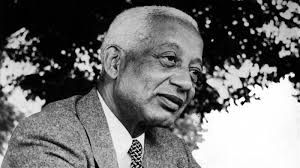
Via White Crane Institute \\ ALAIN LOCKE - Bahá'í
| ||||||||||||||
| This Day in Gay History | ||||||||||||||
September 13Born 1886 - ALAIN LOCKE (d: 1954) An American writer, editor, philosopher, educator and patron of the arts was born on this date. He is best known for his writings on and about the Harlem Renaissance. He is unofficially called the "Father of the Harlem Renaissance." His philosophy served as a strong motivating force in keeping the energy and passion of the Movement at the forefront. In classic same-sex “culture carrier” mode, Locke promoted African American artists, writers, and musicians, encouraging them to look to Africa as an inspiration for their works. He encouraged them to depict African and African American subjects, and to draw on their history for subject material. Locke edited the March 1925 issue of the periodical Survey Graphic, a special on Harlem and the Harlem Renaissance, which helped educate white readers about the flourishing culture there. Later that year, he expanded the issue into The New Negro, a collection of writings by African Americans, which would become one of his best known and seminal works. His philosophy of the New Negro was grounded in the concept of race-building. Its most important component is overall awareness of the potential black equality; No longer would blacks allow themselves to adjust themselves or comply with unreasonable white requests. This idea was based on self-confidence and political awareness. Although in the past the laws regarding equality had been ignored without consequence, Locke's philosophical idea of The New Negro allowed for real fair treatment. Because this was just an idea and not an actual bylaw, its power was held in the people. If they wanted this idea to flourish, they were the ones who would need to "enforce" it through their actions and overall points of view. Locke has been said to have greatly influenced and encouraged Zora Neale Hurston. Also: He was also an early member of the Bahá'í Faith
| ||||||||||||||


Listen to